Asked how to make a guitar, the celebrated luthier Wayne Henderson offered a straight-up answer: "Just get a pile of really nice wood and a whittling knife. Then you just carve away everything that isn't a guitar." (footnote 1)
The making of a preamplifier seems more or less the opposite. You start with a simple volume control and a couple of jacks, then add whatever you think constitutes a preamplifier. Choices might include electronic source switching, line-level gain, phono-level gain and equalization, tone controls, tone-defeat switches, a balance control, a headphone jack, an iPod input, and maybe even a digital-to-analog converter with a USB receiver. The sky is pretty much the limit.
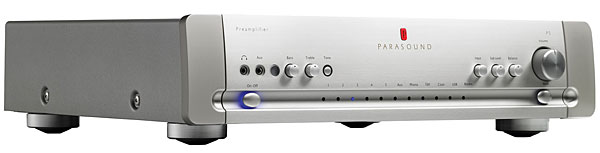
Asked what constitutes a preamplifier, the California-based electronics company Parasound might simply copy the preceding paragraph: The newest preamp in their Taiwanese-built Halo series of products, the Halo P 5 ($1095), incorporates every one of the items mentioned above. And, remarkably, a few more.
Description
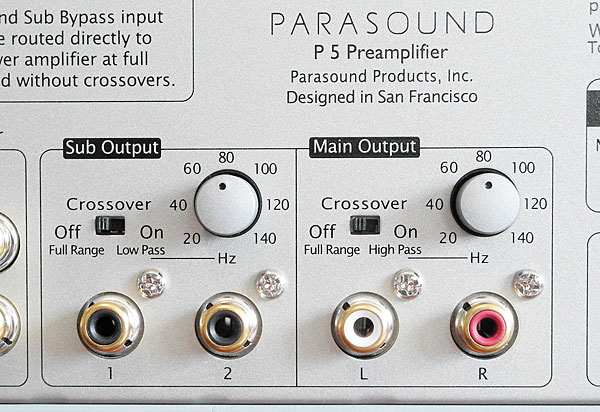
Parasound describes the Halo P 5 as a "2.1-channel stereo preamplifier," hinting at its suitabilities for use in both a stereo music system and a home theater. The latter is presented in a number of ways, the most apparent being its home-theater bypass circuit, by means of which one can add the P 5 to a multichannel system with a surround-sound receiver or processor, to optimize two-channel listening (footnote 2). (For this to work, the surround-sound component in question must have line-level outputs.) Usefully, whenever the P 5 is switched off, its home-theater bypass is automatically selected, so that the surround-sound system can still be enjoyed without additional drudgery.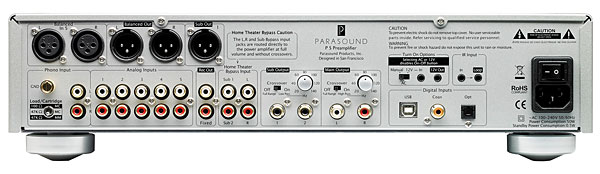 Also of interest to home-theater enthusiasts, the Halo P 5 has line-level outputs for up to three powered subwoofers—the third output is an XLR socket for balanced connection—all of which present the same mono signal and are controllable by means of a front-panel subwoofer level control. Additionally, the P 5 includes an analog crossover comprising a low-pass filter for the sub(s) and a high-pass filter for the main outputs. Both filters are user-controllable by means of small potentiometers on the rear panel, each with a range of 20–140Hz. The crossover's usefulness, of course, is limited to systems whose subwoofers include defeat switches for their own, internal crossovers; perhaps needless to say, the P 5's subwoofer filters are switchable.
 Otherwise, the Halo P 5 is optimized for serious music listening, right down to its front-mounted bass and treble tone controls, and a tone-defeat switch for removing them from the signal path. The front panel also sports a nice-feeling rotary switch for source selection, accompanied by a clearly marked row of indicator lights, and an exceedingly smooth, undetented volume control. I was mildly disappointed by the lack of a mono switch but cheered by the presence of a 3.5mm input jack, the latter tailored, by means of an extra gain stage, for use with the analog output of an iPod or similar device. And although I own neither a balanced-out source component nor a balanced-in amplifier, I was impressed that the Halo includes a single pair each of balanced input and output jacks.
The use of a switch-mode power supply—and the consequent absence of a traditional mains transformer—accounts for the P 5's most surprising characteristic: Notwithstanding its abundance of features, its moderately sized case is almost half empty! Beyond that, there's precious little I can tell you about its innards, other than the fact that its seven circuit boards appeared well made. The P 5's casework is nicely done, with a mix of steel and aluminum structures and a textured finish that gives, from a moderate distance, the impression of a high-tech casting. Cosmetics and ergonomics alike were of higher-than-expected quality for this price bracket.
Installation and setup
Otherwise, the Halo P 5 is optimized for serious music listening, right down to its front-mounted bass and treble tone controls, and a tone-defeat switch for removing them from the signal path. The front panel also sports a nice-feeling rotary switch for source selection, accompanied by a clearly marked row of indicator lights, and an exceedingly smooth, undetented volume control. I was mildly disappointed by the lack of a mono switch but cheered by the presence of a 3.5mm input jack, the latter tailored, by means of an extra gain stage, for use with the analog output of an iPod or similar device. And although I own neither a balanced-out source component nor a balanced-in amplifier, I was impressed that the Halo includes a single pair each of balanced input and output jacks.
The use of a switch-mode power supply—and the consequent absence of a traditional mains transformer—accounts for the P 5's most surprising characteristic: Notwithstanding its abundance of features, its moderately sized case is almost half empty! Beyond that, there's precious little I can tell you about its innards, other than the fact that its seven circuit boards appeared well made. The P 5's casework is nicely done, with a mix of steel and aluminum structures and a textured finish that gives, from a moderate distance, the impression of a high-tech casting. Cosmetics and ergonomics alike were of higher-than-expected quality for this price bracket.
Installation and setup
Owing to a combination of well-labeled controls and a notably clear instruction manual, the Halo P 5 was a breeze to set up. Adding to that ease was the simplicity of this particular installation: I, who own neither a subwoofer nor a surround-sound component—or even a television set that was made in this century—was offered the chance to review the P 5 as a two-channel product in my two-channel system. The remaining 0.1 channel must await another day and another writer. That said, two aspects of the Halo P 5's operation do require special mention, the first being its built-in D/A converter, which is addressable by means of optical, coaxial, or USB connections. With either of the first two choices, the Parasound DAC functions at word lengths and sample rates up to 24 bits and 192kHz, respectively (the chip at its heart is Burr-Brown's 24-bit, 192kHz-capable PCM1798 DAC), but offers only 24/96 performance when the incoming datastream arrives by USB.
The P 5's converter compensates with an exceptionally easy-to-set-up USB connection: Even Windows users should be able to get up and running in just a few minutes, without having to download a separate device driver. My own iMac installation was simplicity itself: In the Sound window of Apple OS10.7.4's System Preferences, the P 5's built-in DAC appeared with the name "PARASOUND P5"; one click was all it took to get me up and running, after which my computer never ceased to recognize the Parasound converter.
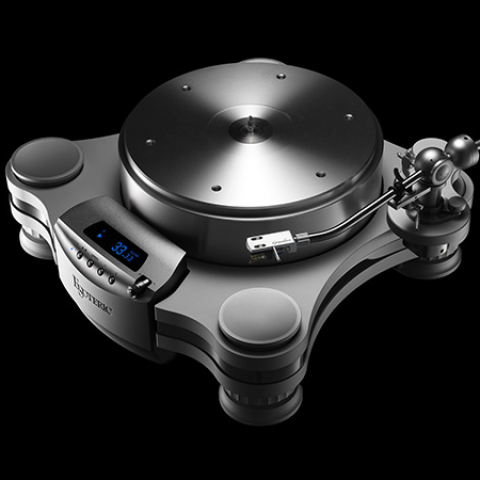
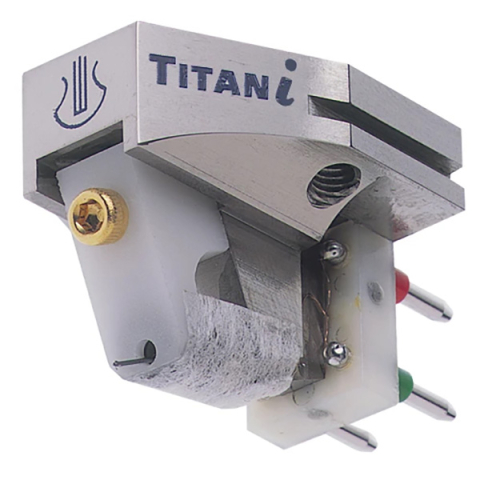
Vinyl lovers will also require an extra minute or two to get going, as the P 5's single pair of phono inputs can be optimized by means of a three-position toggle switch on the rear panel. Two of the three settings are intended for moving-coil cartridges—one provides a load impedance of 100 ohms, the other 47k ohms—while the third setting, for moving-magnet cartridges, also offers the 47k ohm load. Although phono-section gain is not specified in either the P 5's manual or on Parasound's website, I noted that both MC settings provided more than enough gain for my EMT TSD 15 pickup head, which outputs 1.05mV.
Footnote 1: From Clapton's Guitar: Watching Wayne Henderson Build the Perfect Instrument, by former Stereophile record reviewer Allen St. John (New York: Free Press/Simon and Schuster, 2005).
Footnote 2: Perhaps some day there will exist a very high-quality mono preamplifier that incorporates a stereo bypass circuit.
Parasound describes the Halo P 5 as a "2.1-channel stereo preamplifier," hinting at its suitabilities for use in both a stereo music system and a home theater. The latter is presented in a number of ways, the most apparent being its home-theater bypass circuit, by means of which one can add the P 5 to a multichannel system with a surround-sound receiver or processor, to optimize two-channel listening (footnote 2). (For this to work, the surround-sound component in question must have line-level outputs.) Usefully, whenever the P 5 is switched off, its home-theater bypass is automatically selected, so that the surround-sound system can still be enjoyed without additional drudgery.
Also of interest to home-theater enthusiasts, the Halo P 5 has line-level outputs for up to three powered subwoofers—the third output is an XLR socket for balanced connection—all of which present the same mono signal and are controllable by means of a front-panel subwoofer level control. Additionally, the P 5 includes an analog crossover comprising a low-pass filter for the sub(s) and a high-pass filter for the main outputs. Both filters are user-controllable by means of small potentiometers on the rear panel, each with a range of 20–140Hz. The crossover's usefulness, of course, is limited to systems whose subwoofers include defeat switches for their own, internal crossovers; perhaps needless to say, the P 5's subwoofer filters are switchable.
Otherwise, the Halo P 5 is optimized for serious music listening, right down to its front-mounted bass and treble tone controls, and a tone-defeat switch for removing them from the signal path. The front panel also sports a nice-feeling rotary switch for source selection, accompanied by a clearly marked row of indicator lights, and an exceedingly smooth, undetented volume control. I was mildly disappointed by the lack of a mono switch but cheered by the presence of a 3.5mm input jack, the latter tailored, by means of an extra gain stage, for use with the analog output of an iPod or similar device. And although I own neither a balanced-out source component nor a balanced-in amplifier, I was impressed that the Halo includes a single pair each of balanced input and output jacks.
Owing to a combination of well-labeled controls and a notably clear instruction manual, the Halo P 5 was a breeze to set up. Adding to that ease was the simplicity of this particular installation: I, who own neither a subwoofer nor a surround-sound component—or even a television set that was made in this century—was offered the chance to review the P 5 as a two-channel product in my two-channel system. The remaining 0.1 channel must await another day and another writer. That said, two aspects of the Halo P 5's operation do require special mention, the first being its built-in D/A converter, which is addressable by means of optical, coaxial, or USB connections. With either of the first two choices, the Parasound DAC functions at word lengths and sample rates up to 24 bits and 192kHz, respectively (the chip at its heart is Burr-Brown's 24-bit, 192kHz-capable PCM1798 DAC), but offers only 24/96 performance when the incoming datastream arrives by USB.
Footnote 1: From Clapton's Guitar: Watching Wayne Henderson Build the Perfect Instrument, by former Stereophile record reviewer Allen St. John (New York: Free Press/Simon and Schuster, 2005).