I have a Slatecolumn today, an appreciation of Max Roach, who died last week at age 83. (Sometimes my editors let me break away from war and peace, though I have one of those columns today, too.) The headline writer has me calling Roach the “greatest drummer” in jazz. I think Billy Higgins was probably better, but I didn’t make a fuss. In any case, all great jazz drummers who came up after the mid-1940s, Higgins included, leaned or built on Max Roach’s innovations. Listen to the sound-clips that I link to in the column, and be sure to watch the YouTube clip toward the end. If you didn’t know before, you’ll see and hear what we’re all now missing.
Sky Blue, Maria Schneider’s sixth album in 13 years, is at once her most ambitious and most fulfilled, a sweeping, gorgeous work about memory, dreams, love, life, death, the joys of birding…but I’m getting ahead of myself.
I am hereby boycotting Keith Jarrett. It’s a shame. He’s one of the great jazz pianists, but he’s just become too big a jerk—and, at a time when America has an ugly image in the world, a dreadful ambassador. Here’s
footage of him cursing Italian jazz fans for taking his picture as he approached the stage, before he even started playing, at the Umbria Jazz Festival. These are people who paid over $100 for what he called the “privilege” of hearing him play. There are polite ways to ask people not to take pictures. You don’t have to treat them like scum.
It was no surprise that Charlie Haden and Kenny Barron struck such rich chords Tuesday night at the Blue Note, the first in a series of duet concerts that Haden, one of the great bass players in jazz, is headlining—six nights, four different pianists—at the club in Greenwich Village. Haden is best known as the bassist in Ornette Coleman’s original quartet, but it’s a mistake to tag him as a “free jazz” musician, in the usual sense. Above all, Haden is a romantic—he loves ballads and waltzes, he plucks a thick, juicy tone—and Barron is a lush balladeer. A few moments in the opening set didn’t quite click (maybe because Haden, now 70 but still youthful, recently had a hernia operation), but most of it did, Barron cruising triplets on the keyboard, Haden responding with undisguised but tightly harnessed emotion. The duet recording he and Barron made several years ago, Night and the City, seems a simple pleasantry if you play it in the background, but listen closely, there’s so much intricacy between the two—and yet, at every level, the music above all delights and charms.
I have a story in the Arts & Leisure section of today’s New York Sunday Times about Charles Mingus and Art Pepper—specifically about the happy accident that these two famously self-absorbed jazz legends married women who became equally absorbed in preserving their legacies.
My first entry in this blog, six weeks ago to the day, was a news flash that Sonny Rollins, the greatest living improviser in jazz, will play at Carnegie Hall on Sept. 18 in a trio with the monumental drummer Roy Haynes and the agile bassist Christian McBride—a one-night stand that no jazz fan could stand missing.
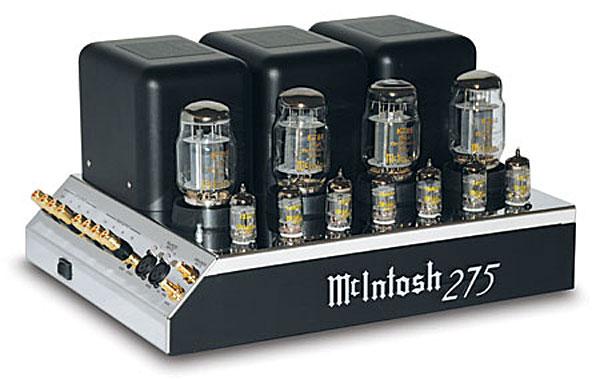
There's something a bit oddball about the notion of a $16,500 integrated amplifier—until you stop to consider that the market is fairly drenched with preamps and power amps that, together, cost that much and more. And putting both pre- and power amp in a single chassis cuts down on storage (one less shelf), accessories (one less pair of cable), and electrical outlets (one socket freed up).
The ad team at Dolce & Gabbana seems to think it can be. Would Charles Mingus’ “Moanin’” become a best-seller if more people knew it sounded so cool—or if the millions who watched this TV commercial knew that’s what they were hearing? Could it be that jazz just needs shrewder marketing? (The whole song can be heard on Mingus’ great 1959 album, Blues & Roots.)
Jason Moran finished a week at the Jazz Standard in New York City last night and confirmed his standing, at age 32, as the jazz pianist of our times. A few years ago, I saw Moran playing in duet at Merkin Hall with Andrew Hill, one of his mentors, more than twice his age. Afterward, a friend of mine, a trumpeter just a little older than Moran, made a sharp observation about their respective generations: Hill, a leading avant-gardist from the ‘60s then undergoing a renaissance, played in one style, his style; Moran played in many styles, all styles. Though he didn’t put it in these terms, Hill (who recently died of cancer) was the jazz equivalent of an abstract expressionist painter (say, Franz Kline or Robert Motherwell), while Moran is the supreme post-modernist (say, Robert Rauschenberg) who appropriates everything around him, including ready-made objects, and somehow makes it all his own.