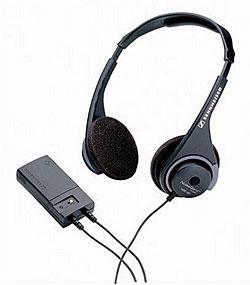
Drum me out of the High End if you must, but I have a shameful confession to make: I love headphones. I know, I know, I'm supposed to preface my comment with a lofty disclaimer, such as, "Of course, given my refined sensibilities, I could never derive satisfaction from such a compromised listening apparatus, but many of you seem to enjoy them." Well, pardon me for saying so, but pfffftttt!
I love being seduced. I'm shocked to learn that not everyone does. The very qualities in live music that excite and intoxicate me are denigrated by many audiophiles as "colorations." It would seem they prefer the lean, chilly sound that they've dubbed "accurate." While I concede that almost all of their preferred audio components have ever-more-extended high frequencies, I'm not certain that that's the same thing as having greater accuracy. It sounds to me—to use Stravinsky's description of electronic music—"spayed for overtone removal." The overtones that I miss are those stripped from the middle ranges—the ones the clinical crowd (footnote 1) disparagingly refers to as the "warmth" region.
The Krell KRC-2 can be regarded as a remote-controlled successor to Krell's successful KSL preamplifier of a few years back. The outboard Krell Phono Equalizer (KPE) is a separate box powered from the KRC-2. Priced at $850, it contains a printed circuit board very similar, in fact, to the $499 unit that can be fitted within the KRC. The KPE and KRC phono stages are well-designed universal units; if someone has the need for a stand-alone phono equalizer of Krell KRC standard, a separate power supply may be purchased for the KPE. It is also an advantage to be able to locate the KPE head amplifier in a hum-free zone near the LP turntable.