Any difference that is at all audible must be treated as though it is huge!" John Atkinson declaimed, as Tom Norton and I rolled on the floor laughing. It was a slow day around the Stereophile offices, and the startlingly huge differences that our colleague was describing did strike us as rather piddlingso John began stentorophonically reciting rules from a mythical Guidebook for Audio Reviewers to gales of laughter all around.
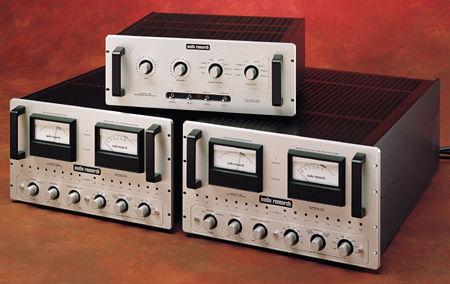
They say you never forget your first time. For me, it was an Audio Research SP-6B that had been heavily modified by Analogique in NYC—which meant, among other things, that yellow capacitors shunted other yellow capacitors all the way up to the top plate. That first taste of the High End—prior to that, you might say my face had been pressed against the window—was definitely love at first listen. That SP-6B was warm yet detailed, and I ended up building a system around it that at least one friend described as a huge musical wet kiss.
It's cheating to say that the best sound I've heard at the English Show was at Martin Colloms' house on Saturday night---cheating the same way it is when someone asks that question and I (or some other reviewer) piously responds that some live music event ranks above any exhibitor. Martin, of course, has an advantage over anyone at the Show. He set up his own listening room and had all the time he needed to boot. Even so, his system, consisting of a Krell KRS-25 and FPB 650Ms and Wilson Audio WITT IIs, was astoundingly fast, rhythmic, and dynamic.
Are there differences between an American hi-fi show and the British variety? A few---the biggest is the extent to which all the real business takes place at the bar. This is true for the audio press (okay, not all that different from an American show), but it's true for manufacturers as well. After Show hours, the boozer is jammed with everybody in the business sharing a few pints, smoking, and talking shop. It's not unusual to see business rivals chatting amiably about the state of the industry---and even discussing distribution in some detail.
Wandering around the halls of the Heathrow Renaissance Hotel, I saw and heard a lot more affordable audio on display than I've seen at most American shows. This makes sense. After all, this is a consumer show (or it will be tomorrow---yesterday and today were trade days), and, while consumers want to fantasize about the state of the art, they also like to see kit they can actually own. Me too.
The HI-FI Show 98, the sixteenth put on by UK audio magazine Hi-Fi News & Record Review, sedately opened its trade days this morning in the Renaissance and Excelsior hotels on Bath Road near London's Heathrow International Airport. No, that's not a change in venue, it's yet another name change for the hotel that first hosted the "Penta Show" and, more recently, the "Ramada Show." However, this year's show will be the last at the site, as the new owners do not seem interested in hosting large-scale events at all. Next year the show will be moving---to a destination that nobody's revealing in advance of Friday's official announcement.
You can read all about an automobile, check its gear ratios, and ponder the engine's horsepower all you want—but until you put yourself in the driver's seat and take that baby out for a spin, you have no idea whether or not it's going to be fun to drive.
Back when the CD was a pup, I used to hear people say, "I refuse to buy a CD player until they can record." Ha ha, I thought, smart-ass audiophile that I was, they're gonna wait for a long timethat's never gonna happen. I was half rightit has been a long time coming. But I was also, as my football coach used to insist, half-fast. "Never" has arrived.
I was watching Mr. Holland's Opus on the tube the other day and was surprised to find myself teary-eyed, even though the film lost me by subjecting me to Michael Kamen's atrocious "symphony" in the finale. Why had I become all choked up? Because I had a Mr. Holland of my own.
"Them which is of other naturs thinks different," said Martin Chuzzlewit's Mrs. Gamp. If that is true, then Naim's Julian Vereker must be of a very different nature indeed. Vereker—and, by extension, Naim—has never done things the conventional way. Take, for example, power regulation and stiffening power supplies. Long before the rest of the world was taking them seriously, Naim offered upgrades to their components not by changing the audio circuitry, but by adding stiffer and stiffer outboard power regulation.