I have always been a dyed-in-the-wool vinyl fan, committed to the superiority of analog over current 44kHz/16-bit CD technology. Nevertheless, I have been surprised at how greatly the sound of CD has improved over the past 10 years. By 1994, digital had gotten much closer to analog than I had ever expected, which was a good thing, as 1994 also saw the disappearance of the LP as a medium for obtaining new releases of mainstream recordings. But over the last two years, I've noticed some interesting phenomena: More turntables, tonearms, and cartridges started to become available, at least in the high-end arena. Audiophiles and, to a lesser extent, segments of the general music-loving public, began clamoring for new vinyl releases. Specialty labels, such as Classic Records and Acoustic Sounds, started to reissue premium vinyl releases of classical, jazz, and pop classics at reasonable prices. And major labels again began to offer vinyl versions of major pop releases.
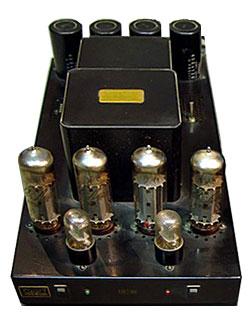
Although I'll be spending most of my time at Stereophile reviewing affordable gear, I will from time to time examine so-called "trickle-down" designs from high-end designers who have made their mark in the upper-price echelons. More and more, such designers are taking what they've learned and applying it to less-expensive products in order to broaden their customer base. Cary Audio Design, for example, of single-ended triode fame, has entered the ring with the SLM-100 pentode monoblocks.
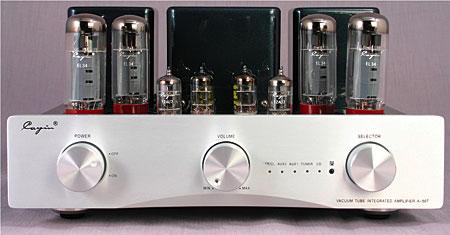
Late in 2006, I was watching John Atkinson set up a pair of DPA cardioid microphones in front of the stage of New York City's Otto's Shrunken Head to record a performance of my jazz quartet, Attention Screen (footnote 1). Before the first set, Wes Phillips approached me. "Bob, I found a piece of equipment you must review—the Cayin A-50T integrated amp. It's only 1300 bucks and you'll love it!"
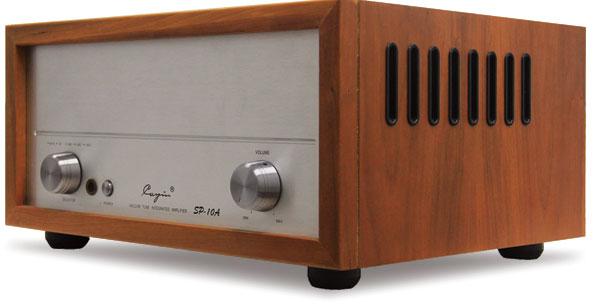
Stereophile has reviewed two integrated amplifiers from Chinese manufacturer Cayin in the past: the A-50T, which I wrote about very positively in March 2008, and the A-300B, which Art Dudley reviewed in February 2007. So when I read about Cayin's $2195 SP-10A integrated amplifier, which has a wood-covered sleeve, just like the old Marantz and McIntosh gear and offers 38 watts of push-pull power, in our coverage of the 2008 CES, I put in on my must-write-about list.
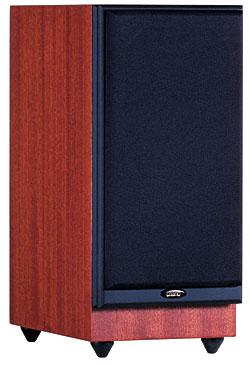
In my reviewing career, except for fleeting listening sessions at the occasional audio show, I've had little contact with products from the Italian loudspeaker maker Chario. When asked if I'd be interested in reviewing an affordable bookshelf speaker from them, I did some research and discovered that Chario is distributed in the US by Koetsu USA. Well, with that kind of pedigreeI'm a loyal owner of two Koetsu Urushi cartridgesI thought I'd better give the Premium 1000 ($1015/pair) a careful listen. A few months later, I was tucking in to a pair of review samples.
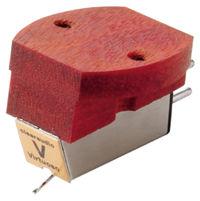
There is no better time than now to invest in audiophile-quality vinyl playback gear. I'll bet even Mikey Fremer would be surprised at the amount of new vinyl releases and reissues and used vinyl available to music-lovers today. And the choices available to audiophiles seeking turntables, tonearms, phono cartridges, and phono preamps is greater than it's been in a decade.
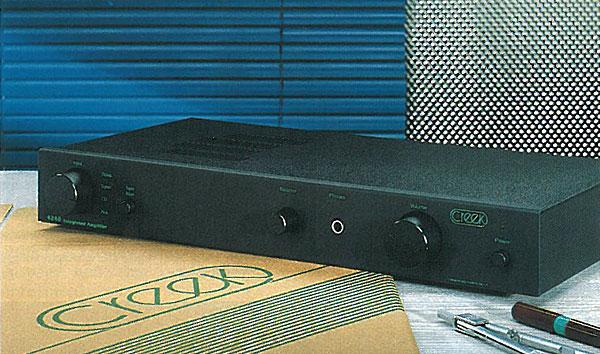
Creek Audio founder/designer/co-owner Michael Creek is a quiet, friendly, unassuming man. Unlike some ego-driven electronics designers who tout their products very loudly from their pulpits, Michael Creek has been quietly designing high-quality, musical, and affordable integrated amps in black-metal boxes for nearly 20 years. His target market is the passionate music-lover who wants something a notch above an entry-level NAD or Rotel receiver, but whose bank manager would frown on splurging on electronic separates.
The one thing I've liked about designer Mike Creek of Creek Audio as much as his design talent is his predictability. I've been following his integrated-amplifier designs for nearly 20 years now, having reviewed, in sequence, the CAS4140s2 (for another magazine), the 4240SE (Stereophile, December 1995, Vol.18 No.12), and the 5350SE (March 2001, Vol.24 No.3). In each case, I was sufficiently impressed with the review sample that I bought it and made it my new reference in my second, affordable system. The predictable part comes from Creek's traditional nomenclature: an "s2" or "SE" (Special Edition) designation has always denoted a modest upgrade, and a numerical uptick in the model number a more significant upgrade, the level of significance denoted by the specific digit being increased. Hence, the update from 4240 to 5350 is intended to indicate a greater improvement in sound than the update from 4140 to 4240.
When I review an affordable loudspeaker, first impressions are important. Once I've unpacked the speaker, noted the quality of its construction and finish, and have complimented or grumbled about the ergonomics of its five-way binding posts, I fire 'er up and give 'er a first listen. Occasionally, the sound will put a smile on my face, either because I'm impressed with the amount of uncolored detail emanating from such an affordable product, or because the speaker sounds so sweet that I'm intoxicated.
I thought I'd review the procedure I typically use to seek out affordable speakers for review as, in the case of the Denmark-designed DALI Zensor, made in the company's facility in China, there was a twist at the end.
In preparing to review affordable loudspeakers, I typically put together a list of potential candidates I've discovered at audio shows, or that have been recommended to me by other Stereophile writers. I add to that list products I've learned about from press promotions, usually from companies whose products have impressed me in the past. I boil this down to a short list, then run it by Stephen Mejias to make sure I'm not tripping over The Kid's own quest for budget sonic nirvana.