Stereophile editor John Atkinson said one evening in 1995, "What I find fascinating is that, in an industry as mature as audio cables, a new company can appear out of the blue and upset everything." He was gently poking fun at my admission that I found cable design fascinating, in particular the practice of combining different conductor materials.
I've had the pleasure of using The Direct Line Stage Line Stage (originally called the Director) from Ron Sutherland for the past few months. This active line-stage preamp (it has no phono section) is available from Acoustic Sounds for $3000.
It seemed a simple and obvious question, but I couldn't get an answer out of Ron Sutherland. Why did his new 20/20 phono preamp use an AC power supply instead of batteries? I asked directly, I asked repeatedly, I tried framing the question in different ways, all to no avail. Did the AC supply make it sound better? Was it less expensive to build? Were potential customers turned off by having to replace batteries once every year or two?
Saying that Sutherland Engineering builds a nice line of phono stages is like saying that the Porsche 911 Carrera is a nice line of sports car. The Sutherlands all share common design philosophies, features, and sonic attributesbut just as ramping up from Porsche's classic Carrera Coupe ($78,000) to the GT3 ($115,000) or the Turbo S Cabriolet ($172,000) increases the level of performance and distills the Porsche experience down to its essence, ascending the Sutherland line from the PH3D ($1000) to the 20/20 ($2200) to the Hubble ($3800) buys more of what Ron Sutherland is all about.
Ron Sutherland has devised the Timeline, a device for testing the 33.33 and 45rpm speeds of turntables. It's housed in a disc of aluminum and Delrin that fits over the platter spindle. Turn it on, and an LED shoots a red dash of light at the wall (if there is one) behind your turntable. If the dash doesn't move, the speed is correct. If it drifts to left or right, you'll need to adjust the 'table's speed. Unless your wall has hash marks, there's a bit of subjectivity involved, and at $399 the Timeline isn't cheap, but Sutherland says he's not making much money at that price, and that it will take a lot of sales to recoup the R&D he's put into designing something as precise as he claims the Timeline is.Michael Fremer
The $3000 moving-coil (MC) PhD, available from Chad Kassem's Acoustic Sounds operation, is a monumental achievement that, for me, sets new standards for the cleanness and transparency possible in a phono preamp—and I've had a lot of experience with phono preamps.
On the occasion of a recent major birthday, my significant other, Bonnie, gave herself a "mid-life crisis" present—a beautifully restored, bright yellow Porsche 911. She'd spent the previous several weeks wading through reference books to figure out exactly which year and model she wanted, and each night we'd discuss the pros and cons of various models, options, and points in the 911's +30-year evolution. Bonnie explained to me that, throughout its production run, the 911 maintained the same basic design and a consistent set of engineering goals, but was continually updated and refined. In her mind, the 1973 Targa was the one to have, the last and fastest of the lightweight 2.4-liter models.
When I describe the Thiel CS7.2 to friends, the word that gets the biggest reaction is "simple." Veteran audiophiles protest, noting the big Thiel's multiple drivers, complex cabinet, and elaborate, zillion-element crossover. Nonaudiophiles just glance at the 5'-tall speaker, smile sympathetically at Bonnie, and roll their eyes.
I had a wonderful audio moment the other night. It was late in the evening, after a long day. I was standing in the middle of my makeshift listening room—Trish's dining room—and in spite of the fact that we were moving in just a few weeks, I'd just unpacked and set up my combo of VPI TNT Mk.V-HR turntable and tonearm with Grado Statement cartridge and dug a box of LPs out of the stacks in the garage. I cued up Dave Brubeck's Time Out (Columbia/Classic CS 8192), and the first notes of "Blue Rondo à la Turk" froze me in my tracks.
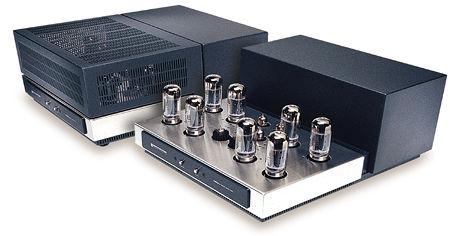
Should an audio component accurately reproduce the signal it's fed, or should it evoke the sound and feel of live music? Accuracy or musicality? This question has been at the heart of high-end audio since its inception. Back then, the question often took the form of the tubes-vs-transistors debate. Proponents of solid-state pointed to the far superior measured performance of transistor designs, and claim that they thus more accurately reproduced the input signal. Tube lovers steadfastly maintained that their gear sounded better, more naturalmore like music. Since then, both camps have eliminated the obvious colorations of their respective technologies, and the levels of performance of today's best tubed and solid-state gear have converged. At the same time, the circuits themselves have blurred into hybrids of various sorts, different mixes of devices and circuits.