Computer Audio Reviews

Sort By: Post DateTitle Publish Date

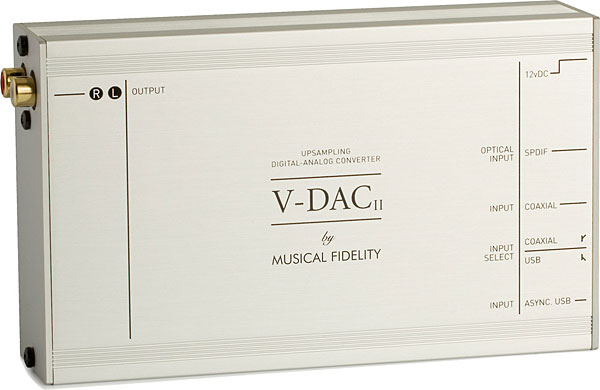
Musical Fidelity V-DAC II D/A processor

There's so much uncertainty and confusion surrounding computer audio and high-resolution downloads. Which hi-rez formats will win out? How do you store the downloads you've bought? (Easy. Don't buy them.) How do you access them? Will digital rights management (DRM) cramp your style, or data-storage fees for cloud computing crumple your wallet?

The Fifth Element #69

I've been reading a fascinating book, Leonard Shlain's The Alphabet Versus the Goddess: The Conflict Between Word and Image (New York: Viking, 1998). Shlain's thesis is that the invention of the alphabet was the cause of immense changes in primitive society, upsetting previously widespread norms of gender equality and horizontal (rather than hierarchical) social relations in general.

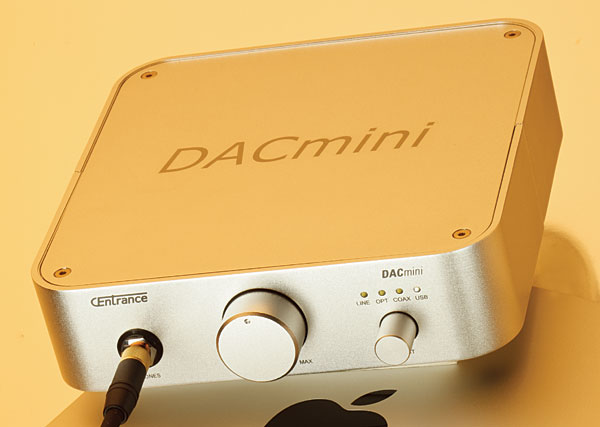
CEntrance DACmini CX D/A converter

Sure, Stereophile gets letters to the editor. We also get some colorful responses for our "Manufacturers' Comments" section. (Vince Bruzzese and Roy Hall are literary standouts among their component-making peers.) And, as one of the magazine's Contributing Editors (Audio), I get lots of personal mail from readers seeking my advice. I thought I might share some of these letters with you, and my responses.

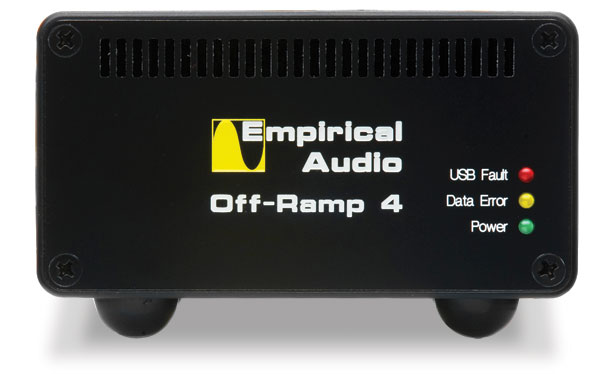
Empirical Audio Off-Ramp 4 USB format converter

If an audiophile visiting an audio show in 1991 were to have been transported two decades into the future, at first he would not be aware of any difference: A two-channel system would be playing in a hotel room. But on closer inspection, he would notice that the CD player, the ubiquitous source 20 years ago, would be conspicuous by its absence. Yes, there might be a turntable—"Good to see that people are playing LPs in the future," he would think—but why is there a PC in the room?

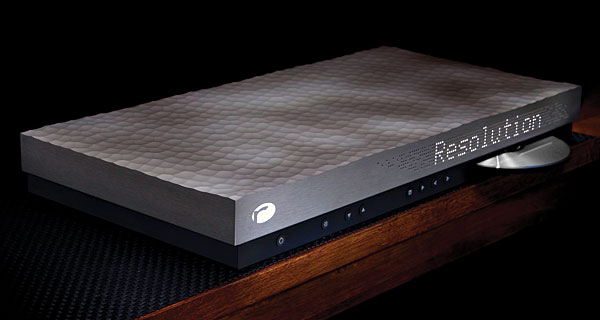
Resolution Audio Cantata Music Center

The dual subwoofers were bumping and our pant legs were flapping. Only moments before, we'd been treated to a polite viola da gamba. Not now. Resolution Audio's designer, Jeff Kalt, had brought only two discs with him to ensure that his company's Cantata Music Center was functioning properly in my system: Jordi Savall and Hespérion XXI's Altre Follie, 1500–1750 (CD, Alia Vox 9844), and Tool's 10,000 Days (CD, Tool Dissectional/Volcano 81991). After changing a few things around with the chamber music, we'd advanced to the hard rock of Tool.

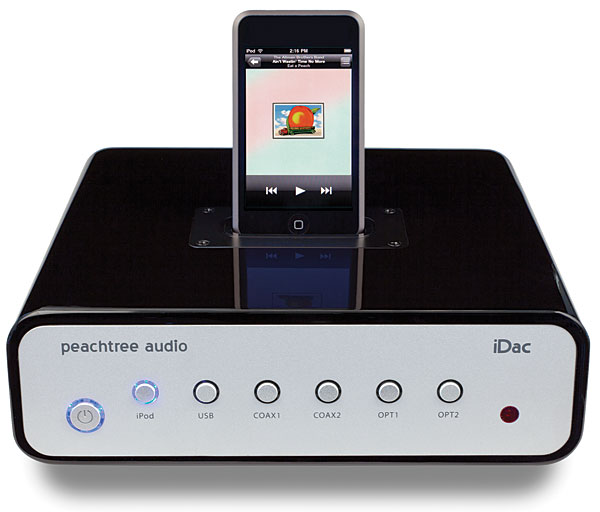
Peachtree iDac D/A converter

Oh boy, another new DAC review. Some folks think DACs, once you get past the features, all sound pretty much the same. I mean, it's just digital. Well, they're right. Pretty much. Just as two new cars of a particular make, model, color, and options package both look the same, sitting there on the lot.


But if you discover a ding in the door of one of them, where most folks still see only a new car, you now see the ding. It might have been there all along, undetected the first few times you walked around the car—maybe your buddy even had to point it out to you. It's insignificant in the scheme of all that a new car is, but once you've seen it, you always see it. Now you can easily tell the two cars apart, and we both know which one you'll drive home.

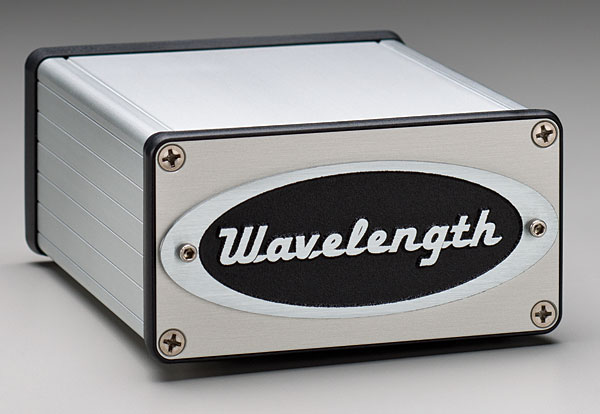
Wavelength Audio Proton USB D/A converter

I don't remember where I was when the Berlin Wall came down, and I already don't remember what I was doing when Liz Taylor died. (I suppose I was busy not thinking about Liz Taylor.) But I do remember when USB-based computer audio became a serious medium: That was when Gordon Rankin, of Wavelength Audio, introduced asynchronous data streaming, with his proprietary Streamlength software. After that, things picked up speed.

Listening #103

As metaphors go, the silver bullet is somewhat ambiguous, given that it's used to represent both the reliably destructive and the reliably beneficial. (Who would have guessed that an idea from a Lon Cheney Jr. film would prove too subtle and complex for people in the 21st century?) Nevertheless, at Montreal's Salon Son et Image on April 2, those of us who comprised Stereophile's reliably responsive "Ask the Editors" panel—John Atkinson, Robert Deutsch, and I—volleyed it with the sort of sprightly, vernal abandon that is the sole province of men with gray hair. To wit: We agreed that no materials, technologies, or design decisions can either guarantee or prevent good sound. Not vinyl. Not star grounding. Not class-A circuits. Neither tubes nor transistors. Neither belt nor idler nor electrostats nor multiway nor single-driver nor copper nor silver nor silk nor beryllium. Not even harmonic distortion. Each of those ideas may mean something to someone, in the short term, in the narrow view, but that's all. There are no silver bullets.

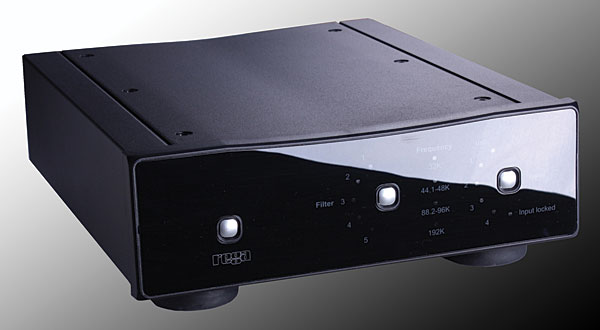
Rega DAC D/A processor

"We like to make things," Roy Gandy, Rega's founder and owner, once told me. "It's what we do." Or maybe it was Rega's chairman and chief engineering honcho, Terry Bateman. Rega products are designed and manufactured in the south of England. So far as I know, no one at the Rega facility, on the Temple Farm Industrial Estate, has committed suicide; the same cannot be said of workers at the factory in China where iPods are made. Al Gore is on the board of Apple. Al, what do you think?

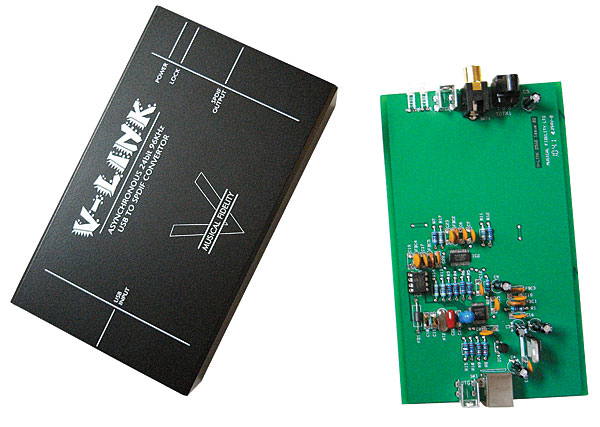
Musical Fidelity V-Link USB-S/PDIF converter

A computer is not optimized for the uninterrupted streaming of audio data. It has rapidly become established wisdom, therefore, that the optimal means of extracting audio data from a computer's USB port is to operate that port in what is called "asynchronous isochronous" mode. This lets the receiving device, such as a digital-to-analog converter (DAC), control the flow of data from the PC. In theory, asynchronous USB operation (not to be confused with the asynchronous sample-rate conversion used in some DACs) reduces jitter to unmeasurable levels, depending on the accuracy of the receiver's fixed-frequency oscillator, which is used to clock the data to the DAC. By contrast, in the alternative and almost ubiquitous USB operating mode, called "adaptive isochronous," while the sample rate of the output data, averaged over a longish period, will indeed be the specified 44.1 or 48kHz, there will be short-term fluctuations, or jitter, due to the oscillator having to change its frequency every millisecond to match the uncertain rate of data flow from the PC.

Advertisement
Advertisement
Advertisement