Phono Cartridge Reviews

Sort By: Post DateTitle Publish Date

Gramophone Dreams #78: The EMT Experience

If you've read any of my previous Dreams, you no doubt realize that I am an empiricist by trade—that I believe in the value of relaxed, mindful observation, especially if my solitary observances are independently corroborated by others. Whenever possible, I test my observations by getting either the Spin Doctor, the Audiophiliac, or my Russian neighbor to listen and tell me what they notice. If they notice the same things I noticed, independently, I relax. Corroboration is important because when I submit a review, I have an obligation to get it right. I need to be confident that readers, when they listen, will likely hear the same thing I heard, for themselves.

Gramophone Dreams #76: Lounge Silver Copla, Grado Platinum3 High, Benz Gullwing SLR, Shure V-15 Type III

I'm going to tell a story about blind listening, because it illustrates what I consider the most important issue in today's audiophile environment. I'm going to skip the names of the participants because you probably know them. And I'm not going to name the components, because their role in this story is merely as symbols of their type. Here is what I'll reveal: We were playing LPs through an expertly curated, six-figure–priced sound system in a largish room that suited the large speakers perfectly.


The occasion was a "listening party" at a friend's apartment. The guest list included me and four of the most experienced listeners I know. The plan was for everyone to nosh lightly, drink good wine, and weigh in on a new, unnamed, not-free low-output MC phono cartridge, only available on a limited, made-to-order basis.

Brilliant Corners #5: High Water Sound; TW-Acustic Raven GT2 turntable; Dynavector Te Kaitora Rua & Miyajima Shilabe phono cartridges

"New York is an ugly city, a dirty city," John Steinbeck wrote in 1953. "But there is one thing about it—once you have lived in New York and it has become your home, no place else is good enough." Decades later, the novelist's insight about this appalling, incomparable city still feels true. New Yorkers love to complain about the summers, with their wafting miasma of hot garbage and urine; about the superannuated subway system, which only sometimes resembles a psilocybin trip gone really wrong; about the purgatorial agony of finding an apartment; about the affronts of existing shoulder-to-shoulder with the stupendously rich. . .


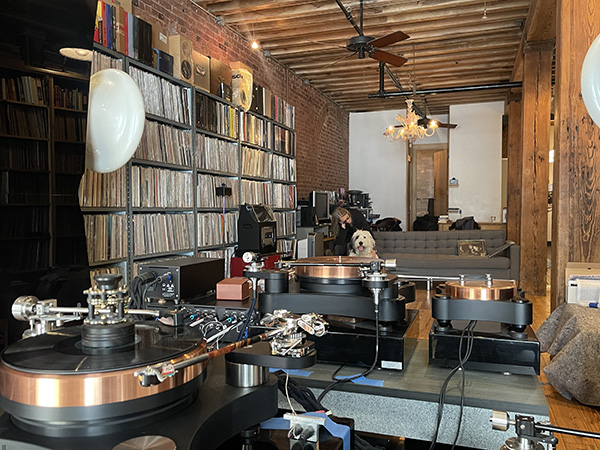
What I'm getting around to saying is that easily the best part of living here is the people. One of them is Jeffrey Catalano, who has been a drummer, painter, DJ, and construction worker and today runs a hi-fi business, High Water Sound, from a loft in a former sail-making factory on Water Street in Manhattan's financial district.

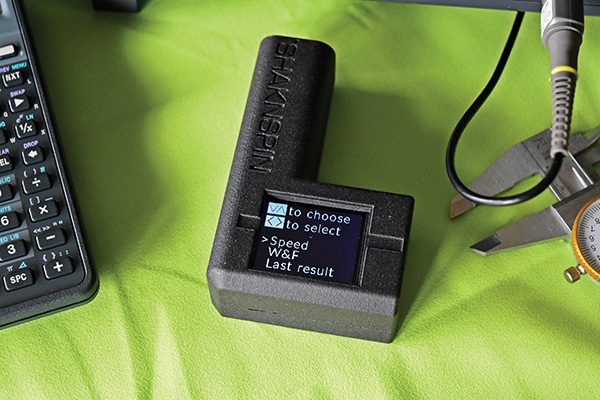
Spin Doctor #1: Shaknspin2 & Miyajima Kotetu Mono Phono Cartridge

Over the last 40 years, I have set up or serviced literally thousands of turntables, and during that time I have seen a lot of increasingly sophisticated tools become available to help in getting your turntable optimized. I've had my eye on the Shaknspin speed analyzer since it was launched a couple of years ago, and now there's a new Shaknspin2, which promises more accurate results.

Gramophone Dreams #70: Sutherland Engineering SUTZ & Lounge Audio Copla headamps, Dynavector DV-20X2 & XX-2 MKII phono cartridges

As an upstart journalist-flâneur, my basic urge is to step on the gas and let my '54 Buick careen down the freeway, crashing into guardrails on both sides. Old Buicks were built for that, and I would love to take readers on one of those kinds of rides.


But when I write this monthly column, I find myself aiming for a different feel, more like driving cross-country in a '70s Ford station wagon, documenting motels and gas stations. A trip where it's fun to roll easy, take in the views, and stop at every car museum, snake farm, and stalactite cave.


This month, I'm going to put some miles on the Ford's odometer as I investigate the effects of Ron Sutherland's newest current-drive creation: a $3800 transimpedance moving coil headamp called the SUTZ. Along the way, I will also re-review Dynavector's $1250 DV-20X2 moving coil cartridge and examine what might be the sweetest spot in Dynavector's cartridge lineup: the $2150 XX-2 MKII.

Gramophone Dreams #67: Grado Platinum3 and Goldring Eroica H phono cartridges; Herbie's Way Excellent II turntable mat


In last month's Gramophone Dreams, I explained why doing any sort of empirical study of high-quality digital sources was extremely difficult. That any success I might achieve as a reporter would boil down to my ability to employ metaphors to describe a DAC's clarity and dynamic personality. Concocting metaphors for DAC reviews is risky because it assumes readers will be familiar with the sound of my amplifier and speakers and, ideally, with one of the DACs I'm using in the comparison. That's a lot to assume.

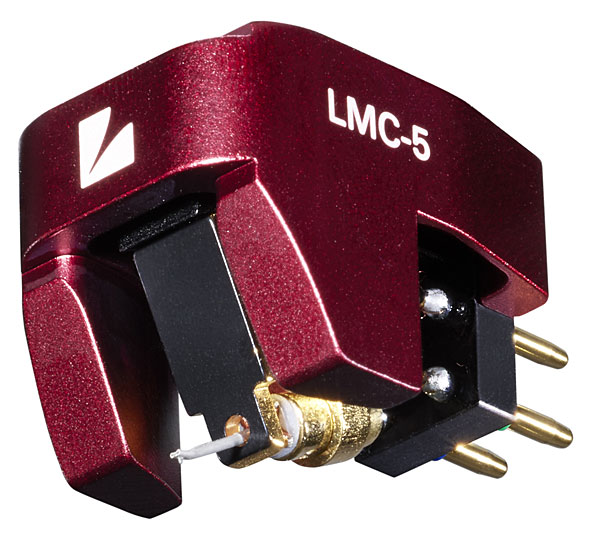
Luxman LMC-5 moving coil phono cartridge

Since 1925, Japan-based Luxman Corporation has manufactured high-quality integrated amplifiers, preamplifiers, power amplifiers, phono stages, turntables, and, more recently, DACs and CD players. But it has been 40 years since Luxman introduced a new phono cartridge; the last one was the LMC-2 in 1982, released just after 1981's LMC-1. That dry period ended with the introduction of the Luxman LMC-5 ($2695).

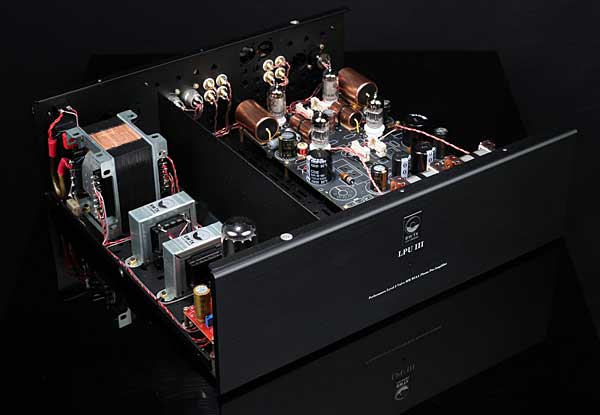
Analog Corner #324: Phono Cartridge Standards, SW1X LPU III Balanced phono preamplifier, Sumiko Wellfleet phono cartridge

Whenever I do turntable-setup seminars, I complain to the participants about the lack of cartridge-pin diameter and clip-opening standards. Anyone who does their own setup has experienced it: The connection is too tight or too loose. Forcing the clip onto the pin usually results in a broken-off clip that most end users don't have the soldering skills needed to repair; in the worst case, it can even result in damage to the cartridge when you try to remove the clip from the pin.

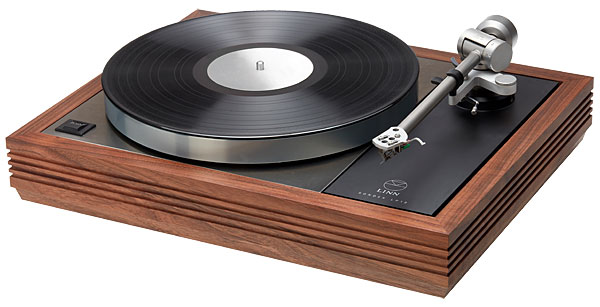
Linn Klimax LP12 Record-Playing System

Playing records is a delight-filled chore. The simple, quiet act of lowering a tonearm places one's mind at the ready for something marvelous to happen. Surely, this gentle ritual initiates a higher mode of psychic connectedness than poking absentmindedly at a side-facing equilateral triangle on a piece of cheap plastic.

Analog Corner #321: EMT JSD Novel Titan MC cartridge, Fozgometer V2, Mat Chakra, WAM Wallyscope

Let's get right to it: The best way to set azimuth, as I recently wrote in this space, is to measure crosstalk using either a high-quality voltmeter or a digital oscilloscope and a good test record like Analogue Productions' The Ultimate Analogue Test LP (AAPT1). The traditional, qualitative procedure—setting the headshell so that it's parallel to the record surface—assures only cosmetic satisfaction.
Advertisement
Advertisement
Advertisement