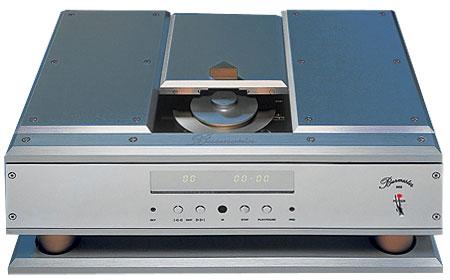
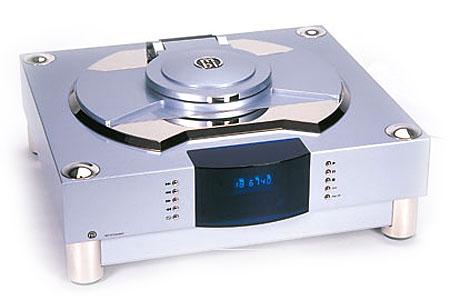
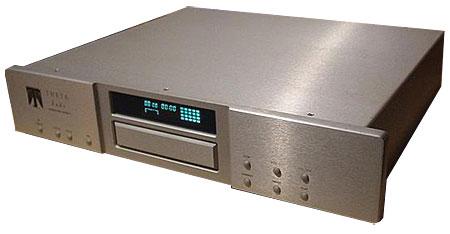
When the Compact Disc was first introduced nearly ten years ago, many were critical of the sound quality from this medium that promised "Perfect Sound Forever." To many sensitive listeners digital playback was a travesty that paled by comparison to even modestly priced turntable/arm/cartridge combinations. Ironically, those listeners who first praised CD sound have been forced to recant when confronted by the huge improvements in digital to analog conversion (and A/D conversion) seen in the past few years.
"I don't like Mondays!" sang Bob Geldof some years back, and I'm beginning to hate Mondays too. No, not for the obvious reason. You see, Monday is "hate-mail" day. Every day I get letters from Stereophile's readers. But for some reason known only to the mavens (or should that be Clavens?) of the US Postal Service, the ones pointing out my stupidity, dishonesty, and sheer incompetence as a human being arrive on Mondays.
For example: "Bits are bits, and it is therefore dishonest for Stereophile's writers to continue to insist that they can hear any differences between CD players or digital processors!" recently wrote an angry reader, canceling his subscription. (They always tell me they're going to cancel their subscription.) "Yeah, right!" thought I, having just sat through a comparative audition of, would you believe, digital data interconnects in Robert Harley's listening room. Some of the differences I heard were not trivial. They might even be audible in a blind listening test.
The face was different, but the look was familiar. It should have been. The $2395 Aria Mk.III is a close cousin to the Aria II that I'd hung around with for about two years. Same sense of style, same heart of tubes. CAL Audio apparently made it what it is today, from the ground up. They even designed its transport and transport-drive circuitry in-house (footnote 1). In a high-end world which has gone increasingly to separate digital processors, CAL has been, up till now, a conspicuous holdout. They've only recently introduced their first outboard converter, and have in the past argued in favor of the all-in-one player. Something about reduced jitter from all the timing circuits being under one roof.
The whole idea that different CD transports have different sonic characteristics when driving the same digital-to-analog converter is a vexing problem. It is easy to prove that even the cheapest CD players recover the data stored on most CDs with bit-for-bit accuracy, thus disproving the widespread and erroneous belief that errors in the digital code are commonplace and affect presentation aspects such as imaging, soundstage depth, textural liquidity, etc (footnote 1). If the datastream driving the digital converter is comprised of the same sequence of ones and zeros, regardless of the transport, what other factors could account for the sonic differences between CD drives reported by many listeners?
"Desperation is the Mother of Invention." Isn't that how the proverb goes? Certainly it applied ten years ago in the case of the Philips engineers working on the development of the Compact Disc system. Given a specification that had included a 14-bit data word length, they had duly developed a 14-bit DAC chip, the TDA1540, only then to be informed that the CD standard decided upon after Sony joined forces with the Dutch company would involve 16-bit data words. (Thank goodness!)
The Proceed CD player is the first digital product from Madrigal Audio Laboratories, a company known for their Mark Levinson preamplifiers and power amplifiers, including the very highly regarded No.20.5 power amplifiers. Given Madrigal's track record of producing ultrahigh-end (and expensive) components, I was surprised and encouraged that the Proceed CD player is so affordably priced.
The Proceed was a long time in development, reflecting Madrigal's care and thoroughness before releasing a new product. Many technical innovations have been incorporated into the Proceed, and the machine's unusual appearance exemplifies the "start from scratch" attitude behind its development. With its nearly square proportions, grey cabinet, and sparse front-panel controls, the Proceed may set a new trend in audio component styling.
The Arcam Delta 170 is one of the first examples of an entirely new product category: CD transports. The concept of different CD transports having different sonic qualities is vexing. It is a simple matter to prove that the bit stream contains identical data from virtually any CD transport (see "Industry Update," Vol.12 No.8). According to Arcam, development of the Delta 170 was spurred by audible differences among transports heard by dealers, customers, and Arcam staff. The possibility that CD transports have their own sonic signatures is intriguing.
Externally, the LHH1000 came as a bit of a surprise to these jaded eyes, over-familiar with plain black or brushed-aluminum boxes. Each enclosure is finished in an almost white, anodized finish, with greenish-gray endcaps (made from zinc alloy, I believe) painted with a nubbly, crackle finishan attractively utilitarian styling with shades of military-surplus radio equipment, nicely set off by subdued blue fluorescent readouts. Internally, the units are constructed to audiophile standards. The transport uses Philips's top CDM-1 mechanism, which is fabricated from diecast aluminum, compared with the plastic CDM-4 mechanism which appears in less expensive and less well-specified players. The loading tray, too, which is made from metal, has a reassuringly solid feel to it.
In a way, you could say that Meridian started the now epidemic practice of modifying stock CD players (usually of the Philips-Magnavox species). The original Meridian player, the MCD, was a reworking of the first-generation Philips and was praised by J. Gordon Holt in these pages in his 1985 review (Vol.8 No.2). The Meridian Pro (Vol.8 No.6) won similar plaudits, and is still to be seen lurking in JA's system. And the original 207 was well-received by MC in Vol.10 No.3.
Snickering was heard from the major consumer electronics purveyors when California Audio Labs came out with the original Tempest, their first CD player using tube output stages. But not from the audiophile community. It was, all things considered, an inevitable product; I'm certainly not the only one who wonderedbefore the emergence of California Audio Labswho would be the first to build such a unit. The obvious candidates were Audio Research or Conrad-Johnson. But those companies apparently read the audio tea-leaves and, perhaps perceiving the early high-end hostility toward the new format, apparently decided to bide their time. (With regards to tube players, they're still biding it, though C-J has had a prototype player up and running for some time.)
Since its founding just over ten years ago, Mission Electronics has grown to become one of the largest "real" hi-fi companies in the UK. Although their product line originally consisted of three relatively conventional loudspeakers, it rapidly grew to encompass high-end pre- and power amplifiers, cartridges, tonearms, and turntables, and, in the mid 1980s, a system concept based on CD replay and relatively inexpensive electronics: the Cyrus amplifiers and tuner.
Well, it was inevitable. Prior to the MCD, every CD player had been a product of a major Japanese or European manufacturer, and we all know what kind of audio electronics "major" manufacturers usually design: adequate, but rarely much better. The MCD is the first player from a small, perfectionist-oriented firm, and an English one at that (Boothroyd-Stuart).
What, a high-fidelity product from Magnavox? The company that 20 years ago had a reputation for building massive, polished-console boom-boxes and was scornfully referred to in audiophile circles as "Maggotbox"? Some important things have happened to Magnavox since those days. Mainly, it became a subsidiary of the Dutch Philips company, co-developer of the laser video disc and now the audio Compact Disc. The Magnavox CD players are actually made by Philips for US distribution by Magnavox.