Solid State Power Amp Reviews

Sort By: Post DateTitle Publish Date

Dan D'Agostino Progression Mono monoblock power amplifier

For as long as I've known about high-end audio, I've put Dan D'Agostino, co-founder of Krell, on the same pedestal reserved for the likes of Frank McIntosh, Saul Marantz, Avery Fisher, H.H. Scott, and Sidney Harman. The reason is simple: Dan's the man whose achievements at Krell led me from the harsh sound of my first high-end amp into another dimension, one of truly musical sound reproduction.

Emotiva XPA Gen3 two-channel power amplifier

Have I told you about my objectivist friend—the left-brain audiophile who puts a lot of trust in measurements? He has a high natural intelligence and is an extremely experienced listener, but once he knows a component doesn't measure well, he can never again experience it impartially.


I don't want to embarrass my friend, so in this story I will call him O., for Mr. Objectivity.

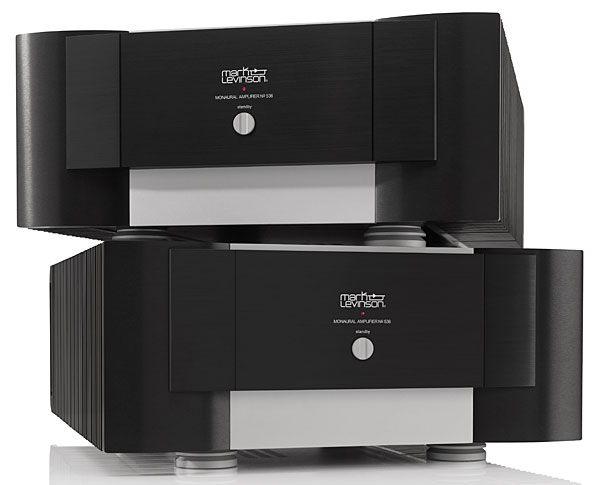
Mark Levinson No.536 monoblock power amplifier

Dinesh Paliwal, CEO of Harman International Industries, was addressing engineers and the audio press in a crowded conference room at the opening of Harman Luxury Audio's new Engineering Center of Excellence (ECOE), in Shelton, Connecticut. Paliwal singled out as the ECOE's first beneficiary the Mark Levinson brand, with the goal of revitalizing it as Harman's flagship marque. (Other brands in the HII stable include Harman Kardon, Infinity, JBL, Crown, AKG, Lexicon, and Revel.) To achieve this, he gave the ECOE team access to Harman's R&D budget of $400 million; brought on Todd Eichenbaum, formerly of Krell, to be its Director; and hired 11 more engineers.

Audionet Max monoblock power amplifier

Three years ago, when I first heard Audionet's Max monoblock power amplifiers, I described their pairing with YG Acoustics Hailey loudspeakers "an absolute winner" and "definitely one of the finer systems at T.H.E. Show Newport Beach." At subsequent audio shows, no fewer than four other Stereophile Contributing Editors enthused about different pairings of YG loudspeakers with Audionet amplification. Herb Reichert, at the 2014 Rocky Mountain Audio Fest: "Everything had a kind of just right quality. Totally impressive!" Sasha Matson, at RMAF 2015: "Marvelous" on vocals, "rockin' and tight" on bass and drums. John Atkinson, at T.H.E. Show 2016: "Duke Ellington's classic Jazz Party in Stereo . . . was reproduced with terrific dynamics." Larry Greenhill at the 2017 Consumer Electronics Show on the sound in the YG Acoustics room, which included Audionet's Max monoblocks: "the sound on playback of Jake Shimabukuro's ukulele wizardry came closer to matching his live performance than in most rooms."

AVM Ovation MA8.2 monoblock power amplifier

I've known Peder Bäckman, international sales director for the German firm Audio Video Manufaktur GmbH (AVM), for many years, ever since he worked with Electrocompaniet. When I told him that I was looking for products to review in the reference system in my new 20' by 16' by 9' music room, he invited me to browse AVM's large catalog and see what tickled my fancy. In consultation with John Atkinson, it became clear that AVM's largest, most powerful monoblock amplifier, the Ovation MA8.2 ($29,990/pair), seemed a good fit.

Music in the Round #83: ATI & Monoprice 3-Channel Amplifiers

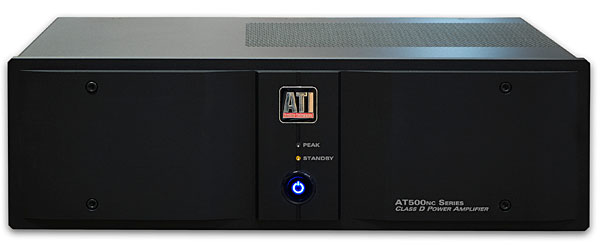
The power-amp saga continues. For months, I've been plowing through the market, searching for something to drive my three front speakers. (I use a two-channel amp for the surrounds.) It can be a three-channel amp or three monoblocks—it just has to sound great with my speakers, and be light enough that I can lift it by myself when I need to rearrange my system. I'd finally settled on Classé's Sigma Monos for their transparency, and because I can manage their weight, one at a time. At the CEDIA Expo in September 2016, I saw two more candidates worthy of consideration. Review samples of both arrived here almost simultaneously.

Boulder Amplifiers 2150 monoblock power amplifier

"I'm a recording engineer, so I value accuracy," said a panelist in a discussion—titled "How to Read Between the Lines of Audio Advertising"—at last October's Rocky Mountain Audio Fest. I, too, was on the panel, which was moderated by Brent Butterworth, a writer for the SoundStage! Network of online audio magazines.


"Accuracy is overrated," I interjected from the other end of the dais. "Accurate to what? To your sonic tastes? To what you hear on your preferred loudspeakers? Other than one's personal preferences, I'm not sure the term accuracy has much meaning."

Bel Canto e.One Ref600M power amplifier

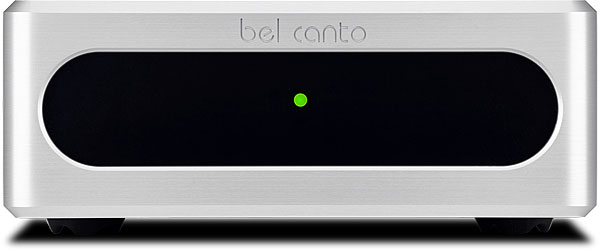
Has it really been more than seven years since I reviewed Bel Canto's REF1000M monoblock? According to the Bel Canto website, that model, based on Bang & Olufsen's ICEpower class-D modules, is no longer available. But now, like so many manufacturers, Bel Canto has adopted for its new models the NCore class-D module from Hypex—although the REF600M monoblock ($4990/pair) is not Bel Canto's first product to use it . . .

SAE 2HP-D power amplifier

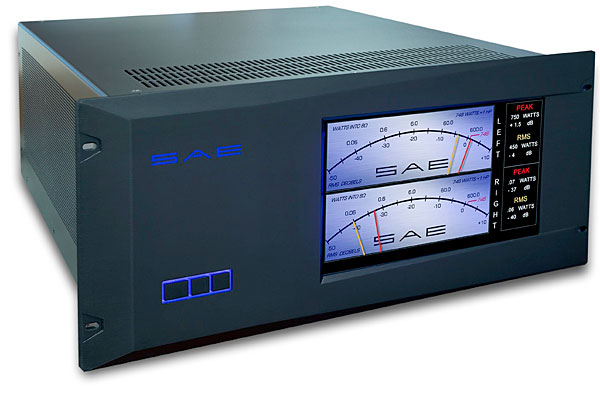
In 1967, in Los Angeles, Morris Kessler, with Ted and Beth Winchester, founded Scientific Audio Electronics (SAE), which enjoyed a successful run of 21 years. In addition to Kessler, Sherwood Electronics cofounder Ed Miller, as well as the legendary James Bongiorno, contributed designs. (If you don't know Bongiorno's résumé, please do a web search.) Some SAE products, particularly their big-metered power amplifiers, became objects of desire for audiophiles on the West Coast and, especially, in Japan.

First Watt J2 power amplifier

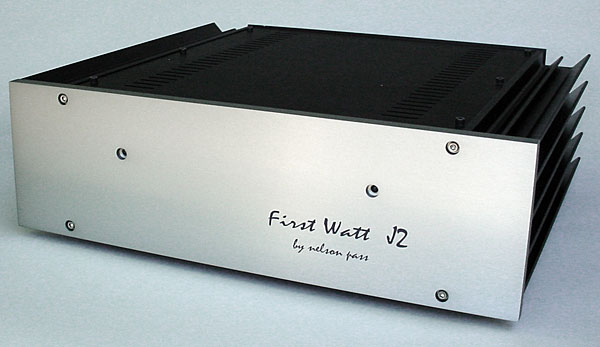
Every time a new audio technology enters the marketplace, a debate begins about its relative merit. That debate never ceases, even decades after the technology first came (and sometimes went). Turntable platters driven by belts vs rims vs idlers vs directly by their motors. Analog vs digital. Tubes vs solid-state. Triodes vs pentodes, Single-ended vs push-pull. Objectivism vs subjectivism. The power and seriousness of each of these debates has splintered our global hobby into diverse tribes, cults, and subcults—and therein lies one of the chief joys of being an audiophile: participating in cult rivalries.
Advertisement
Advertisement
Advertisement