Stand Loudspeaker Reviews
Sort By: Post Date | Title | Publish Date
John Atkinson Feb 29, 2008 Published: Mar 29, 1990 0 comments
According to the conventional wisdom, companies selling consumer products fall into two categories: those whose sales are "marketing-led" and those whose sales are "product-led." Marketing-led companies tend to sell mature products into a mature market where there are no real differences between competing products—soap powder, mass-market beer, or cigarettes, for example—whereas product-led companies tend to sell new technologies, such as personal computers and high-end hi-fi components. In the audio separates market, conventional wisdom would have a hard time categorizing any individual company: no matter which you choose, it would be simplistic to say that it is either product- or marketing-led. No matter how good the product, without good marketing the manufacturer stands little chance of success; a poor product superbly marketed may make a company successful overnight, but that success will have hit the end stops by the following night.
Sam Tellig, John Atkinson Jul 06, 2009 Published: Jan 06, 1990 0 comments
And now for something completely different.
John Atkinson May 05, 1995 Published: May 05, 1989 0 comments
Following my reports on 13 mainly inexpensive loudspeakers that have appeared in the last four issues of Stereophile, I thought I would give myself a treat this month by reviewing the latest incarnations of a model that has stood the test of time: the two-way Celestion SL600Si...This is a carefully tuned infinite-baffle design, sacrificing ultimate extension for upper-bass and lower-midrange quality. Its crossover is conventionally British in that it puts flatness of on-axis amplitude response ahead of time coherence, while everything about it, from drive-units to the cabinet itself, is flagrantly "high-tech."
John Atkinson Sep 05, 1995 Published: Sep 05, 1988 0 comments
"Who Stole The Bass?" asked Anthony H. Cordesman, writing about minimonitors in the April/May 1987 Stereophile (Vol.10 No.3). And for the designer of a box loudspeaker, the fundamental design decision, at any price level, is how much bass extension to aim for. It will always be possible to design a speaker with extension down to 20Hz, but will the result be musically and commercially successful? Will the designer end up with a speaker hypertrophied in that one area at the expense of every other? Will, indeed, the result be feasible technically? For example, for a given cabinet volume, gains in low-frequency extension have to be balanced against corresponding drops in sensitivity, and it is quite possible that to go for 20Hz extension will result in a 60dB/W/m sensitivity, equating with a speaker that only plays extremely quietly, and thus of no use to anyone.
John Atkinson Sep 03, 1995 Published: Sep 03, 1988 0 comments
"Who Stole The Bass?" asked Anthony H. Cordesman, writing about minimonitors in the April/May 1987 Stereophile (Vol.10 No.3). And for the designer of a box loudspeaker, the fundamental design decision, at any price level, is how much bass extension to aim for. It will always be possible to design a speaker with extension down to 20Hz, but will the result be musically and commercially successful? Will the designer end up with a speaker hypertrophied in that one area at the expense of every other? Will, indeed, the result be feasible technically? For example, for a given cabinet volume, gains in low-frequency extension have to be balanced against corresponding drops in sensitivity, and it is quite possible that to go for 20Hz extension will result in a 60dB/W/m sensitivity, equating with a speaker that only plays extremely quietly, and thus of no use to anyone.
John Atkinson, Robert Harley Nov 07, 2010 Published: Aug 07, 1988 0 comments
The loudspeaker coming under the microscope this month emanates from north of the border. The Canadian loudspeaker industry has benefited enormously in the last few years from having the measurement, testing, and listening facilities of Canada's National Research Council in Ottawa made available to it on a commercial basis. Unlike the US or even the UK, where a new speaker designer has pretty much to rely on his own resources, having to invent his own test procedure as well as design the product, the Canadian equivalent can have his loudspeaker tested under standard conditions, quickly indicating whether he is on the right track or not. (He still, of course, has to rely on his own talent to get on the right track in the first place or to get back on it if it appears that something is amiss.)
Thomas J. Norton, Various Jun 28, 1995 Published: Jun 28, 1988 0 comments
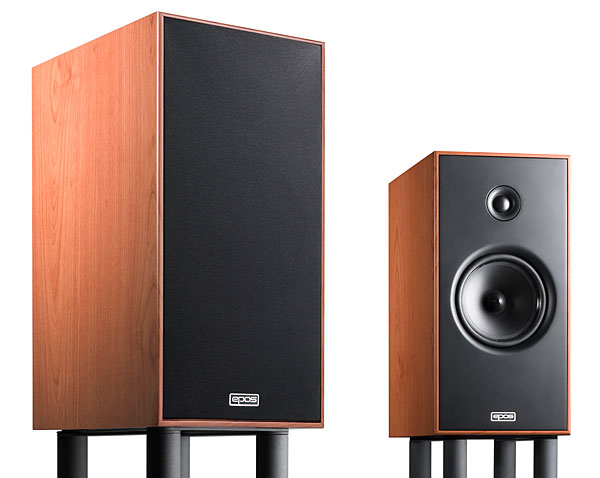
Americans might be forgiven if they haven't heard of Epos. A small, British specialist loudspeaker manufacturer, it was founded in 1983 by its designer, Robin Marshall—an ex-BBC engineer and a onetime consultant to Monitor Audio, according to Roy Hall of Epos's US importer, Music Hall. Their first model, the ES 20, didn't make it to the US, and was apparently a bit too pricey in the UK to make much of a splash there (about £700, $1300 at the current rate of exchange—a mint in a country with the patent on sub-$500/pair (UK prices!) two-ways). In 1986 or thereabouts, the new, smaller ES 14 was introduced, using updated versions of the same drivers in a smaller, ported cabinet. Music Hall only recently began importing the Epos into the US.
J. Gordon Holt May 14, 2013 Published: Nov 01, 1986 2 comments
One of the oldest names in US audio, Altec Lansing was building speakers for theaters and recording studios long before the introduction of the microgroove LP in 1948 (which date many see as marking the inception of high fidelity). Started in 1931 under the name All-Technical Services ~Corp., the firm later purchased another audio firm called Lansing Engineering, and merged the names. Altec's Model 604, one of the first true coaxial speakers, was adopted for home use by many early hi-fi buffs and, several permutations later, is still widely used for monitoring in disc-cutting rooms.
J. Gordon Holt, Thomas J. Norton Sep 18, 2012 Published: Jul 01, 1985 0 comments
While it is not quite accurate to say that $500/pair loudspeakers are a dime a dozen, they are by no means unusual. And since this is a price area where major design compromises are mandatory (footnote 1), the sound of such loudspeakers tends to vary all over the map, from pretty good to godawful—depending on what performance areas the designer chose to compromise and by how much.

I approached this latest half-grander with little enthusiasm, despite Siefert's persuasive literature, I have, after all, been reading such self-congratulatory hype abiout new products for longer than most Stereophile readers have been counting birthdays. This, I must admit, was ho-humsville.

Sam Tellig, Alvin Gold May 14, 2013 Published: Jan 01, 1985 3 comments
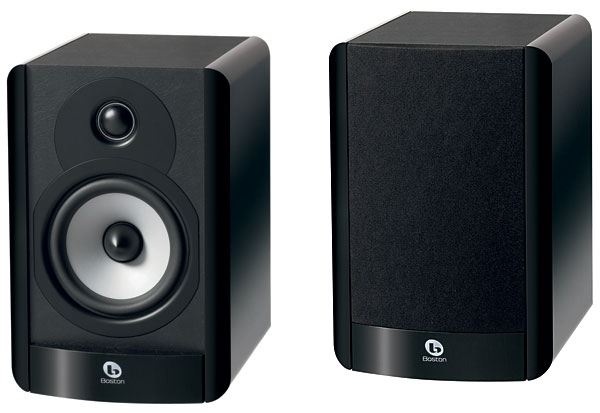
The Boston Acoustics A40 loudspeaker ($150/pair) has become "legendary" (ie, it's stayed around for a while), probably because a pair of them images as well as Rogers LS3/5As. Unfortunately, it is no match for the LS3/5A in terms of smooth midrange response. Of course, at $150/pair, it shouldn't be.

I was originally going to do a review comparing the Spectrum 108A ($200/pair) and the Boston Acoustics A40. On first listen, I was mightily impressed by the A40. But after Stereophile's Larry Archibald schlepped me out a pair of the 108As, I didn't much want to listen to the A40s.

Dick Olsher Jun 11, 2006 Published: Apr 11, 1984 0 comments
Small enough to fit in a shoebox, these little darlings from England almost manage to redefine the state of the art in very compact monitor design (footnote 1). Here's a speaker that isn't as neutral as the BBC LS3/5a compact monitor, but that does manage to equal or exceed that venerable design in most respects.
Larry Greenhill, Dick Olsher Jun 17, 2008 Published: Mar 18, 1984 0 comments
The Fourier 6 has the special ability to generate large coherent sonic fields, from a box small enough to slip into an ordinary shopping bag. At $499/pair, the 6 competes directly with another remarkable-imaging, compact American speaker, the Spica TC-50 ($420/pair).
Anthony H. Cordesman, Various Mar 11, 1998 Published: Feb 11, 1984 0 comments
High-quality, low-cost loudspeaker systems are not an everyday blessing. The Rogers LS3/5a has survived for more than a decade precisely because so few US manufacturers sought musical accuracy as distinguished from high output and powerful bass. The economics of loudspeaker manufacture also don't lend themselves to economy. The cost of woodwork is driving the price of speakers up almost as fast as the cost of sheet-metal work is escalating the price of electronics.
J. Gordon Holt Nov 07, 1995 3 comments
The Bose 901 has created more of a stir in audio circles than any other loudspeaker we can think of, with the possible exception of the original Acoustic Research system. Much of the 901's popularity is attributable to Julian Hirsch's rave report in Stereo Review, and there is no doubt but that Amar Bose's compellingly convincing ads had their effect, too. But these things alone could hardly account for the 901's popularity.
J. Gordon Holt Jun 11, 2006 1 comments
In the last issue we published a rather enthusiastic "Quickie" report on a small, $190/pair speaker system from a new company—the FMI Model 80. It was virtually devoid of low end, even as a stereo pair (pairing effectively doubles bass output), and slightly rough as well as a shade soft at the high end, but it had a quality of "aliveness" to it that almost defied belief. Was it a breakthrough in design? A new transducing principle? No, it was neither. In fact, the Model 80 looks like any one of those hundreds of little bookshelf systems that clutter, the pages of Stereo Review's "Hi-Fi Directory" in tedious profusion.
Site Map / Direct Links