Smalls is, well, a small jazz club in New York City’s West Village and, while far from the most comfortable establishment in town, it’s certainly among the most authentic and dedicated. The cover is cheap, the audience is youthful (two facts that are probably related), the musicians are usually the best up-and-coming players, and established masters sit in now and then too. (Last week, Albert “Tootie” Heath played drums with the Bad Plus pianist Ethan Iverson.)
Disaspora Suite is the 4th in a series of albums recorded by trumpeter-composer Steven Bernstein for John Zorn’s Tzadik label (the others were Diaspora Soul, Diaspora Blues, and Diaspora Hollywood). It’s also the most ambitious, far-flung, and satisfying. The band is a nonet that includes the versatile Nels Cline on electric guitar (strumming, plucking, and occasionally wailing), Peter Apfelbaum on saxes, and Ben Goldberg on clarinet. This is by no means simply “Jewish music.” The sounds and influences drift in from everywhere. The first track starts with an electric guitar riff and bongos back-up that’s straight out of Marvin Gaye. Horns enter, blowing slightly dissonant intervals. Two minutes in, the clarinet rolls in with those punchy klezmer chords, but it doesn’t overwhelm the other spices; they all mix and meld, play in and out and around one another. It’s dark, bluesy, danceable (in your head and on the floor). It careens off in unexpected directions, all of them worth following.
Audiophiles well know the glories of a 12-inch slab of 180-gram virgin vinyl cut for 45-rpm playback. Compared with a normal LP’s 33-1/3 revolutions per minute, the grooves on a 45 are stretched out over a wider space, allowing the stylus to track them more accurately and to give voice to the music’s minutest details. The non-‘philes among you may be shaking your heads (Oh, no, Is this guy a nutball?) but, believe me, it’s true. A few years back, Classic Records, Mike Hobson’s L.A.-based audiophile label, put out a series of limited-edition single-sided 45 rpm LPs, one album stretched out on four slabs of vinyl, each of which had grooves on one side but nothing, just plain black vinyl, on the other. The theory was that a perfectly flat bottom surface would couple more firmly to the turntable’s mat, eliminating the distortion of vinyl resonances. That may sound nuttier still, but, believe me, it’s true, too. (I’ve compared single-sided and double-sided 45 rpms of several albums that Hobson released in both formats—especially Sonny Rollins’ Our Man in Jazz and the Chicago Symphony’s performance of Prokofiev’s Lt. Kije, conducted by Fritz Reiner. The differences were not subtle. I value those albums as much as any in my collection, for musical and sonic reasons.)
Ted Nash and Frank Kimbroughco-founders of the Jazz Composers Collective, which I recently wrote about in this spacehave new albums, and they're both among the year's best.
Those of you in the New York area for the holidays (or for all times) should know that two of the best jazz groups around are playing at the two best jazz clubs: Maria Schneider and her Jazz Orchestra make their traditional Thanksgiving-week appearance at the Jazz Standard, and Jason Moran and his Bandwagon trio are at the Village Vanguard.
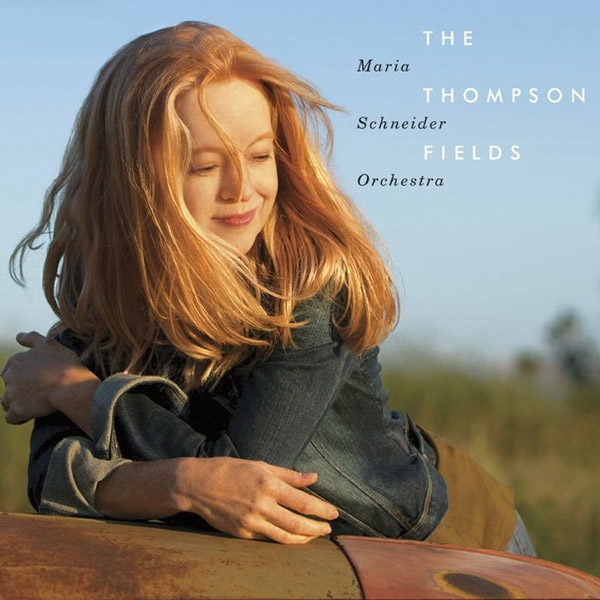
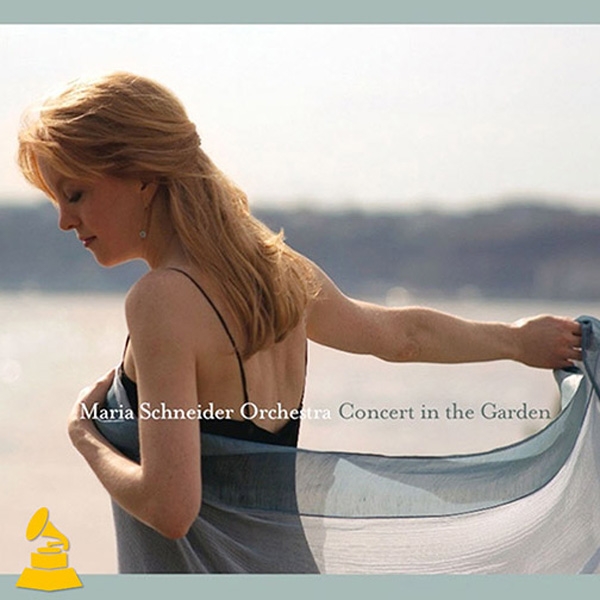
Maria Schneider and her 18-piece orchestra play their annual Thanksgiving week gig at the Jazz Standard starting Nov. 25 and continuing till the 30th (except for Thursday, when the club is closed), and if you’re in the tri-State area, you should reserve seats now, as her shows usually sell out. Regular readers of this blog may recall my previous ravings about Schneider. A former student of Gil Evans and Bob Bookmeyer, she is the most sumptuous jazz arranger on the jazz scene today, having absorbed her teachers’ penchant for lush stacked harmonies and added a flair for Latin rhythms, a propulsive sway, and a dry wit. Her pieces are lyrical, even rhapsodic, but also taut, even muscular. Much of the band has been playing with her for over a decade, to the point where they’re nearly Basie-tight. Her most recent CD, Sky Blue, topped my 2007 list of best jazz albums (except for Charles Mingus’ previously unreleased Cornell 1964 concert-recording). I’m told she’ll be playing many songs from it and from her 1996 album, Coming About, which she’s just re-mastered and re-released. All of her albums are on the ArtistShare label, the artist-owned music collective, and are available only through her website, mariaschneider.com.
Never Stop (on the E1 label) is the album from The Bad Plus that many of us have been waiting for—the first of their albums to consist entirely of original material.
I’ve sometimes wondered how long The Bad Plus can keep up their high-concept mix of pop and punk covers, avant-classical harmonies, jazz cadences, kick-ass polyrhythms, and sly but un-ironic wit. Don’t get me wrong: I like their music a lot; each of the players (Ethan Iverson, piano; Reid Anderson, bass; David King, drums) crackles with brio and virtuosity; their interplay is a delight. Still, in the six years since they improbably crashed onto the scene, there have been times when their conceit has seemed to reach its limit.
The year’s not quite over, but it’s a safe bet that Sonny Rollins’ Road Shows Vol. 1 (on his own Doxy label) will be the best jazz album of 2008 and rank among the best of the decade.
Here’s my list of the 10 best jazz albums of 2008. An elaboration, with 30-second sound clips illustrating my points, will appear tomorrow in my column in Slate. (Some of you may notice that I’ve mentioned most of these CDs in this blog through this year.)
Today in Slate (which, as some of you know, is where I do most of my writing, mainly on national-security politics), I lay out—as I have in each of the last five Decembers—my picks for the 10 best jazz albums of the year. Here are the best of 2007:
Speaking of Carla Bley, her ex-husband, Paul Bley, has a new CD, Solo in Mondsee (ECM), and it’s quietly stunning. I’m a bit late with this—the album came out last summer—but then again, it was recorded in 2001, so who’s counting? Paul Bley has been one of the piano giants in jazz for over a half-century. He may be more famous for those he’s introduced to the jazz scene. He led, I think, the first jazz trio that featured Charles Mingus on bass. While house pianist at the Hillcrest Club in Los Angeles in 1958, he hired Ornette Coleman to play with him (when nobody else would); in fact, what became, a few months later, the first Ornette Coleman Quartet started out as the Paul Bley Quintet, minus Bley. Over the years, he’s frequently played with Ornette’s bassist, Charlie Haden, most recently in a night of riveting duets at the Blue Note in New York. (A couple decades ago, the Montreal Jazz Festival held a weeklong celebration in which Haden led a variety of ensembles; all the sessions were eventually released on CD by Verve; the best of the bunch was a trio session with Bley and Paul Motian.)
As further evidence that the American empire is on the decline, I submit the 8:00 set Friday night at the Blue Note on West 3rd Street in New York City, where three front-and-center tables of Europeans—twenty young to middle-aged, professional-looking men and women, who all seemed to be part of the same tour group—made more noise at a jazz club than I think I’ve ever witnessed. Shushing and shaming, from me and others in the audience, had but short-term impact; they’d quiet down for a few minutes and listen to the trio on the bandstand (more about them, in a moment), but then got back to the main business of yakking, chuckling, and generally treating the whole proceedings as the soundtrack to their merry Manhattan vacation and us poor jazz fans as mere props in the spectacle.