At its best, there’s a quiet majesty to the music of Abdullah Ibrahim, the South African pianist-composer once known as Dollar Brand, and his new solo CD, Senzo (on the German WDR label’s Cologne Broadcasts series), is his most stirring album in years. He was discovered in 1963, at the age of 30, by no less than Duke Ellington, who produced his first recording, then lured him to the States, where he played with Elvin Jones before going on to form his own bands. In the ‘70s, he found his full voice—a swaying pastiche of jazz, spiritual and Capetown rhythms—and, over the course of a few years, recorded a staggering number of great albums: Live at Sweet Basil, Vol. 1 (there was no Vol. 2) and Duke’s Memories with the saxophonist Carlos Ward, Good News from Africa with the bassist Johnny Dyani, Streams of Consciousness with drummer Max Roach, Duet with saxophonist Archie Shepp (the most lyrical album Shepp ever made), and African Marketplace, The Mountain, and Ekaya with his octet known as Ekaya.
What’s the point of having a blog if you can’t be self-indulgent now and then? So allow me to plug my new book, Daydream Believers: How a Few Grand Ideas Wrecked American Power (Wiley & Sons). As the subtitle may suggest, it is not a biography of the Monkees but rather a journalistic dissection of why the United States’ global adventures and image have gone to hell in recent years. Some of you may know that I write a twice-weekly column in Slate about such matters. My book is not a compilation of my columns; it’s all new stuff. The official pub date is February 4, but it’s already in stock in many bookstores and on amazon.
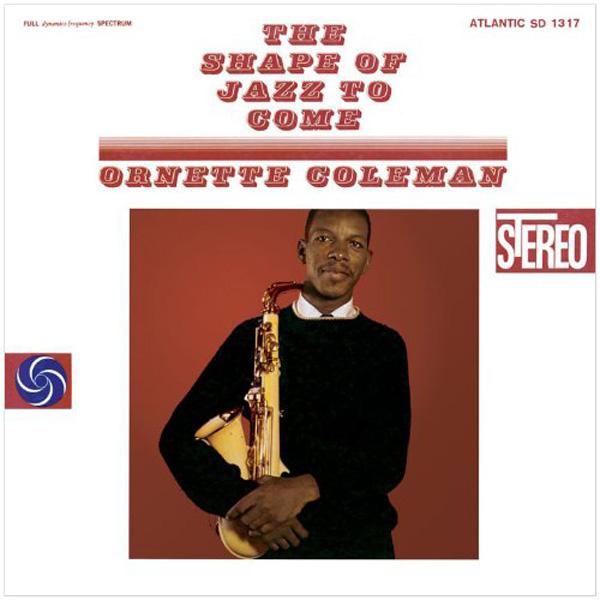
What’s the point of having a blog if I can’t occasionally indulge in self-promotion? So if you’ll forgive my blatancy for a moment, today marks the official pub date of my new book, 1959: The Year Everything Changed. Unlike my last book, which was entirely about foreign policy, this one actually might be of some interest to the readers of this space, because it covers not just politics but also culture, society, science, sex—as the title suggests, everything. More to the point, there are three chapters (out of 25) that deal explicitly with jazz. (Key jazz albums of 1959 included Miles Davis’ Kind of Blue, Ornette Coleman’s The Shape of Jazz to Come, and Dave Brubeck’s Time Out.) There’s also a chapter about the creation of Motown (another 1959 phenomenon), and a jazz-blues vibe infuses the whole book.
Ahmad Jamal’s new CD, Blue Moon (on Harmonia Mundi’s new Jazz Village label), is a wonder. Jamal is 82. He still possesses that spacious lightness of touch that knocked out Miles Davis over a half-century ago. But Jamal has since added to this elegance a syncopated boisterousness, a keenness for dynamics, and an adventurous way with mixing and merging styles.
Listen to what he does with the title tune, loping on not only a slow-simmer Latin rhythm but also a bass line (which occasionally gets passed to the piano, then the drums) from the refrain of Coltrane’s “A Love Supreme.” Or the album’s first track, an original called “Autumn Rain,” where Jamal coaxes clusters of chords, then a sprightly melody, over drummer Herlin Riley’s raucous backbeat.
Every few years, a young jazz musician comes along and sets off some buzz. Usually, the excitement soon coolsthe kid can’t sustain the initial stir, he turns out to have more technique than depthbut now and then, it turns out there’s something really going on. In the past decade, Jason Moran has been the most prominent of these upstarts who’s the real thing. The latest, I’m pretty sure, is a trumpeter, just shy of 29 years old, named Ambrose Akinmusire.
After seeing Ambrose Akinmusire’s quintet at the Jazz Standard in New York City last Sunday night, I realize that, if anything, my recent blog posting sold him shortor fell short, anyway, in describing what makes him so remarkable.
Unlike many of the best young lions of recent years, Akinmusire is not aiming to expand the realm of jazz to include hip-hop, classical, Latin, or whatever. He is steeped in “the jazz tradition” and aims to deepen his stance within itbut his approach doesn’t seem the slightest bit retro. His trumpet tone, as noted earlier, has traces of Clifford Brown and Booker Little; but how he shapes that soundas a player, a composer-arranger, and an ensemble-leaderis thoroughly distinctive. . .
I don’t want to write too much about any one musician, but I just got back from seeing clarinetist Anat Cohen’s quartet at the Village Vanguard, and I can’t resist. Her CD, Poetica, is one of the year’s fresh surprises—breezy, heady, and warm (see my blog of June 17)—but it’s a mere shadow of what she does live. She plays with a perfect clean tone and an insouciant virtuosity combined with a hip-swaying, eyes-rolling, wide-smiling swing—or with a breath-stopping melancholy, depending on the song.
Anat Cohen’s Poetica, on her own Anzic Records label, is a fresh breeze of an album, and I mean that in a good way. Still in her 20s, Cohen plays clarinet with a polished edge and verve second only to Don Byron’s. Born in Tel Aviv, schooled at Berklee, honed in New York clubs, playing not just modern jazz but Brazilian Choro and Dixieland, she lets all her influences show but none of them dominate. Her tone bears something of klezmer’s lilt but none of its schmaltz. Her arrangements have the joyful-melancholic sway of Israeli or Latin folk music but none of its sentimentality. On the album, she also plays two knottily catchy original tunes, a Jacques Brel song, and a tinglingly lovely cover of Coltrane’s “Lonnie’s Lament,” the last backed by a string quartet. The sound, mixed by Joe Ferla and mastered by Sony’s Mark Wilder, is excellent.
It’s been a year and a few months since I’ve seen Anat Cohen, the young Israeli-born jazz clarinetist, play live, and she’s grown still more assured and supple, her swing more insouciant, her tone more sheer and gorgeous. She and her quartet began the early set at the Village Vanguard last night with “Jitterbug Waltz” (as she did the previous time I saw her there) and breezed through it with breathtaking speed, but not just as some virtuosic show: there was brio, gusto, real delight in her playing, as she slid in and out of a slew of styles and rhythms—trad, bop, Latin, quasi-klezmer—seamless and natural and fresh. And so it went through the set, with ballads and blues and multiculti sonic frescoes. She plays tenor and soprano sax as well, though the licorice stick is her glory (second only to Don Byron in fire, versatility and skill). The band consists of the agile Jason Lindner on piano, Daniel Friedman on drums, and Joe Martin (replacing Omer Avita) on bass. The gig continues through this Sunday. She also has a new album, Notes from the Village, which is nice and fine (though I prefer her earlier quartet disc, Poetica, both on her own Anzic label).
The Israeli pianist Anat Fort’s second CD, And If (on the ECM label), is an album that I like a lot, though it’s hard to explain why or even to describe. Her music is rhapsodic but spare, tender but propulsive, flush with melodic hooks that loop in sinuous, unpredictable shapes.
Andrew Hill, the knotty avant-garde pianist, and Chico Hamilton, the boisterous polyrhythmic drummer, seem an unlikely pair at first (or second) glance. But they set off fascinating fireworks, and carved out sinuous jags of common ground, in a duet recording, Dreams Come True, just released on Joyous Shout!, an Indiana-based label that I’ve never heard of. (Its website seems to be a sort of shrine to Chico Hamilton merchandise.)
Music Matters Jazz—the L.A.-based audiophile label that reissues classic Blue Note titles, each on twin slabs of thick, quiet vinyl, mastered at 45 rpm and eased into gorgeous gatefold packages—keeps churning them out.
One of their latest, and greatest, is Andrew Hill’s Point of Departure, a jaw-dropper from 1964 that sounds as fresh as tomorrow.
Hill, 33 at the time (he died in 2007, active till the end), was a precisely adventurous pianist and one of the most inventive composers of that transition era, pushing metric rhythms and chord-based harmonies right up to the edge dividing structure from freedom (he received informal lessons from Hindemith in his youth). Every player in his band—Eric Dolphy on reeds, Joe Henderson on tenor sax, Kenny Dorham on trumpet, Richard Davis on bass, Tony Williams on drums—was top-notch and hitting their peaks.
The Complete Art Pepper at Ronnie Scott's Club, London, June 1980, a 7-LP boxed set released by Pure Pleasure Records, is a total surprise and a sheer delight.
Art Pepper, who died in 1982 at the age of 56, was not only one of the great alto saxophonists of his era but a self-transformer to boot. In the early 1950s, he routinely ranked No. 2 in Downbeat polls (beat only by Charlie Parker), then vanished in the '60s (locked up in various prisons on drug charges), only to emerge in the mid-'70s with a totally different sound.