

Analog Corner #257: AJ Conti, Audio Research Reference Phono 3, TARA Labs Air Evolution cables
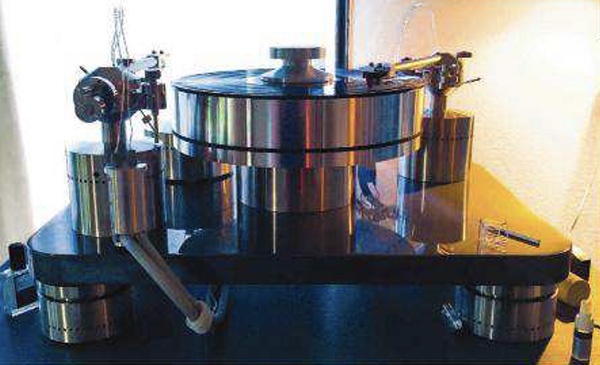
As I began writing this column, the terrible news arrived that Armando "AJ" Conti, founder of Basis Audio, had died of a heart attack at 59. A talented designer of turntables and tonearms, AJ was one of the warmest and more thoughtful people in the High End. Whenever I entered the Basis room at a Consumer Electronics Show, I had to be prepared to spend the next hour or more talking with AJnot only about audio, but about coffee, motorcycling, metallurgy, or any other of his many passions . . .
Analog Corner #258: Dan D'Agostino Momentum Phonostage & Gold Note Tuscany Gold MC cartridge
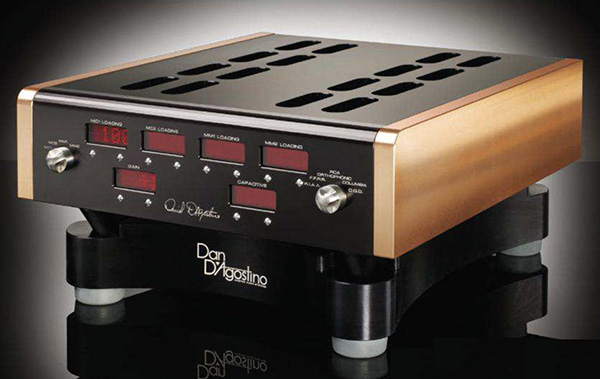
At the beginning of this century, when the vinyl resurgence was at best nascent and few believed it would be as strong as it is today, Boulder Amplifiers manufactured a phono preamplifier that cost $29,000. I reviewed that model, the 2008 (now discontinued), in the July 2002 issue. With a power supply that would probably be more than adequate for a high-wattage power amp, it was built to a standard approached by few other makers of phono preamps...
With his lines of power amplifiers and preamplifiers well established, Dan D'Agostinothe founder, CEO, and chief designer of the company that bears his nameset about designing a phono preamplifier.
Analog Corner #260: CH Precision P1 phono preamplifier
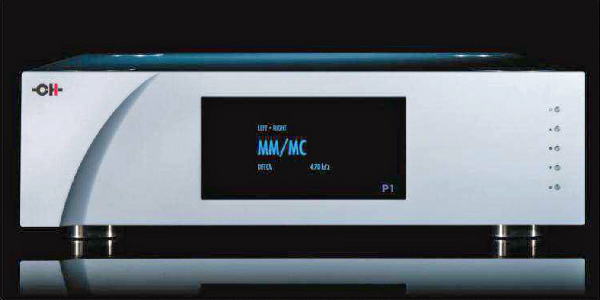
Although Swiss-based CH Precision is a relatively young company, its core design team has been involved in high-performance audio for many years. Their website doesn't state the company's age, but something there did provide a hint: Among the design team's previous activities was work for another Swiss company, Anagram Technologies...I hadn't made the connection between Anagram and CH Precision when Raphael Pasche, the latter's electronics design engineer, visited last fall to install CH Precision's P1 dual-mono phono stage and the optional X1, a discretely regulated, outboard linear power supply that's claimed to exhibit ultralow levels of noise. The P1 can be ordered as a stereo preamp for $31,000; add $17,000 for the identically sized X1 power supply. Or one mono P1 can be used for each channel, for $55,000 plus $34,000 for two X1s. Expensive stuff.
Analog Corner #262: CH Precision P1 phono preamp, darTZeel NHB-18NS Mk.2 preamp, Shunyata Research Denali power conditioners
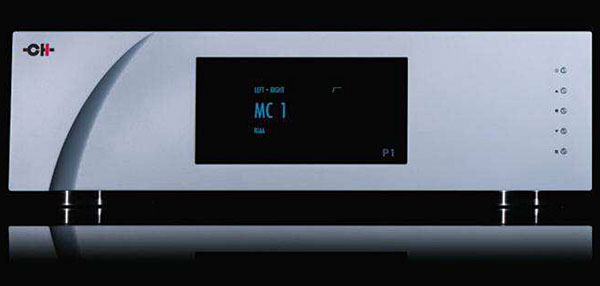
CH Precision's P1 phono preamplifier, which I wrote about in the April 2017 issue, is not going back to its manufacturer. The longer I used it, the more obvious it became that I couldn't part with it, even though I said I couldn't afford it. The cost was stiff even at the accommodation price (at retail, the CH Precision P1 and its optional X1 power supply are $31,000 and $17,000, respectively, footnote 1), but I decided I could afford it, and bought it for myself as a 70th-birthday present. No, I can't hear as well as I did 30 years ago, but my listening is better than ever.
Analog Corner #263: Zesto Andros Téssera phono preamp & Acoustic Signature Ascona turntable and TA-9000 tonearm
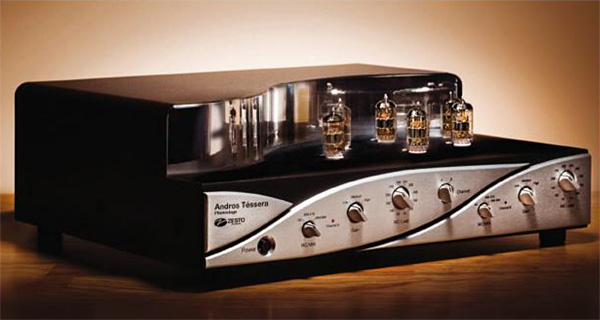
Maybe you've seen the widely circulated New Yorker cartoon: Two guys stand in front of a nicely drawn, tubed audio system, under which are shelves full of LPs. One guy says, "The two things that really drew me to vinyl were the expense and the inconvenience."
Analog Corner #276: van den Hul The Grail phono preamplifier & Colibri Signature Stradivarius phono cartridge
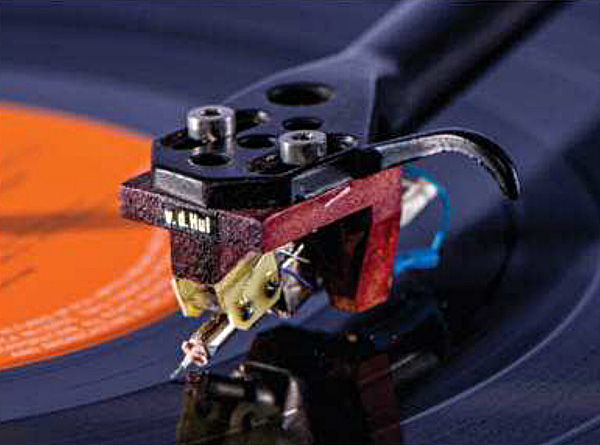
Among the electrically connected, the phrase short circuit induces panic and horrific images of tripped breakers, blown fuses, acrid blue smoke, and melted circuit boards. Nonetheless, near short circuits are becoming popular among the analog set. Moving-coil cartridges of an inductance and impedance so low they're nearly short circuits are now more common, thanks to powerful neodymium magnets that help produce more and more electrical output from fewer and fewer turns of coil wire. Perhaps the most extreme example of this is the Haniwa HCTR01 Mk.II cartridge, which has an internal impedance of 0.4 ohm and an inductance of 0.3µH.
Analog Corner #282: OMA Plinth for Technics SP10, SAT CF1-12 tonearm, Doshi V3.0 phono stage

Last May I got a text message from my vinyl-loving electrician: "Hey Michael, I'm listening to WFMU and a young 12 year old analog genius is guest DJ-ing, Malachi Lui. He mentioned you, and talks about mastering and pressingshe's incredible. I imagine he's been in touch with you. Hope all is well, Craig."
Analog Corner #283: Grado Epoch Mono, Miyajima Infinity Mono, MuTech RM-Kanda Hayabusa, Angstrom Audiolab Stella, Musical Fidelity Nu-Vista Vinyl

Lately, there's been too much gear worth covering and not enough space to cover it in. So this time . . . less think-piece filler and more hardware!
Analog Corner #286: Channel D Lino C 2.0 phono preamplifier
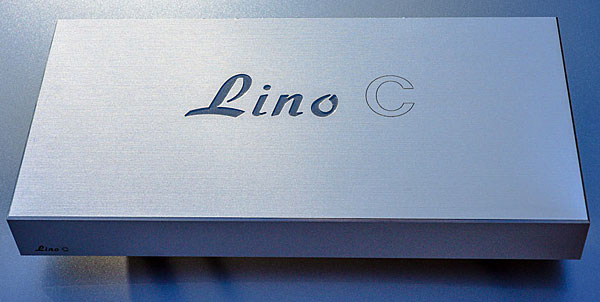
Install a new component in your system and there's usually a period of adjustment as you get used to the difference in soundespecially if the new product costs much less than your reference. Channel D's new Lino C 2.0 balanced phono preamplifier costs $2499, yet my ears instantly accepted its combination of drop-dead, noise-free backgrounds and lack of obvious colorations or sonic personality. I didn't hear itI heard only my Ortofon A95 cartridge, with which I'm well familiar, as amplified by far more costly phono preamps.
Analog Corner #286: StillPoints Aperture II, VPI Voyager, Bespoke Passive Preamplifier
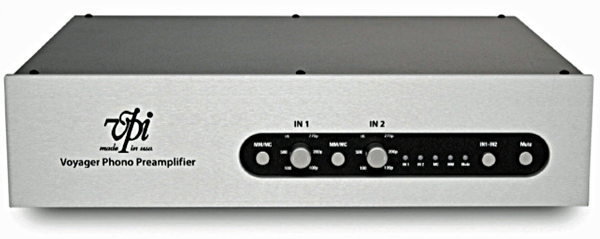
VPI Industries Voyager phono preamplifier
Following my auditioning of Channel D's Lino 2C current-mode phono preamplifier, back in the world of voltage amplification, here's another phono preamp from another company based, like Channel D, in New Jersey. Probably not since Dynaco manufactured its electronics in Pennsauken has the Garden State enjoyed such riches of analog electronics!
Following my auditioning of Channel D's Lino 2C current-mode phono preamplifier, back in the world of voltage amplification, here's another phono preamp from another company based, like Channel D, in New Jersey. Probably not since Dynaco manufactured its electronics in Pennsauken has the Garden State enjoyed such riches of analog electronics!