

Analog Corner #232: HiFiction Simplicity II tonearm, Miyajima Labs Madake phono cartridge, Rogers High Fidelity PA-1A phono preamplifier
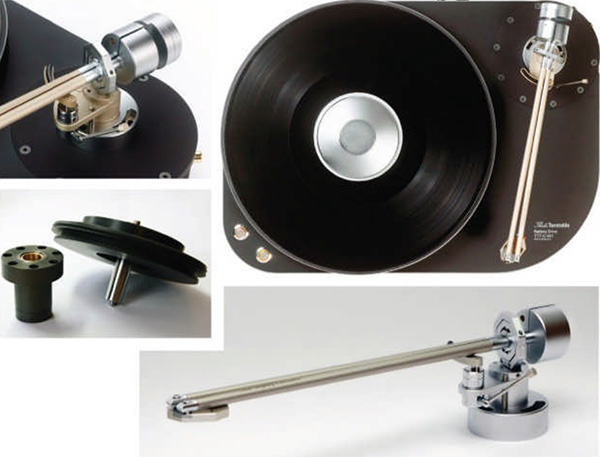
In my January 2014 column, I reviewed HiFiction's Thales TTT-Compact turntable and Simplicity tangential-tracking pivoted tonearm, an intriguing combo from Micha Huber, a talented Swiss watchmaker turned turntable designer.
The TTT-Compact's particulars, including its battery-powered motor and exceptional ease of setup, are described in detail in that review, which includes a link to a useful animation that shows how the design, as Huber says, "reduces the perfectly tangential tracking to pivot points, while the pick-up cartridge is taken and aligned on the Thales' Circle."
Suffice it to say that while the HiFiction tonearm is named Simplicity, its design is anything but.
Analog Corner #233: Pear Audio Blue Kid Thomas turntable & Cornet 2 tonearm
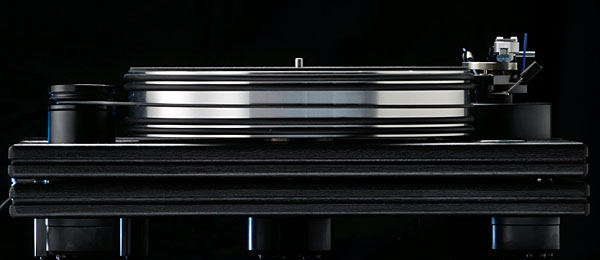
Pear Audio Analogue's Peter Mezek can keep you up all night spinning fascinating turntable tales. Had my mind not been numbed by Sunday evening, October 12, the last day of the 2014 Rocky Mountain Audio Fest, I might have insisted that he do just that.
Over dinner that evening he regaled Pear Audio's North American importer, Michael Vamos of Audio Skies, and me with turntable stories dating back to the late 1970s and the Linn Sondek LP12, which, until the early '80s, he distributed in Czechoslovakia. In the mid-'80s, Mezek was involved in the development and distribution of the Rational Audio turntable, designed for Mezek by Jirí Janda (pronounced Yeerzhee Yahnda), who died in 2000. For those of you old enough to remember, Janda, a founder of NAD, designed that company's 5120 turntable; among other features, it had a flat, flexible, plug-in tonearm that you could easily swap out, much as you can with VPI's current models.
Analog Corner #237: Ortofon MC A95 phono cartridge, Brinkmann Audio Spyder turntable and 12.1 tonearm
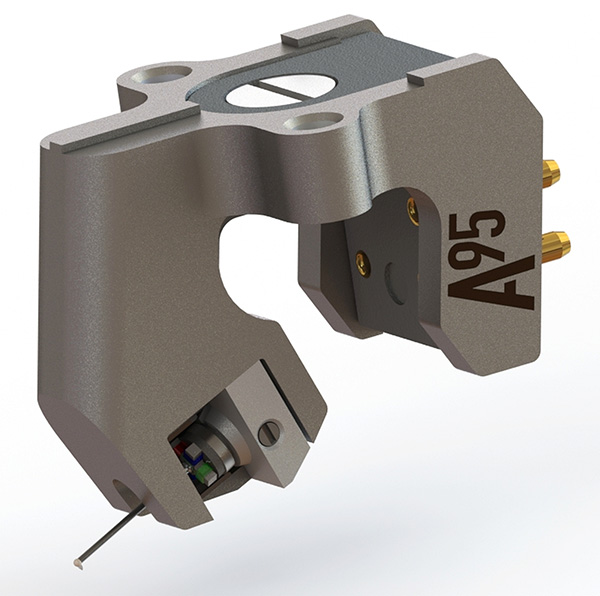
It's difficult to believe that more than five years have passed since Ortofon introduced its ground-breaking MC A90 moving-coil cartridge ($4200 when last available). The limited-edition MC A90, with its radically shaped body made of powdered stainless steel Selective Laser Melting (SLM), celebrated Ortofon's 90th year in business. The MC A95 ($6500), celebrating their 95th year, retains the A90's seductive shape, but the new body is built of powdered titanium, and thus is even more effectively self-damped.
Analog Corner #239: Swedish Analog Technologies tonearm
Late in the fall of 1982, Los Angeles turned ugly for me. I'd finished my work on Tron and despite the Academy Award nomination for Best Sound (which went to the mixing team, not the sound supervisor), it was obvious that nothing else was coming my way anytime soon. To earn a living, I had to reinvent myself.
So there I was in Las Vegas, at the 1983 Consumer Electronics Show, schlepping heavy bags filled with press kits, each containing an audio cassette of a dozen radio commercials for a car-stereo store that I'd voiced and produced, along with a résumé-bio and endorsements from clients.
Analog Corner #240: Sperling-Audio L-1 turntable and TA-1 tonearm
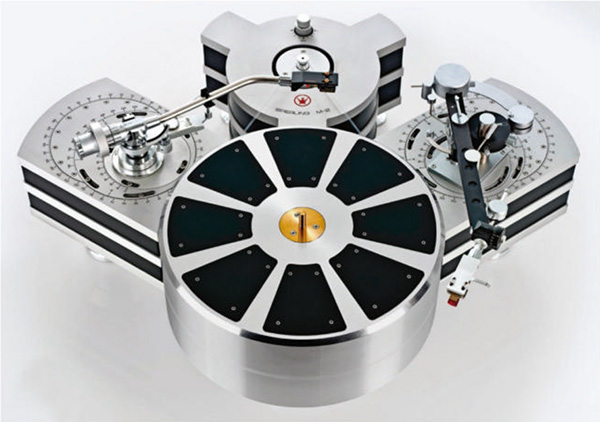
Photo: Echopark
With its swept-wing shape and platter-forward design, Sperling-Audio's L-1 turntable ($35,950, without tonearm) stands out in a crowd. This high-mass design from Germany is the result of a collaboration between Ansgar Sperling and Michael Bönninghoff, two fiftysomething engineers who began working together in recording studio construction.
Both also bring to the L-1's design and construction years of experience in signal processing. For years, Bönninghoff was the chief developer at Brauner microphones, and today is the technical director of the German pro-audio company S.E.A. Sperling worked in radio and signal processing, and has a strong interest in tubed electronics.Analog Corner #243: TechDAS Air Force Two turntable, Graham Phantom Elite tonearm
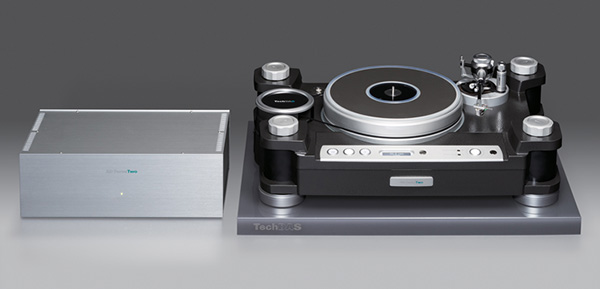
How big is the performance gap between TechDAS's new Air Force Two ($52,000) and original Air Force One ($105,000) turntables? How do you halve the price without also sacrificing the build quality and features of the flagship model that defines the brand? Even $52,000 is more than most people pay for an automobile, not to mention a turntable. Still, TechDAS's assertion on their website that the price of their new model price is "reasonably improved" over the old strikes me as an understatement.
Analog Corner #245: SME Model 15 turntable, SME 309 SPD tonearm
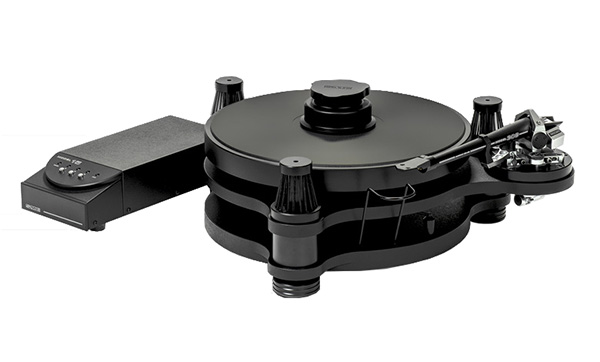
In the April 2000 issue of Stereophile, I reviewed SME's Model 10, which was an attempt by that storied company to produce an "affordable" turntable. I described the Model 10's $5500 turntable-only priceabout $7600 in today's dollarsas "stiff." (At the time, the Model 10 cost $5995 with SME's M10 arm, or $8250 with their IV.Vi arm.) But 16 years later, the same Model 10 costs only $5000 ($7000 with the more recent Model 10 arm, which is superior to the M10).
Analog Corner #248: Mørch DP-8, Reed 3P tonearms, TechDAS Air Force One turntable
"HOW MEASUREMENT FAILS DOCTORS AND TEACHERS" was the headline of a story in a recent issue of the New York Times's "Sunday Review" section (formerly called "News of the Week in Review," now rendered obsolete by the 24/7 news cycle created by and for the terminally self-absorbed). The writer, Robert M. Wachter, a professor and interim chairman of UC San Francisco's department of medicine and author of the book The Digital Doctor: Hope, Hype, and Harm at the Dawn of Medicine's Computer Age, said that healthcare and education "have become increasingly subjected to metrics and measurements," and that the focus on them has "gone too far."
To me, that headline screamed "Audio!" And the book that needs to be written is The Digital Recording Revolution: Hope, Hype, and Harm at the Dawn of Audio's Computer Age.
Analog Corner #256: Acoustic Signature Ascona Mk.2 turntable, TA-9000 tonearm

I recently posted to AnalogPlanet.com's YouTube channel a video that compares VPI's Prime turntable and JMW 3D-printed tonearm ($3995) with Continuum Audio Labs' Caliburn turntable (ca $150,000 with arm and stand, discontinued) fitted with the Swedish Analog Technologies arm ($28,000). Both played "Braziljah," a snazzy track from the New Zion Trio's latest album, Sunshine Seas (LP, RareNoise RNR065LP), featuring guest Brazilian percussionist Cyro Baptista.
The Prime was fitted with a Lyra Helikon SL cartridge (ca $2500, discontinued), driving a reasonably priced phono preamplifier: the Audio Alchemy PPA-1 ($1795, currently under review for AnalogPlanet). Accompanying the Continuum Caliburn and SAT arm were Audio-Technica's AT-ART1000 cartridge ($5000), and Ypsilon's MC-16L step-up transformer ($6200) and VPS-100 Silver phono preamplifier ($65,000)total cost, more than I paid for my first house, in 1992.
Analog Corner #259: Audio Union Döhmann Helix 1 turntable and Schröder CB tonearm
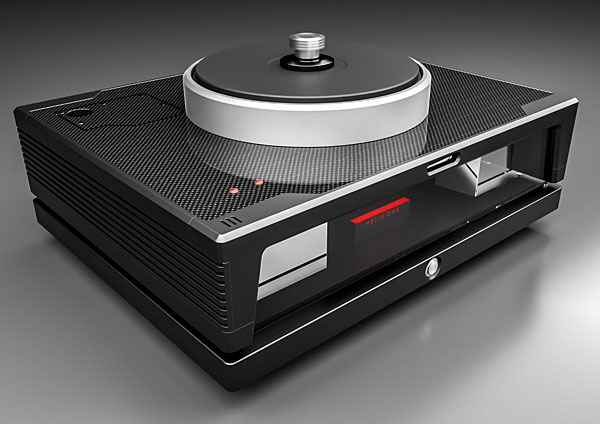
The ability to fine-tune a vinyl playback system is part of what makes it possible to combine an archaic technology with modern thinking and materials to create musical magic, and take listeners to new heights of ecstatic musical pleasure. It's why so many young people are tuning in to vinyl, and helps explain why just today, as I write this, it was announced in the UK that, for the first time, revenues from sales of vinyl exceeded those from downloads.