

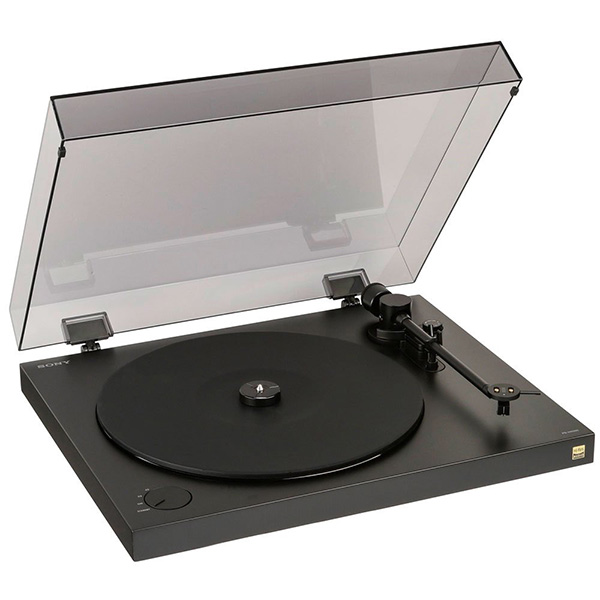
Analog Corner #252: Sony PS-HX500 USB turntable & GEM Dandy PolyTable
Recently, when a reader questioned my hearing acuity on account of my ageI'm 69I didn't argue: I don't hear as well as I did when I was 40, or 50, or even 60, and it would be foolish to claim otherwise. However, while my hearing isn't what it once was, neither is my listeningwhich has never been better. Audio perception is a combination of what the ear delivers and what the brain does with it.
My upper-octave response still sounds to be all there. Are there some lumps and bumps below? Probably. And some tinnitus noise encroaching on very-low-level material? No denying it. But as far as I'm concerned, at least for now, I'm still quite capable of doing this job.
Analog Corner #255: Kuzma Stabi M turntable, Audio Tekne TEA-8695 and Xactive Argo phono preamplifiers

Do good things come in small packages, or is bigger better? Your call. But regarding the products they've sent my way for review this month, designers Franc Kuzma, Kiyoaki Imai, and Velissarios Georgiadis are all in the latter camp. Kuzma's Stabi M, designed to accommodate the 14" version of his 4Point tonearm, is a massive turntable with a big footprint. Imai's Audio Tekne TEA-8695 tubed phono preamplifier has 11 Permalloy core transformers and weighs nearly 100lb. And although it uses just four signal-path tubes and a pair of rectifier tubes, Georgiadis's Xactive Argo phono preamplifier fills the full width, height, and depth of a Harmonic Resolution System shelfand not because it's a big but mostly empty housing.
Analog Corner #256: Acoustic Signature Ascona Mk.2 turntable, TA-9000 tonearm

I recently posted to AnalogPlanet.com's YouTube channel a video that compares VPI's Prime turntable and JMW 3D-printed tonearm ($3995) with Continuum Audio Labs' Caliburn turntable (ca $150,000 with arm and stand, discontinued) fitted with the Swedish Analog Technologies arm ($28,000). Both played "Braziljah," a snazzy track from the New Zion Trio's latest album, Sunshine Seas (LP, RareNoise RNR065LP), featuring guest Brazilian percussionist Cyro Baptista.
The Prime was fitted with a Lyra Helikon SL cartridge (ca $2500, discontinued), driving a reasonably priced phono preamplifier: the Audio Alchemy PPA-1 ($1795, currently under review for AnalogPlanet). Accompanying the Continuum Caliburn and SAT arm were Audio-Technica's AT-ART1000 cartridge ($5000), and Ypsilon's MC-16L step-up transformer ($6200) and VPS-100 Silver phono preamplifier ($65,000)total cost, more than I paid for my first house, in 1992.
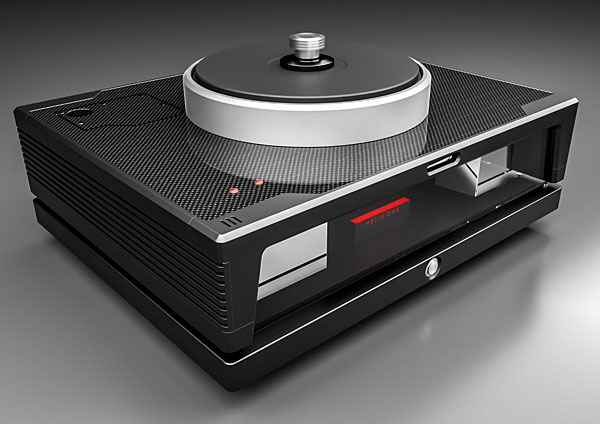
Analog Corner #259: Audio Union Döhmann Helix 1 turntable and Schröder CB tonearm
The ability to fine-tune a vinyl playback system is part of what makes it possible to combine an archaic technology with modern thinking and materials to create musical magic, and take listeners to new heights of ecstatic musical pleasure. It's why so many young people are tuning in to vinyl, and helps explain why just today, as I write this, it was announced in the UK that, for the first time, revenues from sales of vinyl exceeded those from downloads.
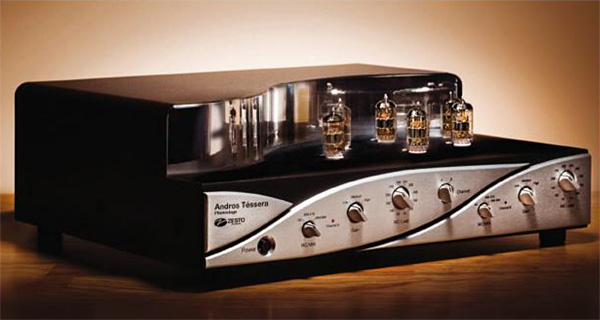
Analog Corner #263: Zesto Andros Téssera phono preamp & Acoustic Signature Ascona turntable and TA-9000 tonearm
Maybe you've seen the widely circulated New Yorker cartoon: Two guys stand in front of a nicely drawn, tubed audio system, under which are shelves full of LPs. One guy says, "The two things that really drew me to vinyl were the expense and the inconvenience."
Analog Corner #267: Reed Muse 3C turntable & Reed 3P tonearm
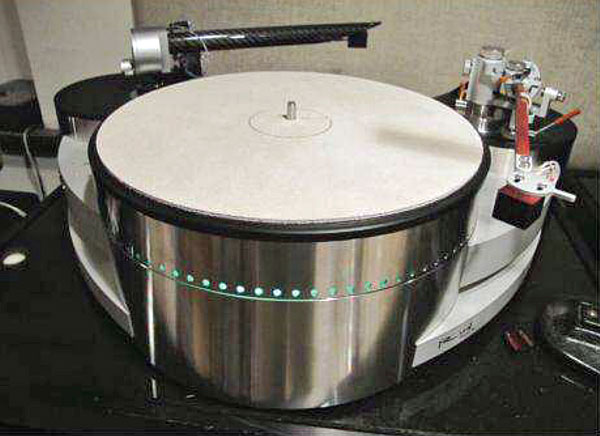
The Reed 3P tonearm, which I reviewed in my April 2016 column, was an impressive piece of imaginative engineering and manufacturing prowess. I asked Reed's importer, Axiss Audio, if I could hold on to the 3PI was already planning to review Reed's Muse 3C turntable. I'm glad I didthe 3P ($5000) and 3C ($15,000) make an outstanding combination. (When the only complaint you have about a turntable is that the cable from its power jack to the power supply isn't long enough to reach the floor, you can be sure you're going to write a very positive review.)
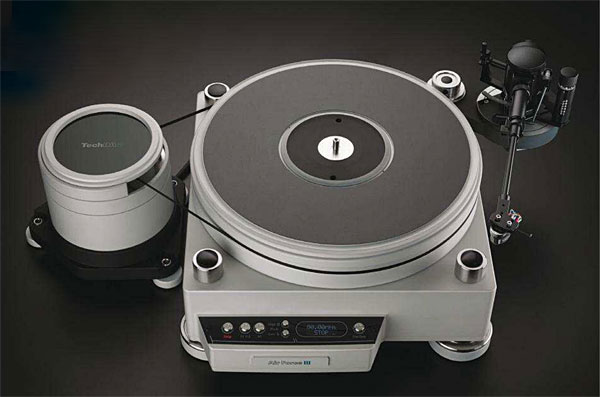
Analog Corner #269: TechDAS Air Force III turntable and Graham Engineering Phantom III tonearm
It was great fun having our editorial coordinator, Jana Dagdagan, shoot a video profile of me in my listening room. As I write this, it's had more than 88,000 views. While the ratio of thumbs up to thumbs down has remained consistently around 10:1, some of the negative comments, particularly about our industry and about this magazine, do enrage me.
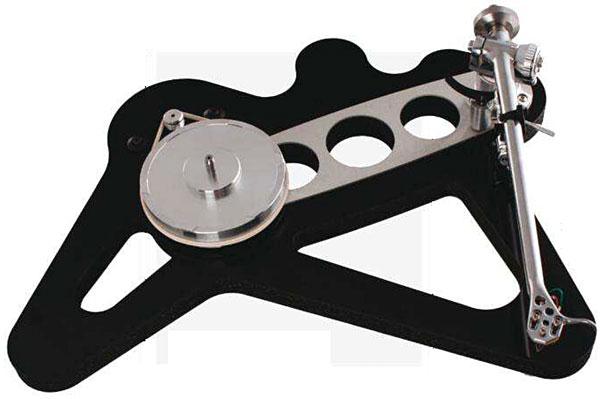
Analog Corner #270: Rega Research RP10 turntable and Aphelion MC phono cartridge
In February 2017, for the first time in almost 20 years, I visited Rega Research's factory in Southend-on-Sea, UK. I found a company that had added to its just-built factory a second building of the same size, had added an upper level within that space, and already was running out of space. Corridors and walkways were being used for assembly and storage.
Analog Corner #275: Bergmann Audio Galder turntable & Odin tonearm
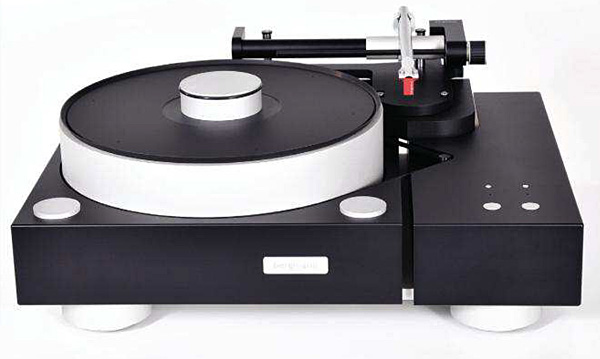
Bergmann Audio (footnote 1) launched its first turntablethe Sindre, which featured an integrated tonearmin 2008. The Sindre's acrylic platter and tangential-tracking tonearm both floated on air bearings; it had an outboard motor controller, a separate air pump for the air bearings, and cost $21,000.
Analog Corner #279: Technics SL-1000R turntable, Swedish Analog Technologies CF1-09 tonearm

Technics' sudden decision, in October 2010, to stop making its iconic SL-1200 direct-drive turntable, then in its MK6 iteration, took vinyl fans by surprise. At the time, although sales of vinyl and turntables for home use were surging, their use in clubs was falling as DJs moved to the digits. According to Technics (a division of Panasonic), production of the SL-1200 was stopped not because professional sales dropped, but because the factory tooling for manufacturing them had worn out, and retooling wasn't cost-effective.