

Music in the Round #34
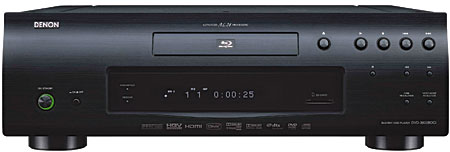
Sometimes, I think life would be easier if I were an audio customer. If I didn't have to wait on the priorities of the electronics companies, I might have gone out and bought a Blu-ray player months ago. Had I done so, I would have been shocked to find that almost all BD players are released with fewer than the advertised number of features, and sometimes require firmware updates—sometimes even a return to the manufacturer—to have them installed.
Music in the Round #35
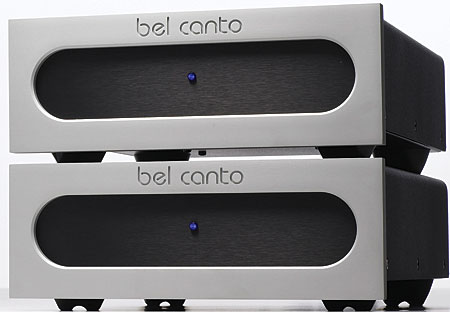
I've been enthusiastically tracking the development of Bel Canto's class-D amplifiers, from their original TriPath-based">http://www.stereophile.com/amplificationreviews/442">TriPath-based models to their more">http://www.stereophile.com/musicintheround/1106mitr">more recent designs based on Bang & Olufsen's ICEpower modules. With each step, Bel Canto has improved their amps' sound quality and reliability.
Music in the Round #36
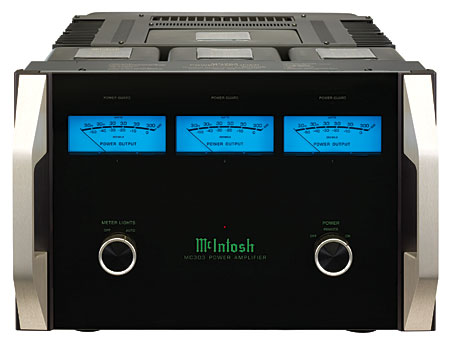
The first time I ever heard stereo sound, it was in a shop on Manhattan's Radio Row. In addition to the Studer staggered-head tape deck, the system consisted of pairs of McIntosh C8 preamps, MC60 power amps, and monster Bozak B-310 speakers. I can still picture the room and almost hear the sound. I was then an impecunious high-schooler, and while I always strived to buy the best equipment I could afford, I unfortunately was never able to own any of these iconic products. However, when I saw McIntosh's new MC303 three-channel power amp glowing brightly on silent display at the 2008 CEDIA Expo, a light bulb went on over my head: I'd been assessing a series of three-channel and monoblock amps, and the MC303 would fit nicely into my New York City system.
Music in the Round #37

HDMI is the invention of the Devil. I grant that the Devil is very smart—he has put on a single cable both hi-rez audio and video, and paid tribute to the gods of industry by incorporating obligatory content protection. However, he has confounded the rest of us by using a connector that, while it relies on friction to maintain physical contact, has so little friction that the cable connector can be easily displaced from or misaligned with the chassis connector. The traditional audiophile predilection for heavy cables is, in this case, actually counterproductive—exerting just a bit of torque on a stiff HDMI cable can be enough to break the connection.
Music in the Round #41
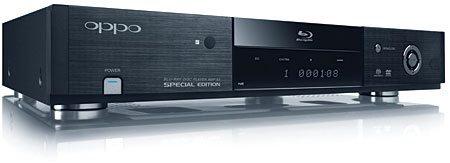
It was only a few">http://www.stereophile.com/musicintheround/music_in_the_round_37/index2… months ago that I greeted Oppo Digital's BDP-83 universal Blu-ray player as a breakthrough consumer component, and it became a Runner-Up for Stereophile's Budget Product of 2009. It now appears that Oppo is using the design as a base on which to develop similar and more advanced products, both for themselves and for a good many other manufacturers. Some may take exception to my use of the word manufacturers—if it's an Oppo under the skin, what, precisely, are these other "manufacturers" contributing? Well, that's hardly a new question.
Music in the Round #43
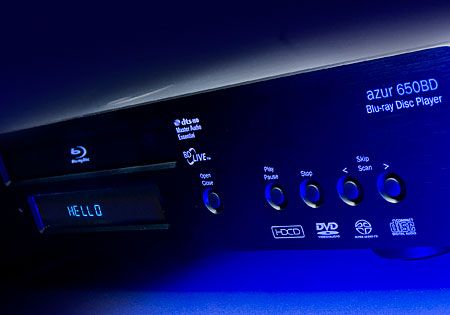
The debate over which audio component is most important in determining the quality of a system's sound is one that has been with us for decades. Recently, it came up in a conversation I had during a visit to a Manhattan high-end shop, when I was told about a discussion on the topic by Ivor">http://www.stereophile.com/interviews/1101ivor">Ivor Tiefenbrun (of Linn) and David">http://www.stereophile.com/interviews/690wil">David Wilson (of Wilson Audio Specialties). You don't have to be a seasoned audiophile to predict their respective positions, but when I was pressed to take a stand, I paused.
Music in the Round #60
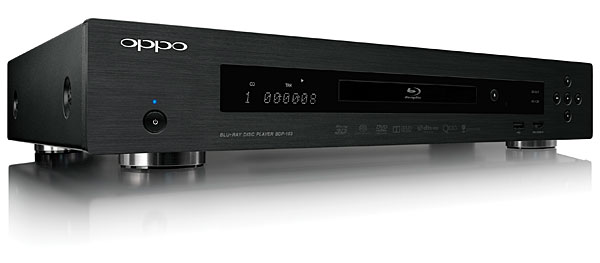
Yes, more Oppos. First off, let's put aside the expected superiority of the D/A conversion and outputs of the BDP-105 ($1199) and state that the BDP-103 ($499) is itself no slouch in these departments. In two or many channels, the '103 was good enough to let me distinguish among various high-resolution media, and to provide me with satisfying enjoyment of music in even the best of systems.
Music in the Round #87: Oppo UDP-205

For some months now, I've lived mostly without music. To survive the dust and grit of the renovation of our Manhattan apartment, all electronics had to be covered with heavy plastic, the speakers encapsulated in large green lawn bags, and the listening room partitioned off with a temporary wall. We could listen to music with our little 3.1-channel TV system in the den (eh) or through headphones (not!), or we could decamp to our house in Connecticut, which we did as much as possible. I felt deprived. Now that it's all over, I'm grateful to have it backand grateful for the improvements in the main system, some of them direct byproducts of the renovation.
Musical Fidelity Tri-Vista SACD player

Overachievers tend to rankle people after a while. Musical Fidelity, a relatively small British company run by Antony Michaelson, has issued a stream of high-performance, high-value electronic products over the past few years, along with a limited-edition line of pricier designs based on the military-spec nuvistor vacuum tube. With few exceptions, Musical Fidelity products have garnered outstanding reviews worldwide, with consumer acceptance to match. Michaelson is also an accomplished clarinetist, recording and issuing classical-music CDs in his "spare" time.
Nagra D open-reel digital recorder

As I write these words, it's the height of the fall catalog season in the Atkinson household. Whole old-growth forests must have died to ensure the everyday stuffed state of our mailbox, which adds to the sense of guilt I feel as I pitch the offenders into the trash without even giving their insides a passing glance. But there are three catalogs I do look forward to receiving, that I read from cover to cover, that I deface with multicolored Post-It notes. The Audio">http://www.audioadvisor.com">Audio Advisor catalog is, of course, a no-brainer for an audiophile. But the Griot's">http://www.griotsgarage.com">Griot's Garage and Levengerhttp://www.levenger.com">Levenger; catalogs get equal billing from me. For both offer tools (used in the widest sense of the word) that appear to have been designed by people who actually use tools, who appear to care about quality, and who appear to feel that a product that breaks while it is being used for its intended task is an offense against God (footnote 1).