

Marantz SA-1 SACD player

At last, a SACD machine from someone other than Sony! This time, it's a Marantz—the Reference Series SA-1, described as a no-compromise "ultimate-quality" player.
Marantz SA-11S2 Reference SACD/CD Player

Unless you've already acquired a large collection of SACDs, buying a player in 2009 necessitates an act of faith similar to the one turntable buyers faced back in 1992. As with the LP back then, the major labels today have all but abandoned the SACD to such niche players as Chesky, Proprius, Harmonia Mundi, Pentatone, Channel Classics, 2L, Telarc, Mobile Fidelity Sound Lab, Groove Note, and Acoustic Sounds.
Marantz SA8001 SACD player

Most people are familiar, at least in outline, with the Hans Christian Andersen fairy tale "The Princess and the Pea." In the story, the Queen decides that it's time for her son to marry, and the Prince—apparently a very fussy young man—decides that he can marry only a true princess, as measured by her sensitivity to small discomforts. It's like being an audiophile, but with peas.
McCormack Audio UDP-1 universal disc player
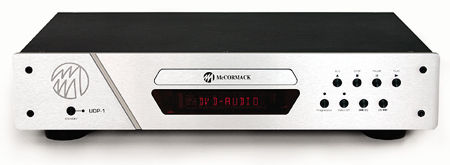
The modification of disc players is a hot topic on the various audio newsgroups, where the discussion includes do-it-yourself options and the recommendations of commercial modifiers. These range from tweak guys to such serious engineering firms as EMM Labs and everything in between. Not surprisingly, the objects of these endeavors are usually players made by one of the electronic behemoths: Sony, Philips, Technics, Toshiba, etc. In fact, it was just such a discussion that precipitated John Atkinson's purchase of and recent">http://www.stereophile.com/digitalsourcereviews/904simaudio/index1.html… comments on a stock Toshiba 3950 player, a popular target of modifiers.
Meridian Digital Theatre surround-sound music system
I am biased: On very little evidence, I remain convinced that, in the near future, high-quality music reproduction will be multichannel. While most multichannel demos are still egregiously and aggressively ping-pong, I have attended a few successful demonstrations of discrete multichannel reproduction that have impressed me so deeply that I hunger to have all the music I love transported to me (and me to it) in this way.
Muse Polyhymnia universal player

"I have something I think might interest you," said Elite AudioVideo Distribution's Scot Markwell. "Kevin Halverson has some, shall we say, different ideas about universal players."
Music in the Round #28

I had planned to feature a few intriguing new products I saw at CEDIA's Expo 2007 held last September in Denver, but I did that on the Stereophile websitehttp://blog.stereophile.com/cedia2007">website;. Instead, I'll just tell you about the only big audio trend I saw there: HDMI.
Music in the Round #29
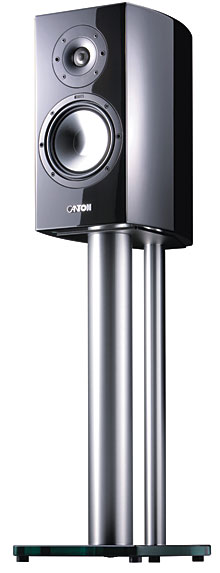
For years, I have espoused the use of the same speakers (except subwoofer) in all positions for multichannel music. To have no speaker in the system contributing a different voice to the choir seems as intuitive as having the room acoustics not color the sound. Of course, this still doesn't guarantee perfect timbral match—positioning and room acoustics usually impose some unique characteristics under all but the most perfect and symmetrical conditions. You can hear tonal imbalances even between the left and right speakers of most two-channel systems simply by switching pink noise between them. On the other hand, there's no reason to superimpose on these unavoidable differences the additional imbalances inevitable with using different speakers in a multichannel array.
Music in the Round #30
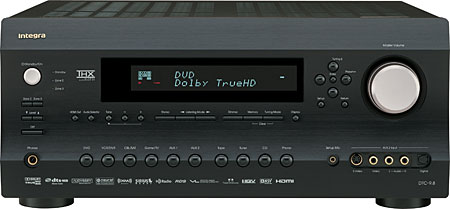
In Januaryhttp://www.stereophile.com/musicintheround/108mitr">January;, I reported on my experiences with the Integra DTC-9.8 preamplifier-processor, which I found to be outstanding with digital sources. That assessment was due, in no small part, to the performance of the Audyssey MultEQ XT room-correction system, which is included in the DTC-9.8. With only a little serious effort, MultEQ opened up the entire soundstage, making possible a better appreciation of the hi-rez sources now available on all sorts of discs. I have no doubt that any careful user can achieve similar satisfaction.
Music in the Round #31

Recently, I got an e-mail from a colleague at another audio magazine complaining about the paucity of new SACD hardware. We've been hearing about the slowing pace of new SACD releases, and about Sony's neglect of a format they themselves developed, but I now realize that, apart from the High End (footnote 1), machines that can play SACDs have been fast disappearing from the middle of the market. When the battle of SACD vs DVD-Audio was raginghttp://www.stereophile.com/asweseeit/305awsi">raging;, universal players that could play both formats were available from almost every major manufacturer. Even John Atkinson jumped on the bandwagon, acquiring a Pioneer DV-578A universal player for $150 to use as a reference. The exceptions were the very companies that had developed the new formats: Sony offered only SACD players, and Panasonic, at least at first, only DVD-A players. No matter—you could buy a universal player at any national electronics chain store, even if that store didn't stock recordings in either format and their staff had never heard of DVD-As or SACDs. Some things never change.