Interviews
Sort By: Post Date | Title | Publish Date
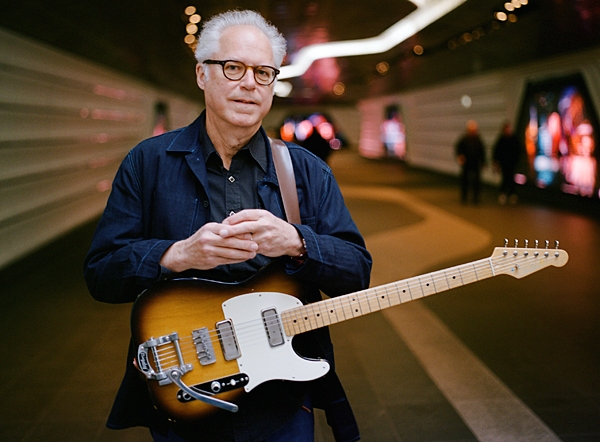
Robert Baird Sep 15, 2011 0 comments
Big bands died out back in the 1950s, right? They went away when the jitterbug faded and folks began dancing to music other than swing? And then real jazz fans departed when the bebop soloists came along and made big-band players look clumsy and quaint?
Interviews
Jonathan Scull Apr 04, 2004 Published: Jan 01, 1996 0 comments
Jonathan Scull: Gordon, please tell us what you see as the basic difference between single-ended and push-pull.
Interviews
John Atkinson Nov 29, 2010 Published: Oct 15, 1987 0 comments
1087azima.jpgIn its first three years, UK hi-fi manufacturer Mission Electronics employed a number of engineers to reinforce the creative talents of founder and hi-fi enthusiast Farad Azima. The lineup included John Bicht, now with Versa Dynamics, and Stan Curtis, now heading up Cambridge Audio. But when Farad's brother Henry—"Henry" is actually a nickname and I am sure you can see the derivation—joined the company in 1979, he brought both a much-needed stability, and initiated a considerable degree of commercial success for the company's products. Now resident in Canada, he spends his time commuting between his laboratory in Toronto and the company's headquarters near Cambridge, England (footnote 1). Prior to joining Mission, however, Henry had served in the Iranian Navy for 15 years, an unusual training for an audio engineer. I asked him if this had been an appropriate preparation for the world of hi-fi.

Henry Azima: I had actually been a student in the UK, studying electronic engineering at the University of Surrey in Guildford. When I left the Navy in 1979 after the revolution in Iran, I moved to the UK and got a job with my previous University as an Assistant Lecturer and Researcher. However, Farad then asked me out of the blue to join Mission. I said, "Well, I have no idea about hi-fi, and stuff like that." He said, "You will learn, there's no problem!"

Interviews
Jonathan Scull Jul 08, 2007 Published: Mar 08, 1997 0 comments
Our interview with Hiroyasu Kondo—founder of Audio Note Japan, and a legendary figure in his own time—took place during HI-FI '96 last June at the Waldorf=Astoria. It seemed very natural; the crowd at the Show was very internationalist. Herb Reichert of Audio Note New York found us a quiet corner after lunch, and we sat down to talk.
Interviews
Wes Phillips Apr 09, 1996 0 comments
To get some background information both on Aerial Acoustics and on the 10T loudspeaker that I review this month, I gave Aerial's Michael Kelly a call. When had he got involved in loudspeakers, I asked...
Interviews
David Lander Nov 30, 2003 Published: Nov 01, 2001 0 comments
In July 1877, Thomas Edison wrote that he was sure he would "be able to store up & reproduce at any future time the human voice perfectly," and the word phonograph soon began showing up in his lab notes. By the time Ivor Tiefenbrun stepped onto the audio industry soundstage, nearly a century had passed, and even discriminating listeners took the record player for granted. But Tiefenbrun had discerned sonic differences among players, and he knew that his LP12—he had built a prototype for personal use—was a superior performer. When people told him that turntables do no more than go 'round and 'round, he would rebut them by pointing out that speakers merely go in and out.
Kalman Rubinson Mar 25, 2007 0 comments
Iván Fischer, founder and conductor of the Budapest Festival Orchestra, has performed with many major orchestras and recorded for a number of major labels, most significantly with Philips, from 1995 to 2004. Fischer/BFO made the first multichannel orchestral recording for SACD, which Philips used as a demonstration disc for their first SACD players. I still treasure that disc—it demonstrates many of the advantages of the medium with a wide and varied program—but it has never been commercially released.
Interviews
Jonathan Scull Sep 21, 2004 Published: Oct 01, 1998 0 comments
Kathleen (K-10) and I first met Jack Renner—Telarc's Chairman, CEO, and Chief Recording Engineer—at Iridium, a tony jazz club here in New York. He was recording Benny Golson and the Jazz Messengers doing a rousing a tribute to Art Blakey. Now what would you think a guy who's won 31 Grammys over 21 years would be doing, exactly? Maybe feet up, a cigar languidly tracing curlicues in the air while directing his minions?
Interviews
Jonathan Scull Apr 01, 1998 0 comments
Jacques Mahul is an interesting, thoughtful man. He's entirely Parisian: international, urbane, and sophisticated. During "HeeFee" '96 in Paris, Kathleen and I sat down with him and spoke about his early years as an audiophile. To accompany my review of the JMlab Utopia, We tried to find out what drives him—to make the drivers he makes today! I asked him when had it all started:
Interviews
John Atkinson Jun 07, 2010 Published: Sep 07, 1986 0 comments
It is a widely held belief that musicians do not assess hi-fi equipment in the same way as "audiophiles." I remember the British conductor Norman Del Mar—an underrated conductor if ever there was one—still being perfectly satisfied in 1981 with his 78 player, never having felt the need to go to LP, let alone to stereo. And some musicians do seem oblivious to the worst that modern technology can do. I was present at the infamous Salzburg CD conference in 1982, for example, where Herbert von Karajan, following one of the most unpleasant sound demonstrations in recorded history, announced that "All else is gaslight!" compared with what we had just heard. J. Gordon Holt proposed a couple of years back ("As We See It," Vol.8 No.1) that sound is not one of the things in reproduced music to which musicians listen. I have also heard it said that even the highest fidelity is so far removed from live music that a musician, immersed in the real thing, regards the difference between the best and the worst reproduced sound as irrelevant to the musical message: both are off the scale of his or her personal quality meter.
Interviews
Steve Guttenberg Jan 02, 2005 Published: Dec 02, 2004 0 comments
Jim Fosgate fits the category of Classic American Inventor to a T. This softspoken, quietly intense man has earned 18 patents and founded three successful electronics companies. In the late 1970s, he pulled out of the car audio business to follow his quadraphonic bliss, and designed the Fosgate Tate 101, arguably the finest quad decoder of the era. He also created the best-selling matrix surround processor of all time, Dolby's Pro Logic II, and in 2003 won an Emmy for the Development of Surround Sound for Television. He now serves as a senior executive consultant for Fosgate Audionics, a division of the Rockford Corporation.
Interviews
John Atkinson Mar 16, 1998 0 comments
There was something odd about the clock on Jim Thiel's office wall. I didn't get it at first, other than noting that instead of the minutes being marked off at 12 five-minute intervals, Jim's clock had 24 markings. That was it: as well as the number "12" in its usual place at the top of the face, there was another "12" at the bottom, where the "6" usually is. The clock that Jim built was typical of everything this laconic loudspeaker engineer is involved in: logical, functional, and different from what anyone else in the same field does. In his cigarette-strained drawl, Jim explained that the short hand of his clock always points toward the sun: directly up at noon, directly down at midnight. That's the way a clock should be, declared Jim, and when you're in his company, it's hard to see how he could be wrong.
Interviews
David Lander Apr 23, 2004 Published: Jan 01, 2003 0 comments
The Pennsylvania Gazette documented an early connection between music and an American named Winey when, in 1759, it listed for sale as part of an estate "a middle sized organ, having eight stops." Interested parties were directed to one Jacob Winey, a Philadelphia merchant.
Robert Baird Apr 28, 2011 0 comments
Whistling ductwork, whirring fans, murmuring pipes—along with being jazz's most storied location, a living shrine to the memories of Bill Evans, John Coltrane, and so many others, Manhattan's Village Vanguard, on Seventh Avenue South, was, on this winter's night, the Das Boot of jazz. In every corner, every stairwell, every square foot of available backstage space, some kind of furnace machinery audibly ground, banged, and/or wheezed away.
Interviews
John Atkinson Feb 25, 1988 0 comments
Elsewhere in this issue, I review the new Spica Angelus loudspeaker, only the fourth product to appear from this Santa Fe-based manufacturer since it started operations at the end of the 1970s. You will have to read the review to learn what I thought of the speaker, a distinctively styled floor-standing two-way, but I also thought it would be beneficial to talk with Spica's founder and chief engineer John Bau. I therefore made arrangements to meet with him in their facility just a couple of blocks from Stereophile's old Early Street HQ. I had been told that John was tall, but until he unfolded himself from his stool in his laboratory, surrounded by computers and computerized test equipment, I had not realized how tall! Undaunted, I settled into a conventional chair, pointed the microphone in a vaguely upward direction, and asked John how he had gotten into loudspeaker design.—John Atkinson
Site Map / Direct Links