

DALI Zensor 1 loudspeaker
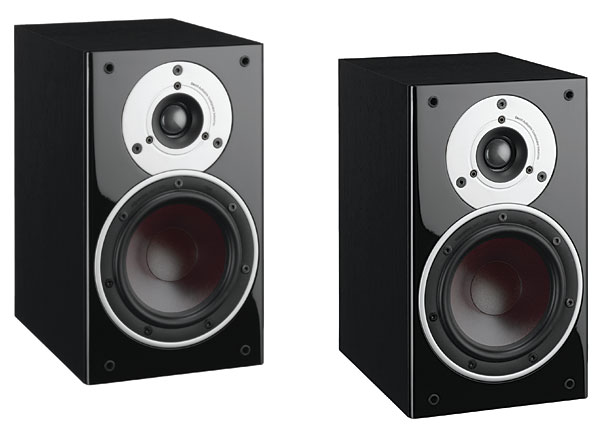
I thought I'd review the procedure I typically use to seek out affordable speakers for review as, in the case of the Denmark-designed DALI Zensor, made in the company's facility in China, there was a twist at the end.
In preparing to review affordable loudspeakers, I typically put together a list of potential candidates I've discovered at audio shows, or that have been recommended to me by other Stereophile writers. I add to that list products I've learned about from press promotions, usually from companies whose products have impressed me in the past. I boil this down to a short list, then run it by Stephen Mejias to make sure I'm not tripping over The Kid's own quest for budget sonic nirvana.
Dana Audio Model 1 loudspeaker
 The philosophy promoted by many mainstream stereo magazines (and thus often the belief of the general public) is that one should spend a minimum amount of one's hi-fi budget on electronics and front ends, and a maximum amount on loudspeakers. Since all electronics sound alike and it's the loudspeaker that really produces the sound, the highest overall performance is obtained by putting expensive loudspeakers at the end of a chain of inexpensive electronics. Cables? Don't waste your money.
Dayton Audio B652 loudspeaker
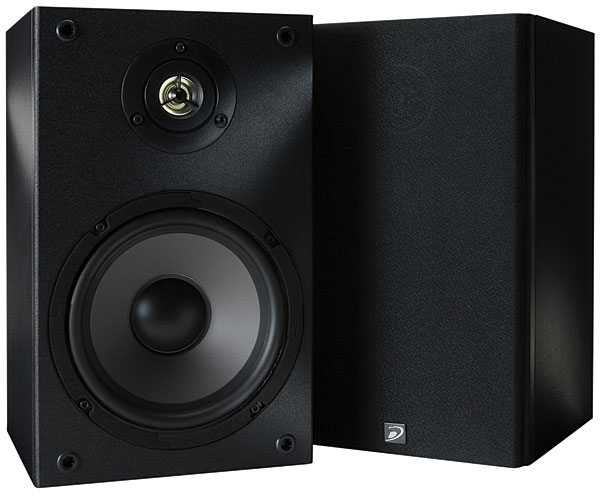
I was ready to have some fun with Dayton Audio's B652 loudspeakersthe ones with the outrageously high price of $39.80/pair.
Available from Parts Express (catalog #300-652), the Dayton B652 is a simple two-way, sealed-cabinet design with a 6.5" polypropylene mid/woofer and a ferrofluid-cooled, 5/8" polycarbonate tweeter. The cabinet is clad in black vinyl and has a removable grille of black cloth. The B652s sounded pretty much the same regardless of whether the grilles were in place, but I preferred their looks with the grilles off, so that's how I listened. Better looks often equal better soundat least in my home.
Definitive Technology StudioMonitor 45 loudspeaker

The Definitive Technology StudioMonitor 45 measures a very room- and back-friendly 11 11/16" (297mm) high by 6¾" (172mm) wide by 11 11/16" (297mm) deep, but these dimensions are attractive for reasons other than simple, efficient transport and placement. I noticed right away that something about the speaker just looked right. Paul DiComo, DefTech's senior vice president of marketing and product development, explained that while the number and size of drivers used in any DefTech design will largely dictate that speaker's height and width, the company nevertheless aims for Fibonacci, or golden-ratio, dimensions. According to DiComo, these efforts help minimize standing-wave and "organ-pipe" resonances inside the speaker's cabinet.
Definitive Technology StudioMonitor 55 loudspeaker
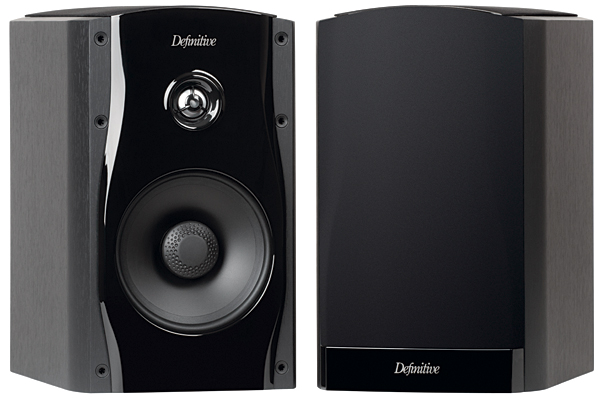
Recently, I thought about all the audio shows I've attended over the last 27 years, looking for any pattern that all of them might have shared. I came up with a handful of audio manufacturers that have earned at shows a reputation for getting, year after year, consistently good soundrooms in which I could reliably depend on being able to chill out and enjoy music in good, involving sound. Those companies include Audio Research, Music Hall (distributor of Creek and Epos), Vandersteen Audioand Definitive Technology. Since their founding, in 1990, Maryland-based DefTech has been a major presence at shows, displaying an increasingly wide range of high-value speakers for two-channel and surround-sound systems. But I'd never reviewed one of their models. I thought it was about time.
Denon SC-CX303 loudspeaker

The companion loudspeaker to Denon's">http://www.stereophile.com/thefifthelement/the_fifth_element_57">Denon's RCD-CX1 SACD/CD receiver is the SC-CX303 ($1200/pair). The SC-CX303 is a ported two-way with a 1" soft-dome tweeter and a 5" carbon-fiber–cone woofer. Denon claims a sensitivity of 86dB and an impedance of 6 ohms. Instead of a formal frequency response, Denon instead gives an unreferenced figure for frequency extension that, at 35Hz–60kHz, is neither helpful nor credible.
Devialet Diary

It's day five of our planned month-long stay à Paris, late April through most of May. My wife is here for workfor me, it's strictly for pleasureand we're enjoying Paris's rich, sensual goodness: food, museums, architecture, coffee, people, food. And yet, earlier today, when we were out for a walkwe've been walking close to 10 miles each day, exploring the cityI realized that my life here has been missing something important.
DeVore Fidelity Gibbon 3XL loudspeaker

Forty years ago, when I first had money enough to buy serious [ahem] consumer audio, there were a few good turntables available, from Thorens, Garrard, Ariston, some others. Today is the golden age of turntables: ask Mikey, if not antiquarian Artie. And loudspeakers! In 1970, models were few, and most were mediocre. Today, you can have a great loudspeaker for a song.
DeVore Fidelity Orangutan O/baby loudspeaker
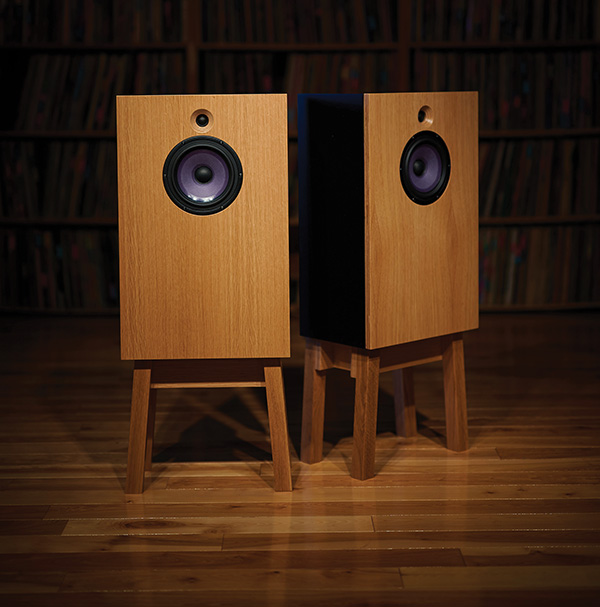
In the mid-2000s, I worked at a "white-shoe" law firm on Wall Street, ran with renegades, and fancied myself a writer. Fast-forward some 18 years. The firm, like many cash-flush NYC firms, has moved to midtown and I've moved on. Those renegades are now respected members and players in the hi-fi community. I still fancy myself a writer.
Back then, I made friends with a big-eared clique that would influence my future in hi-fi: audio writer Michael Lavorgna (currently editor at TwitteringMachines.com); NYU law professor Jules Coleman; former Stereophile deputy editor and current AudioQuest director of communications Stephen Mejias; record-industry veteran Andrew Klein; composer Dan Cooper; illustrator Jeff Wong; vacuum-coffeemachine collector and audiophile Margery Budoff, who regrettably passed in 2015; Tone Imports' Jonathan Halpern; and DeVore Fidelity proprietor-designer John DeVore.
Diapason Adamantes II loudspeaker

Beauty is in the eye of the beholder—but all too often there is little of beauty to be found in high-end audio. In these aesthetic dark ages, we have been indoctrinated to forsake grace and elegance; we all know that every underlying penny should be spent only in the pursuit of superior sonic performance.