

Bowers & Wilkins 705 Signature loudspeaker
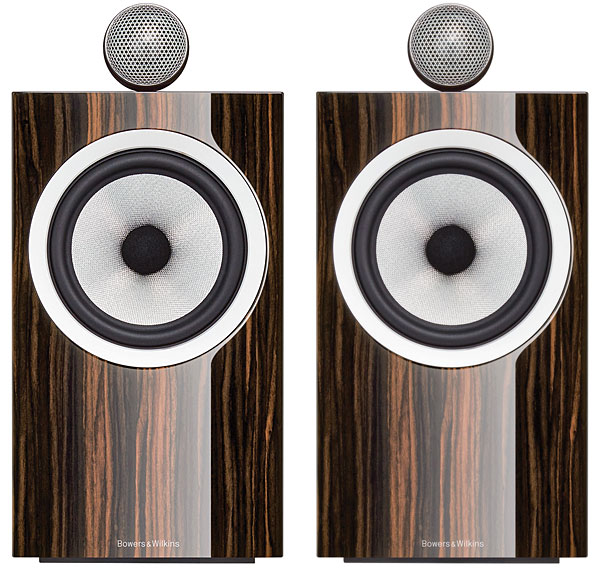
Back in June 1994, I reviewed the Bowers & Wilkins John Bowers Silver Signature standmounted loudspeaker. This speaker cost a breathtaking $8000/pair at that time, and I subsequently bought the review samples and their matching slate stands. It was the best-sounding speaker I had used in my Santa Fe listening room: When the company's then-owner, Robert Trunz, visited me a couple of years later, he told me that he hadn't realized how good the Silver Signatures could sound. But after I moved to Brooklyn, in 2000, the Silver Signature never worked as well in my new listening room. I still own the speakers, but they currently live in our storage unit.
Bowers & Wilkins 805 D4 Signature loudspeaker
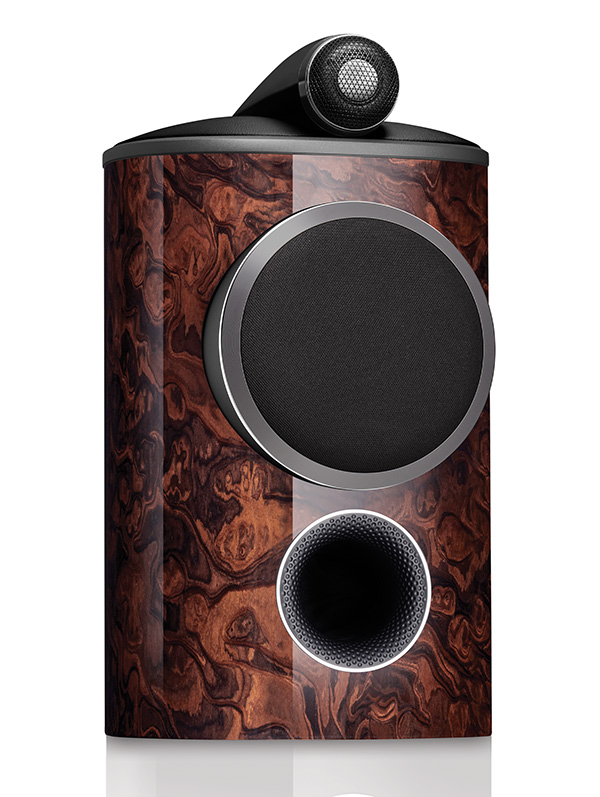
The "Bowers" in the name of British manufacturer Bowers & Wilkins (B&W) refers to founder John Bowers, whom I got to know fairly well before he passed in 1987. In recent years, I've reviewed two Bowers & Wilkins loudspeakers: the 705 Signature two-way standmount in the December 2020 issue and the Diamond Series 804 D4 three-way floorstander in the January 2022 issue. More recently, Tom Fine reviewed the three-way, floor-standing Signature Series 801 D4 in March 2024.
Currently there are two models in the Signature Series, which was launched in 2023 to pay tribute to the company's groundbreaking John Bowers Silver Signature from the early 1990s: the 801 D4 and the subject of this review, the two-way 805 D4 standmount, which B&W describes as its "highest performance standmount ever."
Bowers & Wilkins 805 D3 loudspeaker
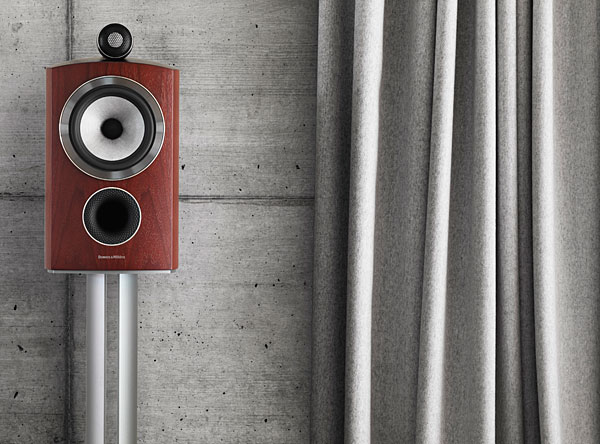
I have had a long relationship with Bowers & Wilkins. The first B&W speaker I spent serious time with was the DM-6, the infamous "pregnant kangaroo," which was reviewed by Allen Edelstein in December 1977 and which I borrowed for a while after interviewing the company's founder, John Bowers. Ten years later, when I met the woman who was to become my third wife, she already owned a pair of B&W Matrix 801s, a speaker reviewed by Lewis Lipnick in December 1987.
Bowers & Wilkins CM5 loudspeaker
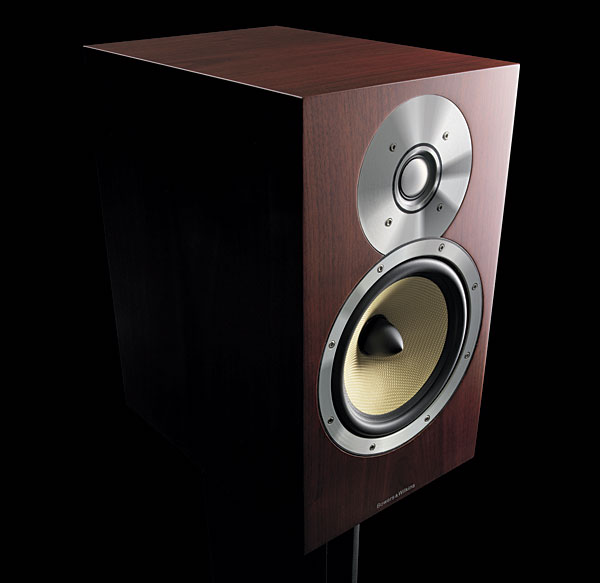
With all the affordable loudspeakers I've written about in recent years, I couldn't remember the last time I reviewed one from the revered British firm Bowers & Wilkins. When I searched www.stereophile.com, I learned that the last time a B&W speaker had graced my listening room's carpet was more than seven years ago: the DM603 S3, reviewed in the August 2005 issue. I thought it was time to revisit the brand, and as the DM603 S3 was a floorstanding speaker, this time a bookshelf model seemed in order.
Brilliant Corners #25: Devon Turnbull and the Klipsch-Ojas kO-R1 loudspeaker
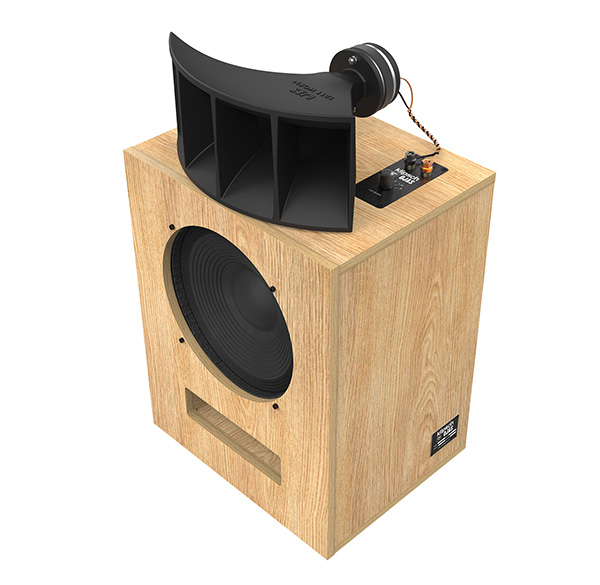
"Paul Klipsch was a genius," Roy Delgado told me recently, with the sound of genuine amazement in his voice. "Me, I'm just a tinkerer." I've spoken to Delgado, Klipsch's chief audio engineer, a handful of times over the past few years and find him affable, plainspoken, and almost absurdly humble. His LinkedIn page describes him simply as "engineer at Klipsch." His bio on the Klipsch Museum website lists his interests as "a closer relationship with God [and] the pursuit of the ever-elusive largemouth bass." To be sure, Delgado holds several patents, has an intimidating grasp of loudspeaker design, and is anything but a tinkerer. But it was still weird to see himdressed in the T-shirt, light jeans, and work boots of an Arkansas fishing enthusiastat the Nine Orchard Hotel during last year's New York Fashion Week.
We were there for the launch of a loudspeaker, a collaboration between the Little Rockbased Klipsch Group and Ojas, the nom de solder of artist and designer Devon Turnbull.
Brilliant Corners #36: A New Listening Space, Jean-Marie Reynaud BLISS Jubilé loudspeaker, Stein Acoustic Discs
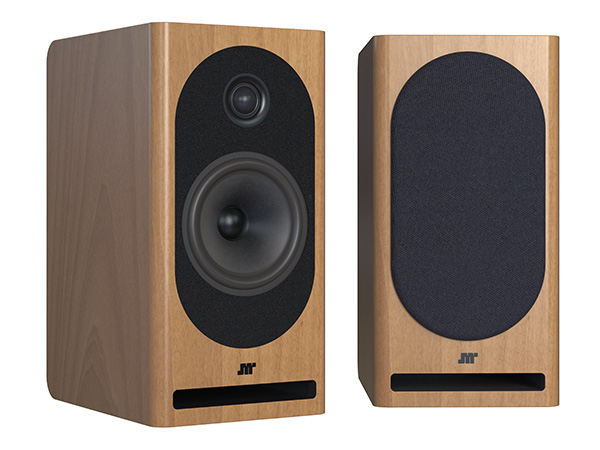
It's difficult to put a positive spin on moving. A recent survey ranked it as life's most stressful event, ahead of divorce, losing a job, or becoming a parent. Forty-two percent of respondents said it brought them to tears. Thirteen percent said it was worse than a week in jail.
Cabasse La Sphère powered loudspeaker
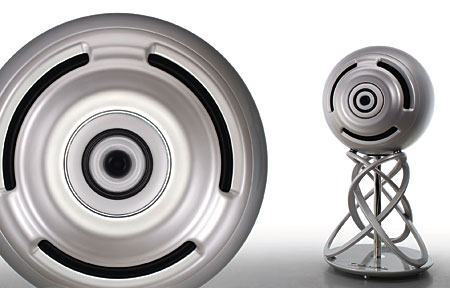
In an unfortunate coincidence, a few nights before the Cabasse team arrived to install the company's unusual-looking La Sphère powered speaker system, VOOM HD Networks, Monster HD channel, which is exclusively devoted to B horror movies, broadcast The Crawling Eye (aka The Trollenberg Terror), a 1958 black-and-white howler starring Forrest Tucker. I watched.
Cambridge SoundWorks Ambiance loudspeaker
According to the conventional wisdom, companies selling consumer products fall into two categories: those whose sales are "marketing-led" and those whose sales are "product-led." Marketing-led companies tend to sell mature products into a mature market where there are no real differences between competing products—soap powder, mass-market beer, or cigarettes, for example—whereas product-led companies tend to sell new technologies, such as personal computers and high-end hi-fi components. In the audio separates market, conventional wisdom would have a hard time categorizing any individual company: no matter which you choose, it would be simplistic to say that it is either product- or marketing-led. No matter how good the product, without good marketing the manufacturer stands little chance of success; a poor product superbly marketed may make a company successful overnight, but that success will have hit the end stops by the following night.
Canalis Anima loudspeaker
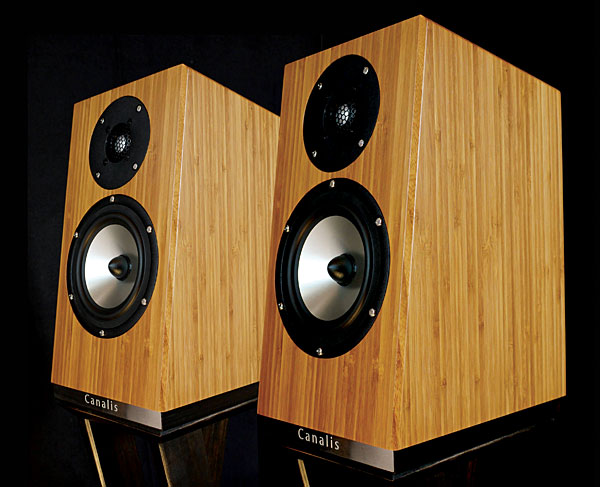
The Anima is a two-way loudspeaker from Canalis Audio, a new enterprise of longtime importer Immedia, of Berkeley, California. Canalis is thereby related to Spiral Groove, and Canalis speakers bear the Spiral Groove logo on their terminal plates. Spiral Groove, founded in 2005, makes turntables; their SG2 ($15,000) was favorably reviewed by Brian Damkroger in the June 2010 issue. Canalis makes at present four models of loudspeakers, all designed in collaboration with noted engineer Joachim Gerhard, formerly of Germany's Audio Physic. All Spiral Groove and Canalis products are made in the US.
Canon S-35 loudspeaker
Yes, it's the same Canon—the Japanese photography, photocopier, and laser-printer giant whose logo for so many years adorned the rear wings of Williams Formula 1 racing cars. Canon's venture into the unknown waters of audio was instigated by the head of the UK-based research center, Hiro Negishi. I have been seeing Negishi-san, one of the world's leading minds in optical technology, at Audio Engineering Society conventions since the early '80s, so I was only half-surprised to see Canon launch first one loudspeaker, then a full range (footnote 1).