

Epos M5 loudspeaker
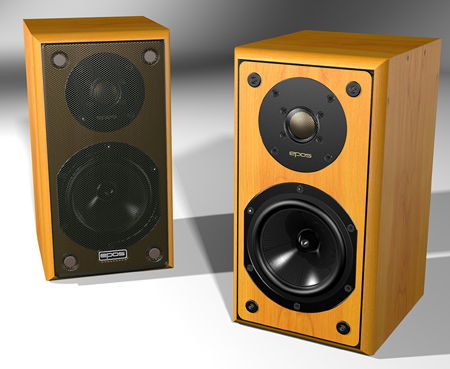
Following my favorable experience with Epos Ltd.'s entry-level loudspeaker, the ELS-3 ($329/pair; see my January">http://www.stereophile.com/loudspeakerreviews/104epos">January 2004 review), Roy Hall, of importer Music Hall, called me with some excitement about the new Epos M5 ($650/pair). In a crowded room at the Home Entertainment 2004 show in New York, I did a quick comparison of the M5 and ELS-3 under suboptimal conditions of multiple speakers in the room and Roy answering consumers' questions while pouring scotch for his dealers. Still, I was able to hear enough from the M5 to intrigue me, and with high expectations, I asked for a pair for review.
Epos M5i loudspeaker
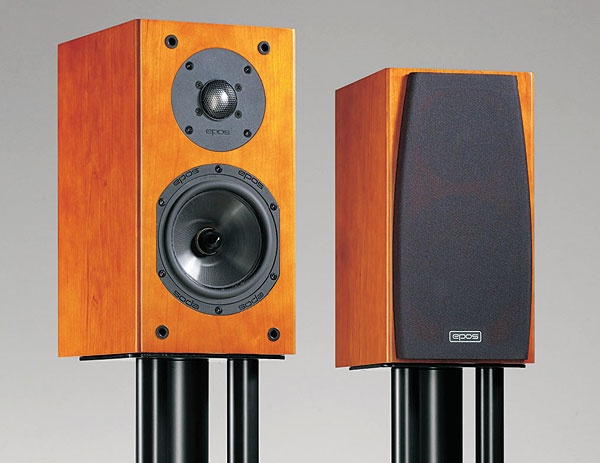
The M5i, basically a two-way bookshelf version of the 21½-way M16i, has the same tweeter, woofer, and footprint as the larger model, less its larger cabinet and second mid/woofer, and incorporates all of the i-series updates included in the M16i. The speakers look very similar; like the M16i, the M5i is available in gorgeous cherry veneer or basic black. The price ($899/pair) is $249/pair higher than the original M5. I placed the M5is on Epos's dedicated stands.
Era Acoustics Design 4 loudspeaker & SUB10 subwoofer
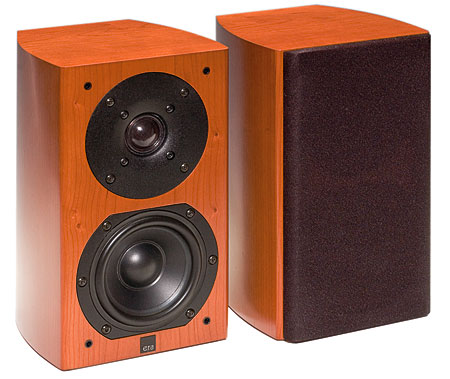
The first time I attended the Las Vegas Consumer Electronics Show, in January 1986, I didn't get there until the second day of the Show. Still, by the beginning of the fourth and final day I'd managed to visit every high-end audio exhibit, and still had time to go back for seconds to the rooms that had sounded the best. Twenty years later, CES has grown so much that it's impossible for a single writer to visit even a quarter of the exhibits in which he might be interested. And even with the sort of team">http://blog.stereophile.com/ces2007/">team reporting Stereophile now practices, covering the Show has become an exercise in applied logistics for the busy journalist: "Should I wait for the free shuttle bus? Should I get a taxi—though I might get caught in Las Vegas's increasing traffic jams, or even just get stuck at the city's interminable traffic lights? Or should I take the new monorail—though that goes nowhere near the hotel in which [insert name of hot company] is demming its products?"
Escalante Design Fremont loudspeaker

Room lock occurs when a set of loudspeakers reproduces the deep-bass notes of a pipe organ powerfully enough that the sounds can be felt as pressure waves. On Day 2 of the 2007">http://blog.stereophile.com/he2007">2007 Home Entertainment Show, in one of the Sound By Singer rooms, our own John">http://www.stereophile.com/thefifthelement/">John Marks played his recording of organist James Busby performing Herbert Howells' Master Tallis's Testament through a pair of Fremont loudspeakers from Escalante Design. The sustained bass note at the end of the passage took my breath away—the stand-mounted Fremonts sounded as open and dynamic as anything else I heard at HE2007. I wondered if they'd sound as good in my home listening room.
Evett & Shaw Elan loudspeaker
Like many audiophiles, I am finding myself listening to more and more music sitting in front of my computer. My experience with the little plastic-box horrors sold as "computer speakers" has not been positive, however, with even models from Altec Lansing and Cambridge SoundWorks scoring an "F." For a long time, therefore, I used a pair of RadioShack Optimus LX5s, stuck at the far ends of my desk because their unshielded drivers messed with the colors on my monitor. I tried and liked a pair of the A/V version of PSB's best-selling $249/pair Alphahttp://www.stereophile.com/loudspeakerreviews/241">Alpha;. Then Jonathan Scull recommended I try a pair of the diminutive Elans from Utah-based Evett & Shaw, with which he had been impressed at the 1999 Consumer Electronics Show.
Falcon "Gold Badge" LS3/5a loudspeaker

The BBC-designed LS3/5a monitor loudspeaker has been in continuous BBC-licensed production in various forms since 1975. During those 45 years, its popularity has never abated. I bought my first pair of LS3/5a's as a Badger kit from an ad in the back of Speaker Builder magazine.
Falcon Acoustics LS3/5a loudspeaker

When all you've ever heard are wooden boxes that shout, it's difficult to recognize their highly accented "voice." Few of us actually notice how miserably distorted all loudspeakers are. Don't believe me? Try listening to a recording of your child's voice, the sounds of rattling keys, or an audience applauding.
Fleetwood Sound Company DeVille SQ loudspeaker
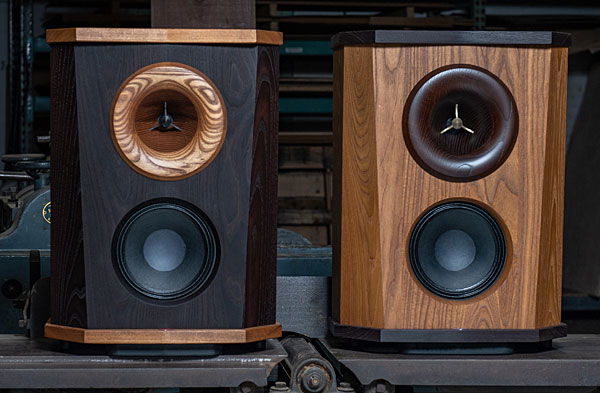
Oswalds Mill Audio's products espouse a sort of steam-punk-meets-modern visual style, but the company's philosophies are straight from hi-fi's '50s and '60s glory days, an era when idler-drive turntables, low-power tube amps, and horn-loaded loudspeakers were the norm. That history and hi-fi's future fascinate and inspire Jonathan Weiss, OMA's proprietor.
Focal Aria 5 loudspeaker kit
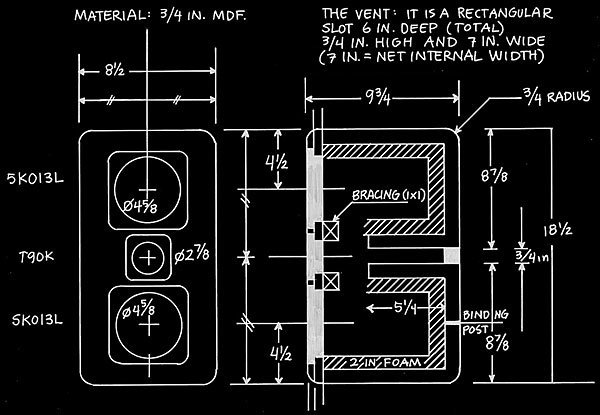
You don't have to be a seasoned speaker builder to recognize the Focal name. For years they've offered the home constructor a full assortment of quality drivers and kits. The kits were designed in-housemostly by Focal in Franceand, according to Focal, they represent fully engineered and tested systems. The Aria kits (the 5 and the 7), depart from Focal's past policy, in that the project was a collaborative design effort between Dr. Joe D'Appolito and Focal America. Focal's main contribution was in the area of cabinet development, while D'Appolito was responsible for the system integration and crossover design.
Focal Chorus 807V loudspeaker

Readers often ask how I choose components for review. My method is simple: Ninety percent of what I review is gear that has impressed me at one of our Home Entertainment Shows, or new designs from manufacturers whose products I've liked in the past. The remainder are assigned by John Atkinson.