

Acoustic Energy Aegis One loudspeaker
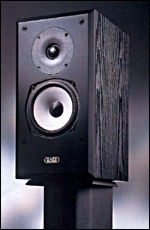
In this issue's "Letters" column, you will find comments from readers who are bothered by what they perceive to be this magazine's emphasis on reviewing very expensive technology. Yes, we do cover a lot of cutting-edge technology, and it is, of necessity, expensive. But our experience has been that that technology invariably trickles down to products that real people can actually afford.
Acoustic Research AR 303 loudspeaker
It's a common audiophile failing to remember the past as being much better than it actually was. (Though, of course, some things were better.) I remember the first time I heard a pair of Acoustic Research LST loudspeakers, in 1974 or thereabouts. Compared with the Wharfedales I used in my own system and the various Goodmans, Celestions, and home-brews I heard at friends' homes, the sound of classical orchestral recordings on the ARs was about as close to the real thing as I could imagine. And the AR ads reinforced my experience, telling me that musicians such as Herbert von Karajan also used LSTs. I never heard those speakers again, but occasionally I wonder how they would hold up today (footnote 1).
Acustik-Lab SR Bolero loudspeaker & Forte woofer
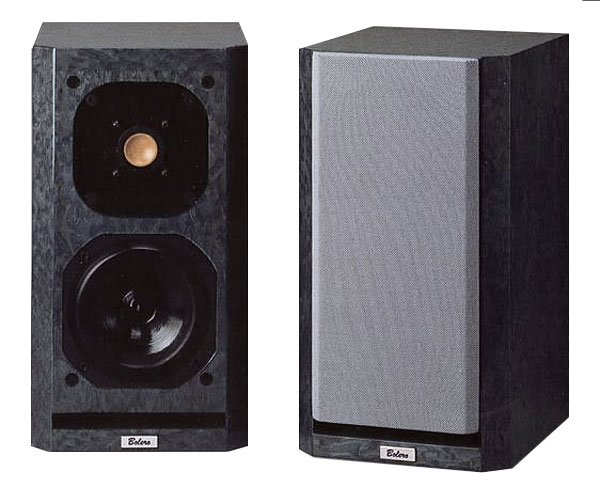
The Acustik-Lab SR Bolero loudspeaker ($1580/pair) debuted at the 1988 SCES in Chicago. I must own up right from the outset that I know nothing about the Swiss SR Trade (Acustik-Lab) company. I do know, however, that Audio Advancements' Hart Huschens was getting an intensely musical sound from their little Bolero speakers, driven by the German Klimo Kent tube amplifiers, at the 1988 Summer CES. I immediately asked for a pair for review; in addition, Mr. Huschens sent along a pair of the matching Bolero Forte woofers ($920/pair).
Aerial Acoustics 5T loudspeaker
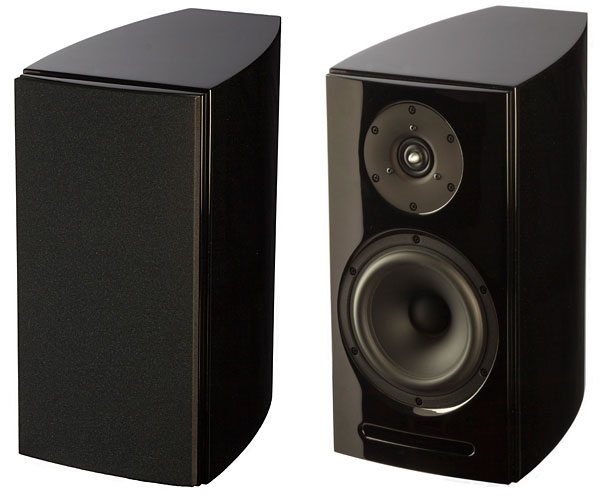
Long-lived loudspeaker models are rare. So it's surprising that the two-way, stand-mounted Model 5, the smallest speaker made by Massachusetts-based Aerial Acoustics, was revised just once between 2015 and April 1997, when Robert Harley favorably reviewed it and it cost $1800/pair. The revised 5B was equally favorably reviewed by John Marks in July 2009. This kept the original's 1" titanium-dome tweeter and sealed-box woofer loading but replaced the 7" polypropylene-cone woofer with a 7.1" laminated-fibercone woofer. Despite more than a decade's worth of inflation, the price rose only slightly, to $2400/pair.
Aerial Acoustics CC3 center loudspeaker
 As the music swelled in the background, Humphrey Bogart leaned toward Ingrid Bergman and tenderly said, "Mnn mmmm mnn nnrm murrrmr."
Damn! I hate when that happens. I ran the laserdisc back and played it again, this time louder.
"MNN MMMM MNN NNRM MURRRMR," said Bogart.
When you think about it, the center channel is probably the most important channelif you don't believe this, watch a movie sometime with the dialog speaker turned off and see how compelling the experience is. I mean, I like explosions, rocket launches, and train wrecks as much as the next guy, but what I really want from a video sound system is the words.
As the music swelled in the background, Humphrey Bogart leaned toward Ingrid Bergman and tenderly said, "Mnn mmmm mnn nnrm murrrmr."
Damn! I hate when that happens. I ran the laserdisc back and played it again, this time louder.
"MNN MMMM MNN NNRM MURRRMR," said Bogart.
When you think about it, the center channel is probably the most important channelif you don't believe this, watch a movie sometime with the dialog speaker turned off and see how compelling the experience is. I mean, I like explosions, rocket launches, and train wrecks as much as the next guy, but what I really want from a video sound system is the words.
Aerial Acoustics Model 5 loudspeaker

One of the fundamental tenets of high-end audio is that a loudspeaker's bass output should be appropriate for the listening room's size. The smaller the room, the less bass the loudspeakers should produce. Any manufacturer of large loudspeakers who has set up such a system in a CES hotel room can attest to how difficult it is to avoid boominess in a tiny space.
Aerial Model 5B loudspeaker

In October 2005's "The">http://www.stereophile.com/thefifthelement/1005fifth">The Fifth Element." I said of the Harbeth HL-3P-ES2, a descendant of the BBC">http://www.stereophile.com/standloudspeakers/361">BBC LS3/5A, "Gloriosky, these little speakers are just great to listen to!" Later, in April">http://www.stereophile.com/standloudspeakers/1293harbeth/index5.html">A… 2007, John Atkinson endorsed that remark.
Alta Audio Alyssa loudspeaker
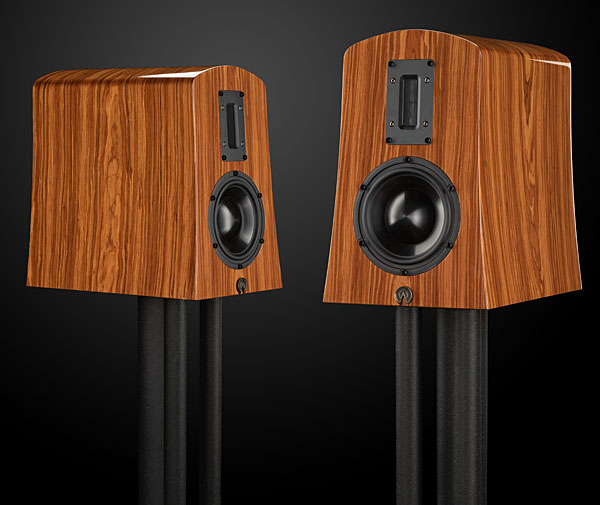
It was a "Wow!" audio moment I'll never forget. It happened just after Ladies Who Lunch, our regular Friday afternoon lunch-n-chat for audio poobahs at the Grand Sichuan restaurant in Chelsea. It was dark at 4 o'clock, and the first snow of winter looked enchanting under the 24th Street streetlamps. Audiophiliac Steve Guttenberg and I were accompanying our turntable setterupper friend Michael Trei to Bob Visintainer's Rhapsody Music and Cinema, where Trei was scheduled to install a Lyra Etna SL cartridge on a TechDAS Air Force III turntable. I tagged along to chatter with Bob and listen with Steve to Alta Audio's tall, open-baffle Titanium Hestia loudspeakers. Rumor had it that this was a happening system.
Altec Lansing 301 loudspeaker

One of the oldest names in US audio, Altec Lansing was building speakers for theaters and recording studios long before the introduction of the microgroove LP in 1948 (which date many see as marking the inception of high fidelity). Started in 1931 under the name All-Technical Services ~Corp., the firm later purchased another audio firm called Lansing Engineering, and merged the names. Altec's Model 604, one of the first true coaxial speakers, was adopted for home use by many early hi-fi buffs and, several permutations later, is still widely used for monitoring in disc-cutting rooms.
Amphion Helium2 loudspeaker
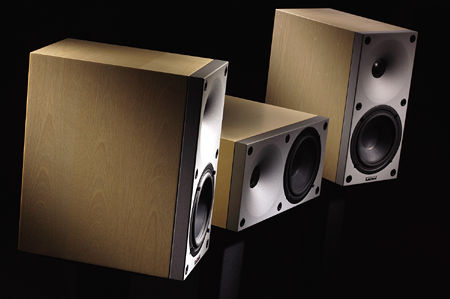
My normal practice in seeking out contenders for Affordable Speaker Nirvana is to pursue speakers I stumble across at our Home Entertainment shows, and to keep tabs on new designs from manufacturers whose wares have impressed me in the past. This time, however, editor John Atkinson called me out of the blue: "How would you like to review the Amphion Helium2 loudspeaker? It's the entry-level speaker in a Scandinavian speaker line distributed by Stirling Trayle of Quartet Marketing."