Loudspeakers are all about balancing conflicting variables: accepting that you can't have electrostatic transparency and horn dynamics; finding something to suit the size of your room and credit rating; and picking the best all-around compromise to suit your particular taste. Goldilocks had the right attitude for loudspeaker reviewing. All that too-soft/too-hard, too-hot/too-cold merely sets the scene; "just right" goes straight to the heart of the matter.  Which is why I suggested to John Atkinson that JMlab's Mezzo Utopia would make a good subject for my first Stereophile loudspeaker review. I've reviewed a lot of speakers in the past decade—mostly mainstream mass-market models, mostly for the British magazine Hi-Fi Choice, and mostly to a sound-bite length of around 600 words. But among the (literally) hundreds of mainstream speaker models, there's been a good sprinkling of more upmarket examples, most of which qualify for the adjective "extreme." Logic might suggest that the further upmarket one goes, the more engineering constraints are lifted and designers are better able to achieve the One True Goal of Ultimate Accuracy, the more speakers would tend to sound alike. Logic doesn't come into it. The more upmarket you go, the more dissimilar speakers tend to become, as the designers get a rare opportunity to indulge their fantasies. Don't get me wrong—I like extreme loudspeakers. Indeed, I use a couple of pairs regularly myself. Reviewing them is as educational as it is fun, and there's always plenty to write about. But I'm chary of recommending such designs without heavy qualification, because stunning performance in one area always seems to come with a downside elsewhere. The really difficult trick is getting a superb all-around performer with no serious chinks in its armor. Which is where the Mezzo Utopia—and Goldilocks, of course—come in.
Mezzo
Which is why I suggested to John Atkinson that JMlab's Mezzo Utopia would make a good subject for my first Stereophile loudspeaker review. I've reviewed a lot of speakers in the past decade—mostly mainstream mass-market models, mostly for the British magazine Hi-Fi Choice, and mostly to a sound-bite length of around 600 words. But among the (literally) hundreds of mainstream speaker models, there's been a good sprinkling of more upmarket examples, most of which qualify for the adjective "extreme." Logic might suggest that the further upmarket one goes, the more engineering constraints are lifted and designers are better able to achieve the One True Goal of Ultimate Accuracy, the more speakers would tend to sound alike. Logic doesn't come into it. The more upmarket you go, the more dissimilar speakers tend to become, as the designers get a rare opportunity to indulge their fantasies. Don't get me wrong—I like extreme loudspeakers. Indeed, I use a couple of pairs regularly myself. Reviewing them is as educational as it is fun, and there's always plenty to write about. But I'm chary of recommending such designs without heavy qualification, because stunning performance in one area always seems to come with a downside elsewhere. The really difficult trick is getting a superb all-around performer with no serious chinks in its armor. Which is where the Mezzo Utopia—and Goldilocks, of course—come in.
Mezzo
My first exposure to the Utopia came vicariously through the pages of this very journal, in Jack English's May 1996 cover story on the Grand Utopia (Vol.19 No.5, p.125), before JMlab had gotten around to distributing its brand in the UK. I was sufficiently intrigued by its appearance, the enthusiasm of the reviewers, and the reputation of the company's Focal drivers, to take up an invitation to visit St. Etienne last summer (see "Industry Update," September 1998). At some point in the proceedings, Manhattan retailer Andy Singer and I decided it was time to check out the Utopias with a few CDs I'd brought along. The speakers sounded very fine driven from some rather tasty Lavardin amplifiers, but of the four Utopia models, from Mini up to Grande, the then-brand-new Mezzo most took my fancy. It might not have had quite the weight and scale of the bigger models, but I was very taken by its delicacy, coherence, sweetness, and "just rightness." It also looked like a sensibly sized match for my listening room. I arranged to borrow a pair when I returned to England, and reviewed them for Hi-Fi Choice in a mini group test alongside the B&W Nautilus 801 and the Ruark Excalibur. I had a fun few weeks alternating between the three very impressive yet quite distinct designs. I've always had a weak spot for 15" bass drivers, and so developed enormous respect for the big B&W. But when I asked myself "Which would you most like to keep?," the answer kept coming up "Mezzo." This had something to do with room size (of which more anon) and my predilection for low, late-night listening levels, goes at least some way toward explaining why an Englishman has ended up reviewing a French loudspeaker in an American magazine. The bad news is the price. At $13,000/pair, the Mezzo Utopia costs 22% more than the Nautilus 801 in the US, whereas in Britain it's 15% (and in Germany 4%) cheaper. Such surprising discrepancies may well handicap the Mezzo's US sales, but the two designs are sufficiently different to find their own constituencies. The Mezzo might not look like such good perceived value, therefore, but it has its own very special touch of genuine class.
Technology
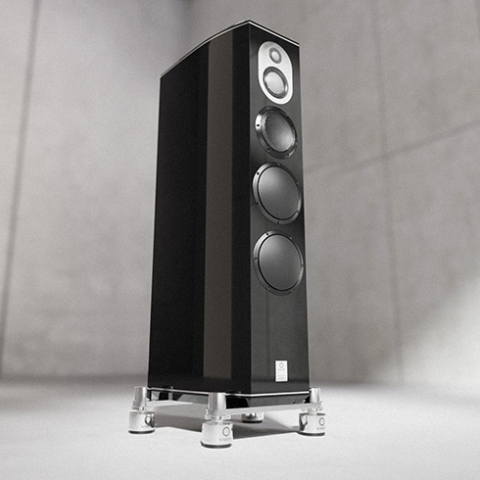
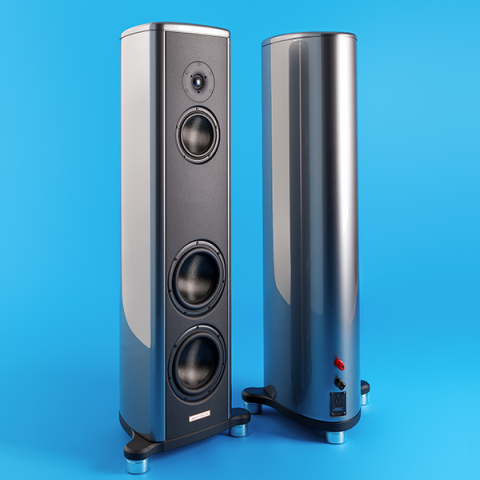
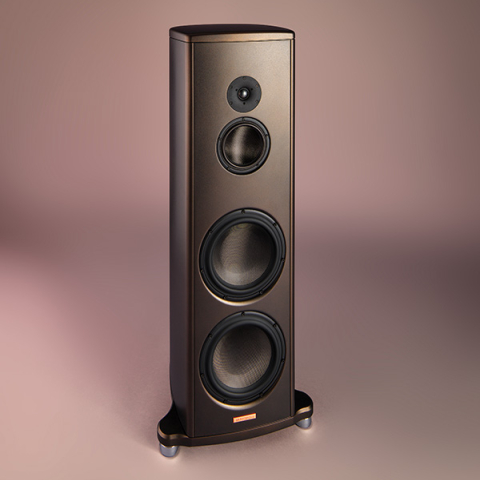
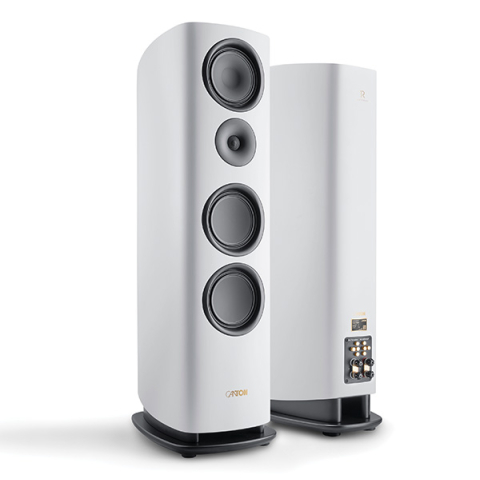
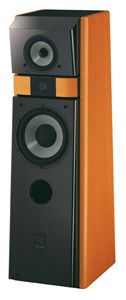
The Mezzo follows the "separate box" tradition established by the big Utopias. Each of the three drivers has its own enclosure, the midrange above and bass driver below a tweeter situated exactly at seated ear height (34"). There's no attempt to decouple one section from the others, as the chunky slabs of plain but attractive Anigré hardwood veneered side panels hold everything together.
Which is why I suggested to John Atkinson that JMlab's Mezzo Utopia would make a good subject for my first Stereophile loudspeaker review. I've reviewed a lot of speakers in the past decade—mostly mainstream mass-market models, mostly for the British magazine Hi-Fi Choice, and mostly to a sound-bite length of around 600 words. But among the (literally) hundreds of mainstream speaker models, there's been a good sprinkling of more upmarket examples, most of which qualify for the adjective "extreme." Logic might suggest that the further upmarket one goes, the more engineering constraints are lifted and designers are better able to achieve the One True Goal of Ultimate Accuracy, the more speakers would tend to sound alike. Logic doesn't come into it. The more upmarket you go, the more dissimilar speakers tend to become, as the designers get a rare opportunity to indulge their fantasies. Don't get me wrong—I like extreme loudspeakers. Indeed, I use a couple of pairs regularly myself. Reviewing them is as educational as it is fun, and there's always plenty to write about. But I'm chary of recommending such designs without heavy qualification, because stunning performance in one area always seems to come with a downside elsewhere. The really difficult trick is getting a superb all-around performer with no serious chinks in its armor. Which is where the Mezzo Utopia—and Goldilocks, of course—come in. My first exposure to the Utopia came vicariously through the pages of this very journal, in Jack English's May 1996 cover story on the Grand Utopia (Vol.19 No.5, p.125), before JMlab had gotten around to distributing its brand in the UK. I was sufficiently intrigued by its appearance, the enthusiasm of the reviewers, and the reputation of the company's Focal drivers, to take up an invitation to visit St. Etienne last summer (see "Industry Update," September 1998). At some point in the proceedings, Manhattan retailer Andy Singer and I decided it was time to check out the Utopias with a few CDs I'd brought along. The speakers sounded very fine driven from some rather tasty Lavardin amplifiers, but of the four Utopia models, from Mini up to Grande, the then-brand-new Mezzo most took my fancy. It might not have had quite the weight and scale of the bigger models, but I was very taken by its delicacy, coherence, sweetness, and "just rightness." It also looked like a sensibly sized match for my listening room. I arranged to borrow a pair when I returned to England, and reviewed them for Hi-Fi Choice in a mini group test alongside the B&W Nautilus 801 and the Ruark Excalibur. I had a fun few weeks alternating between the three very impressive yet quite distinct designs. I've always had a weak spot for 15" bass drivers, and so developed enormous respect for the big B&W. But when I asked myself "Which would you most like to keep?," the answer kept coming up "Mezzo." This had something to do with room size (of which more anon) and my predilection for low, late-night listening levels, goes at least some way toward explaining why an Englishman has ended up reviewing a French loudspeaker in an American magazine. The bad news is the price. At $13,000/pair, the Mezzo Utopia costs 22% more than the Nautilus 801 in the US, whereas in Britain it's 15% (and in Germany 4%) cheaper. Such surprising discrepancies may well handicap the Mezzo's US sales, but the two designs are sufficiently different to find their own constituencies. The Mezzo might not look like such good perceived value, therefore, but it has its own very special touch of genuine class.
The Mezzo follows the "separate box" tradition established by the big Utopias. Each of the three drivers has its own enclosure, the midrange above and bass driver below a tweeter situated exactly at seated ear height (34"). There's no attempt to decouple one section from the others, as the chunky slabs of plain but attractive Anigré hardwood veneered side panels hold everything together.