| Columns Retired Columns & Blogs |

Sutherland Engineering 20/20 phono preamplifier Page 3
The 20/20's treble performance was excellent as well, and struck me as being extraordinarily vivid, with detailed, tonally rich images, big dynamic swings, and crisp, precise timing. I noted several times that the 20/20 sounded airier, more open on top, than the PhD or Direct, though I was hard-pressed to parse this impression into neat audiophile categories. I could sometimes convince myself that I was hearing greater extension with the 20/20 than with either the PhD or Direct; at other times, I was certain the 20/20 wasn't more extended, but was just producing larger dynamic swings and retaining a richer tonal palette at the same high frequencies. Similarly, I often concluded that the difference I heard between the 20/20 and the Direct wasn't one of extension, but was the result of the 20/20's better resolution of low-level detail.
The 20/20's re-creation of spatial information was excellent and, again, more reminiscent of the vibrant, outgoing Sutherland Direct than the more introspective, slightly subdued PhD. I could describe the 20/20 as having a more "front-row-center" perspective vs the PhD's more mid-hall vantage point, but that's not quite right. Listening to Miles of Aisles one evening, I noted that everything sounded a bit larger through the 20/20—Mitchell herself, the body of her guitar, the stage, even individual audience members—as well more dynamic and forceful, and slightly farther forward on the stage. I also noticed that the stage was deeper with the 20/20, particularly toward the sides; the PhD's stage seemed more trapezoidal in comparison. But what struck me most was the difference in feel between the two performances. With the PhD, the word that came to mind was passive; the performers and venue were simply there, and the PhD was just allowing things to happen. Conversely, the 20/20, like the Direct but to a lesser degree, felt as if it were actively re-creating the performance and placing in front of me.
One component of the difference between these "active" and "passive" feels was the 20/20's effortless, natural reproduction of dynamic transients at the mid-level volumes to the louder end of the SPL spectrum; say, from mf to ffff. With the 20/20, dynamics were bigger, faster, cleaner, and better controlled. On several occasions, with the volume levels carefully matched with test tones and double- and even triple-checked, as soon as the music started, I was stunned by how much louder and more dynamic the 20/20 sounded than the PhD—and, for that matter, than any of my CD players. Acoustic guitar chops, for example, had a much more realistic impact and ring with the 20/20 than with the PhD, and were reproduced as well as I've heard anywhere. Through the 20/20, the classic riffs in "Night Moves," from Bob Seger's Nine Tonight (LP, EMI STBK-12182), completely blew me away. It takes a complex mix of precise timing, pitch control, and nearly unlimited dynamic headroom to capture the distinctive jangling sound of a sharply strummed Ovation guitar. The 20/20 nailed it perfectly.
But at the quiet end of the spectrum, from pppp up through p, or maybe mf, I found the PhD's performance more natural and involving. The PhD's transparency, purity, and, as MF described it, "freedom from electronic detritus," allowed it to re-create the subtlest, finest nuances of pitch, dynamic, and spatial detail in ways the 20/20 couldn't match. As good as the 20/20 was, the PhD simply resolved and presented more low-level information. Imagine 100 different dynamic levels between p and pp instead of 10, or 10 different shades of any tonal color instead of just one. Joni Mitchell idly brushing her guitar strings or quietly tuning up between songs felt more live with the 20/20, but with the PhD, it was somehow richer and more involving . . . it was individual fingers brushing individual strings, with all sorts of microdetail in each finger's touching of each string. The 20/20 was no slouch at low-level detail, but neither it nor any other phono preamp I've heard has matched the PhD in this regard.
Bringing it all back together
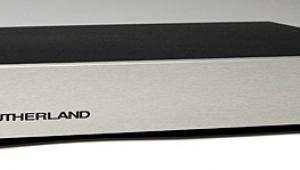
The Sutherland 20/20 excelled in a lot of different ways, and in some ways, it was as good as any component I've heard. It surpassed its overachieving predecessor, Sutherland's classic PhD, with its larger, more powerful dynamic transients, and easily transcended Sutherland's Direct Line Stage in terms of transparency and resolution of detail. In many ways, the 20/20 managed to combine the best of both earlier products while avoiding the shortcomings of either.
If you're in the market, buy one; if not, buy one anyway
Since setting the audio world on its ear with the PhD, Ron Sutherland has gone from strength to strength. For $3000, the Direct Line Stage matched the performance of models costing five times as much. The Ph3D delivered much of the PhD's incredible purity and natural ease for $1000, and the Hubble took the PhD's strengths to a new, even higher level at nearly the same price ($3800). After two months of listening to the 20/20, and a lot of evenings spent surrounded by record jackets, my initial impression hasn't changed: The 20/20 is another winner. It's simple and easy to use, gorgeous to behold, beautifully built, an absolutely superb sonic performer, and, at $2195, one of the High End's very best values.
NEXT: Specifications »
 | |||||||||||

|
|
| |||||||||
- Log in or register to post comments








| Loudspeakers Amplification Digital Sources | |
Analog Sources Accessories Featured | |
Music Columns Retired Columns | |
Show Reports | |
Features Latest News Community | |
Resources Subscriptions |
 © 2024 Stereophile
AVTech Media Americas Inc., USA
All rights reserved