Turntable Reviews

Sort By:  Post Date TitlePublish Date

Analog Corner #237: Ortofon MC A95 phono cartridge, Brinkmann Audio Spyder turntable and 12.1 tonearm
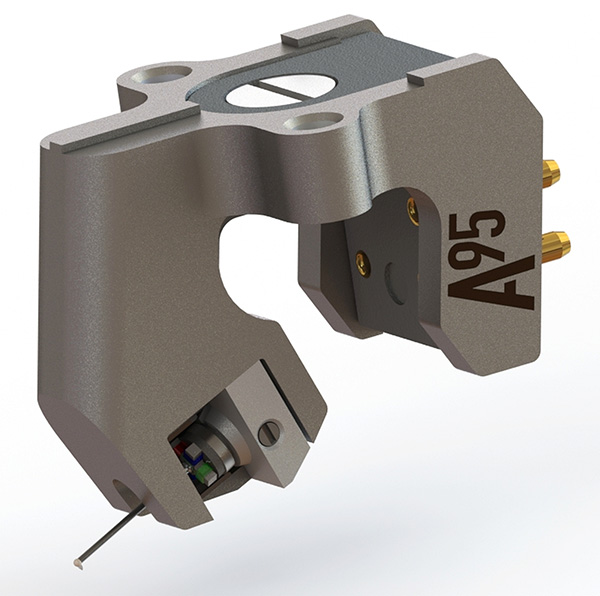
It's difficult to believe that more than five years have passed since Ortofon introduced its ground-breaking MC A90 moving-coil cartridge ($4200 when last available). The limited-edition MC A90, with its radically shaped body made of powdered stainless steel Selective Laser Melting (SLM), celebrated Ortofon's 90th year in business. The MC A95 ($6500), celebrating their 95th year, retains the A90's seductive shape, but the new body is built of powdered titanium, and thus is even more effectively self-damped.
Analog Corner #240: Sperling-Audio L-1 turntable and TA-1 tonearm

Photo: Echopark

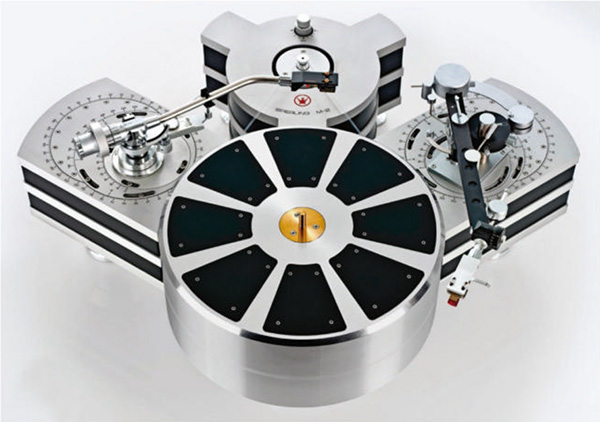
With its swept-wing shape and platter-forward design, Sperling-Audio's L-1 turntable ($35,950, without tonearm) stands out in a crowd. This high-mass design from Germany is the result of a collaboration between Ansgar Sperling and Michael Bönninghoff, two fiftysomething engineers who began working together in recording studio construction.

Both also bring to the L-1's design and construction years of experience in signal processing. For years, Bönninghoff was the chief developer at Brauner microphones, and today is the technical director of the German pro-audio company S.E.A. Sperling worked in radio and signal processing, and has a strong interest in tubed electronics.

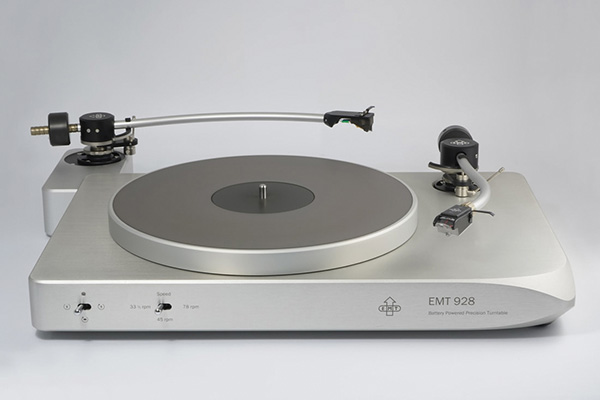
EMT 928 II record player

Modern turntables are a paradox. The ever-evolving technology beneath their sleek exteriors fascinates me. The high-end turntable market these days can feel less like a haven for music lovers and more like a brutalist arms race in pursuit of maximum audio extraction.

Yet, it's not all about performance. Many new 'tables are adorned with outlandish, purely cosmetic flourishes that cause me to chuckle. Some super-bling record players, with their jutting angles and industrial menace, evoke the chrome carcass of the Battlestar Galactica, a testament to mechanical might. Others are even more menacing, channeling the mirror-finish abyss of Darth Vader's helmet, gleaming with a promise of sonic domination—but is that an invitation or a threat?

Setting aside those cosmetic affectations, it's a war, and the enemy—well, the main enemy anyway—is vibrations, which may seem strange considering that vibrations are the whole point of the endeavor.

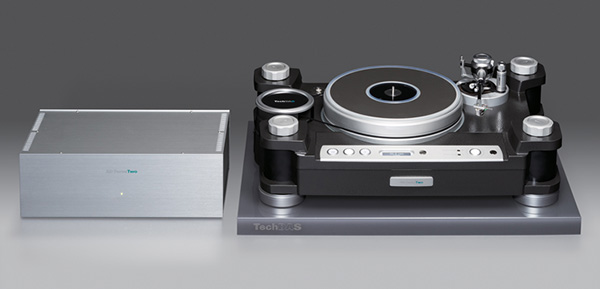
Analog Corner #243: TechDAS Air Force Two turntable, Graham Phantom Elite tonearm

How big is the performance gap between TechDAS's new Air Force Two ($52,000) and original Air Force One ($105,000) turntables? How do you halve the price without also sacrificing the build quality and features of the flagship model that defines the brand? Even $52,000 is more than most people pay for an automobile, not to mention a turntable. Still, TechDAS's assertion on their website that the price of their new model price is "reasonably improved" over the old strikes me as an understatement.

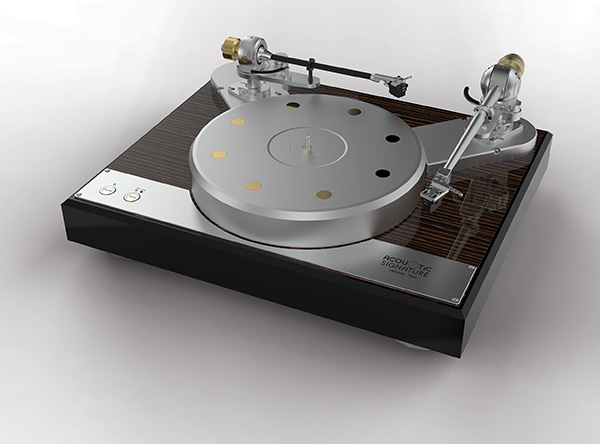
Spin Doctor #13: Acoustic Signature Verona NEO turntable, TA-5000 NEO, TA-7000 NEO tonearms, Ultra Carbon TC-40 record weight

I sometimes joke about how audio designers create products that resemble themselves, not just in how they look, but also in the design approach used, and especially the way they sound. So, we have tall, cool, pragmatic Scandinavians making gear like the lean, elegant Børresen loudspeakers, while the Italians build luscious curvy equipment endowed with natural wood and leather, like Sonus Faber speakers and Unison Research amplifiers. Continuing this blatant stereotyping, we have Acoustic Signature founder Gunther Frohnhöfer, a stout German known for creating precision-built turntables that are as solid-looking as he is.

When I visited the Acoustic Signature factory in 2023, I watched as they hewed massive slabs of aluminum into beautiful, heavyweight turntables. This approach is the opposite of the lightweight-but-rigid philosophy embraced by Rega, and while the resulting performance has different strengths, I would argue that it is at least equally valid. As with Rega, Acoustic Signature products have a purposeful simplicity, in a way that would allow a nonaudiophile to instantly recognize what their function is.

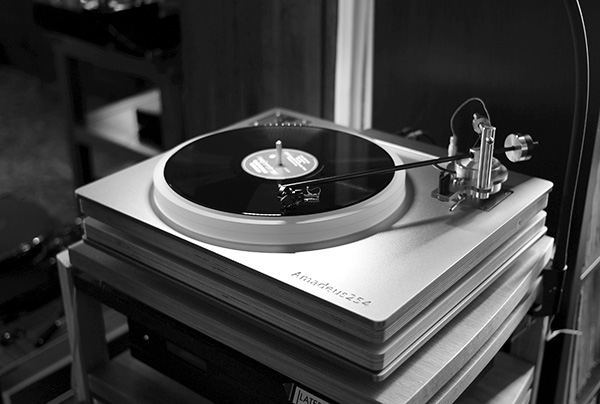
Brilliant Corners #15: Well Tempered Lab Amadeus 254 GT turntable

Photo by Michael Stephens

Last May, during a visit to High End Munich, I was ushered into an exhibitor's room with much ceremony. Other showgoers had been shooed out so that I, a reviewer at an important magazine, could listen to the hi-fi undisturbed. The room featured obelisk-shaped "statement" speakers, monoblocks with enough tubes to light a cafeteria, and a wedding cake–sized turntable, all connected with python-thick cables. The whole thing cost as much as a starter house in coastal Connecticut.

The room's proprietor asked me to choose from a small stack of LPs. I went for Cannonball Adderley's Somethin' Else, a wonderful Miles Davis record in all but name. I know it as well as any other piece of recorded music. When the system began to play, it was doing all the audiophile things expected of an expensive hi-fi. But while I recognized the notes, I struggled to recognize the music. Something was clearly, obviously amiss. The rhythmic emphases and stresses that convey music's meaning and emotion were landing in the wrong places.

Analog Corner #245: SME Model 15 turntable, SME 309 SPD tonearm

In the April 2000 issue of Stereophile, I reviewed SME's Model 10, which was an attempt by that storied company to produce an "affordable" turntable. I described the Model 10's $5500 turntable-only price—about $7600 in today's dollars—as "stiff." (At the time, the Model 10 cost $5995 with SME's M10 arm, or $8250 with their IV.Vi arm.) But 16 years later, the same Model 10 costs only $5000 ($7000 with the more recent Model 10 arm, which is superior to the M10).

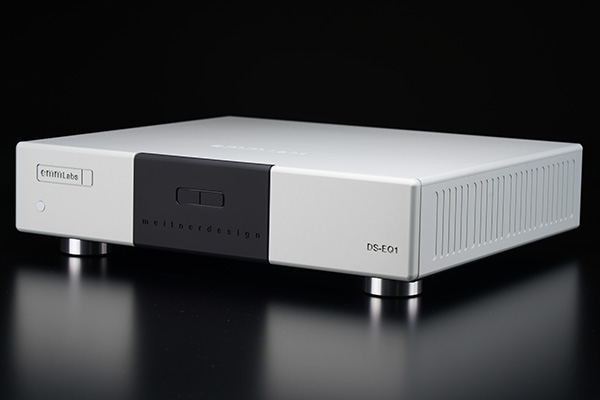
Spin Doctor #12: EMM Labs DS-EQ1, The Wand 14-4 Turntable, M•A Inner Sleeves

"I think both moving coil and moving magnet cartridges are terrible." That's what legendary Canadian audio designer Ed Meitner told me when I asked about the pioneering transimpedance current drive phono stage he created for his Meitner PA6 preamp some 40 years ago.

Meitner has been designing innovative hi-fi gear for the pro and consumer audio markets for more than 50 years, but for most of the last 30, he has been best known for his work with high-resolution digital audio and DSD recording. Despite this focus on digital—and despite that comment about the two leading phono cartridge technologies—deep in his heart, Ed still loves analog and has fond memories of the Kenwood optical cartridges from the 1970s, which I discussed in last month's Spin Doctor column. So when Ed read that a company in Japan called DS Audio was bringing back an improved version of the optical cartridge using modern materials, he contacted designer Tetsuaki Aoyagi to learn more.

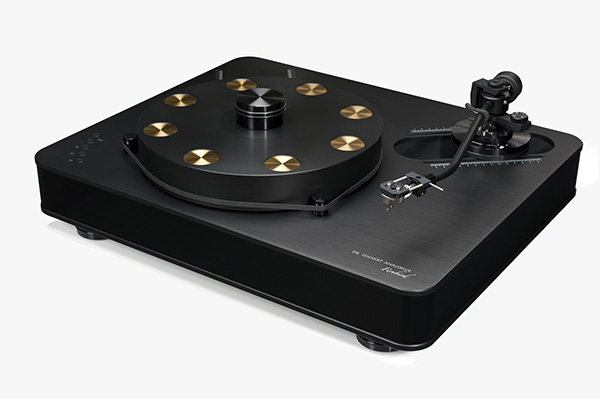
Analog Corner # 247: Dr. Feickert Firebird turntable, Viva Fono MC phono preamplifier, AcroLink and Fono Acustica interconnects

Dr. Feickert Analogue's top-of-the line turntable, the Firebird ($12,500), is a generously sized record player designed to easily accommodate two 12" tonearms. Its three brushless, three-phase DC motors, arranged around the platter in an equilateral triangle, are connected to a proprietary controller in a phase-locked loop (PLL); according to the Firebird's designer, Dr. Christian Feickert, a reference signal from just one of the motors drives all three—thus one motor is the master while the other two are slaves. (Man, today that is politically incorrect, however descriptively accurate.)

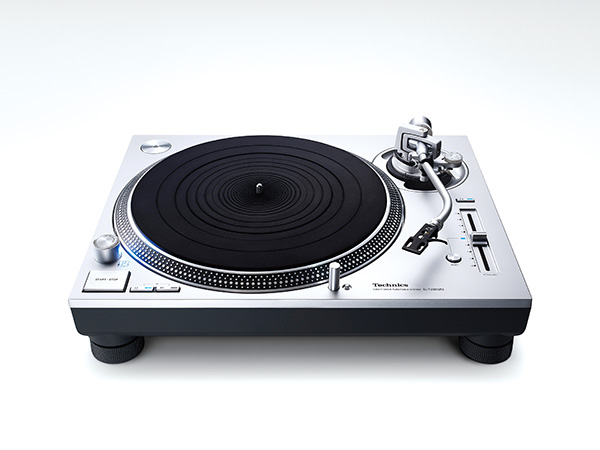
Technics Grand Class SL-1200/1210GR2 record player

In the early 1980s, I worked in a pop band playing AM radio hits, grooving behind my Yamaha drums and Zildjian cymbals as sweat drenched my body and my ears rang. We danced. We pranced. My shiny silk jumpsuit led upwards to a 2"-high afro, which women ran fingers through in hopes of finding contraband smokes ... Then overnight, everything changed.

At the beginning of the previous decade, Technics had released the SP-10, the first direct drive turntable. That was followed in short order by the SL-1100. Clive Campbell, aka Jamaican-American DJ Kool Herc, pioneered the simultaneous use of two Technics SL-1100s, initially at his sister's birthday party in the Bronx, inspiring "block parties" (rigging streetlamps for power) and hip-hop culture. Kool Herc isolated drumbeats from records by James Brown (with drummers Clyde Stubblefield and John "Jabo" Starks) and the Incredible Bongo Band (powered by master studio drummer Jim Gordon), among others, creating "breaks" for heated dance-floor partying. Soon, Lace Taylor (aka Afrika Bambaataa) and Grandmaster Flash (The Message) took Kool Herc's inventions into the mainstream, and hip-hop went global.

Advertisement
Advertisement
Advertisement