The most exciting development in audio today isn't multichannel surround, single-ended triodes, or $10,000 phono cartridges. It's "trickle down." I get buzzed when an audio designer known for cutting-edge multikilobuck designs claims to have a product that can produce 80% of the sonic realism of his flagship design at 50% of the cost. I get even more excited when he does it again—that is, produces a product that produces 64% of his flagship's performance at 25% of the cost. Designers who have successfully trickled-down their flagship technologies abound in all quarters of audiophilia, from electronics (eg, Audio Research, Conrad-Johnson) to speakers (Alón, ProAc) to cables (MIT). 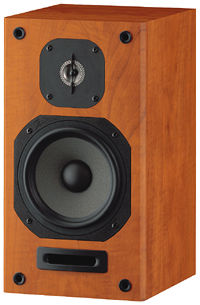 I've always been impressed with the sound of Jonathan Scull's system, based on the $30,000/pair JMlab Utopias. Through J-10's careful component selection, meticulous equipment setup, and fanatical attention to room treatment, Chez Scull has become one of the more enjoyable and revealing nooks in which to hear recorded music in all of New York City. But in recent years, JMlab, too, has been producing ever more affordable speaker designs. Still, it wasn't until 2001 that JMlab announced, at both WCES and Stereophile's Home Entertainment 2001 show, that it was plunging further down the price ladder with its new Chorus series: six models ranging in price from $300 to $1200/pair. I chose the Chorus 706, a $450/pair two-way satellite speaker. L'histoire
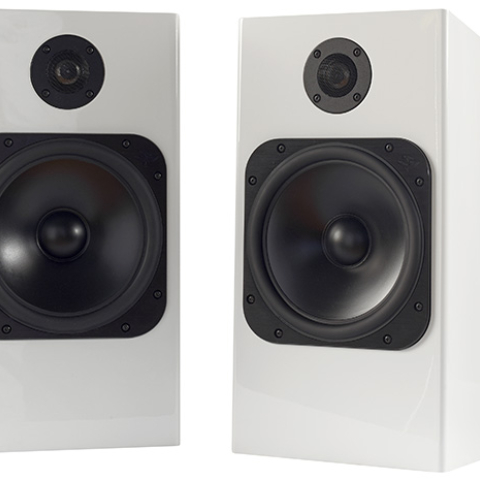
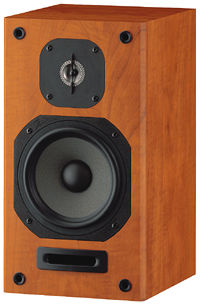
The Chorus 706 is the brainchild of Jacques Mahul, founder and director of technical development for the French company Focal JMlab. The firm designs and manufactures the broad range of JMlab speakers as well as Focal drivers, which have been used for years by speaker designers worldwide (eg, Wilson Audio). The Chorus 706 is a two-way satellite/bookshelf design featuring a 6½" woofer made of Polyglas, a proprietary material patented by JMlab and developed as a cost-effective way to maximize rigidity and minimize mass, for higher efficiency. The 1" inverted-dome titanium tweeter with ¾" coil is identical to that used in JMlab's Cobalt series of speakers (which retail for $995-$2395/pair). The front-ported cabinet has vertical and horizontal bracing, and the front baffle is of MDF for added rigidity.
Voulez vous entendre avec moi, ce soir?
I used the Chorus 706s primarily on Celestion Si stands loaded with lead shot and sand. I got the best results when I removed the grillecloths; this slightly increased transparency without altering the speaker's tonal balance. The Chorus 706 had the most intriguing and paradoxical tonal balance of any inexpensive speaker I've heard. The speaker's timbral presentation deviated from neutrality and uniformity in several areas, but in ways that were consonant with the musical experience, and that enhanced the realism of the musical presentation. That last comment requires explanation. I'll start with the glorious midrange, the 706's greatest strength. Aside from a warm, rich character in the lower midrange, the utterly colorless midband presentation made the 706 a vocal speaker to die for. I enjoyed an evening sharing a bottle of 1986 Chateau Talbot with my wife, Ellen, reveling in the breathy, intimate articulations of Patricia Barber on Companion (Premonition 90747) while perched in my Ikea chair. The speaker's superb rendition of low-level detail, ambience retrieval, and articulation of microdynamics further enhanced the illusion that a vocalist was in the room on well-recorded works, especially on classical chamber works such as Milton Babbitt's Solo Requiem (Nonesuch 78006). Male vocals were also stunning—both Mighty Sam McClain (Give It Up to Love, AudioQuest AQ-1015) and Louis Armstrong (St. James Infirmary, Audio Fidelity/Classic ST91058, 45rpm) were reproduced with the requisite growl and warm, guttural bite.
I've always been impressed with the sound of Jonathan Scull's system, based on the $30,000/pair JMlab Utopias. Through J-10's careful component selection, meticulous equipment setup, and fanatical attention to room treatment, Chez Scull has become one of the more enjoyable and revealing nooks in which to hear recorded music in all of New York City. But in recent years, JMlab, too, has been producing ever more affordable speaker designs. Still, it wasn't until 2001 that JMlab announced, at both WCES and Stereophile's Home Entertainment 2001 show, that it was plunging further down the price ladder with its new Chorus series: six models ranging in price from $300 to $1200/pair. I chose the Chorus 706, a $450/pair two-way satellite speaker. L'histoire The Chorus 706 is the brainchild of Jacques Mahul, founder and director of technical development for the French company Focal JMlab. The firm designs and manufactures the broad range of JMlab speakers as well as Focal drivers, which have been used for years by speaker designers worldwide (eg, Wilson Audio). The Chorus 706 is a two-way satellite/bookshelf design featuring a 6½" woofer made of Polyglas, a proprietary material patented by JMlab and developed as a cost-effective way to maximize rigidity and minimize mass, for higher efficiency. The 1" inverted-dome titanium tweeter with ¾" coil is identical to that used in JMlab's Cobalt series of speakers (which retail for $995-$2395/pair). The front-ported cabinet has vertical and horizontal bracing, and the front baffle is of MDF for added rigidity.
I used the Chorus 706s primarily on Celestion Si stands loaded with lead shot and sand. I got the best results when I removed the grillecloths; this slightly increased transparency without altering the speaker's tonal balance. The Chorus 706 had the most intriguing and paradoxical tonal balance of any inexpensive speaker I've heard. The speaker's timbral presentation deviated from neutrality and uniformity in several areas, but in ways that were consonant with the musical experience, and that enhanced the realism of the musical presentation. That last comment requires explanation. I'll start with the glorious midrange, the 706's greatest strength. Aside from a warm, rich character in the lower midrange, the utterly colorless midband presentation made the 706 a vocal speaker to die for. I enjoyed an evening sharing a bottle of 1986 Chateau Talbot with my wife, Ellen, reveling in the breathy, intimate articulations of Patricia Barber on Companion (Premonition 90747) while perched in my Ikea chair. The speaker's superb rendition of low-level detail, ambience retrieval, and articulation of microdynamics further enhanced the illusion that a vocalist was in the room on well-recorded works, especially on classical chamber works such as Milton Babbitt's Solo Requiem (Nonesuch 78006). Male vocals were also stunning—both Mighty Sam McClain (Give It Up to Love, AudioQuest AQ-1015) and Louis Armstrong (St. James Infirmary, Audio Fidelity/Classic ST91058, 45rpm) were reproduced with the requisite growl and warm, guttural bite.